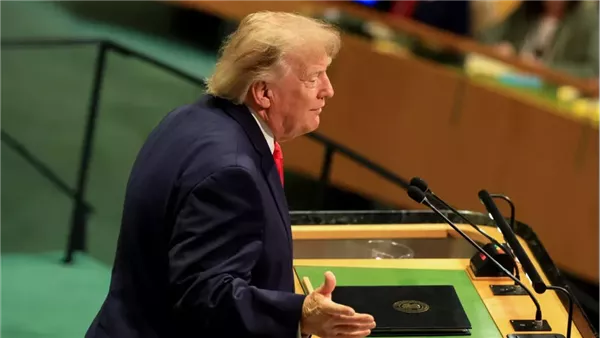
US President Donald Trump, in a speech at the United Nations General Assembly, announced a new term for artificial intelligence, suggesting the term "super intelligence" instead. He stated that the term "artificial" might give the impression that it's not real or fake, whereas he believes it represents a real and impactful technological advancement. Trump emphasized the need for caution when dealing with this technology.
Trump explained that using the word "artificial" makes intelligence seem like something unreal, adding that the technology is indeed amazing but requires careful handling. He expressed hope that other countries would adopt the new term, which he believes is more accurate in describing the developments in the field of artificial intelligence. The US will use the term "super intelligence" (SI) in its documents, Trump announced.
The US President rejected attempts to establish global controls on artificial intelligence, stating that the technology will be referred to as "super intelligence" in official documents. He added that American documents will use the new term and hoped it would spread globally. This statement comes amid a rapidly accelerating international race between governments and tech companies to develop more advanced models and greater computing capabilities.
Trump reiterated his previous idea that the country that excels in this technology will be in a strong global position. He claimed that the US is currently ahead of China but emphasized the need to maintain this advantage. This stance is linked to the growing US-China competition in areas such as semiconductors, data centers, advanced computing, and the development of artificial intelligence models.
Trump stated that he does not want regulations to slow down the growth of the artificial intelligence sector, noting that the technology could have a greater impact than the Industrial Revolution or the emergence of the internet. The US will encourage the development of super intelligence while monitoring its progress and intervening when necessary through relevant government agencies and law enforcement.
Trump also addressed concerns related to artificial intelligence, criticizing what he described as pessimistic predictions about the technology's potential to cause widespread disasters or threaten humans. He noted that some critics warn of scenarios where robots become uncontrollable or artificial intelligence turns into a threat to humanity. The debate around the risks of artificial intelligence remains strong among researchers, governments, and tech companies.
Trump concluded by emphasizing that the US will continue to support the development of super intelligence while monitoring it and addressing any issues that may arise. He expressed confidence that Americans have historically risen to technological challenges and will continue to treat this field as a key area of future competition. This reflects a broader global debate about artificial intelligence, not just as a technological tool but as a strategic area linked to the economy, security, and international competition.
Key points
- Trump suggests renaming artificial intelligence to super intelligence, citing concerns that the term "artificial" may imply it's not real.
- The US will use the term "super intelligence" in its documents, hoping it will spread globally.
- Trump rejects attempts to establish global controls on artificial intelligence, emphasizing the need for caution and monitoring.