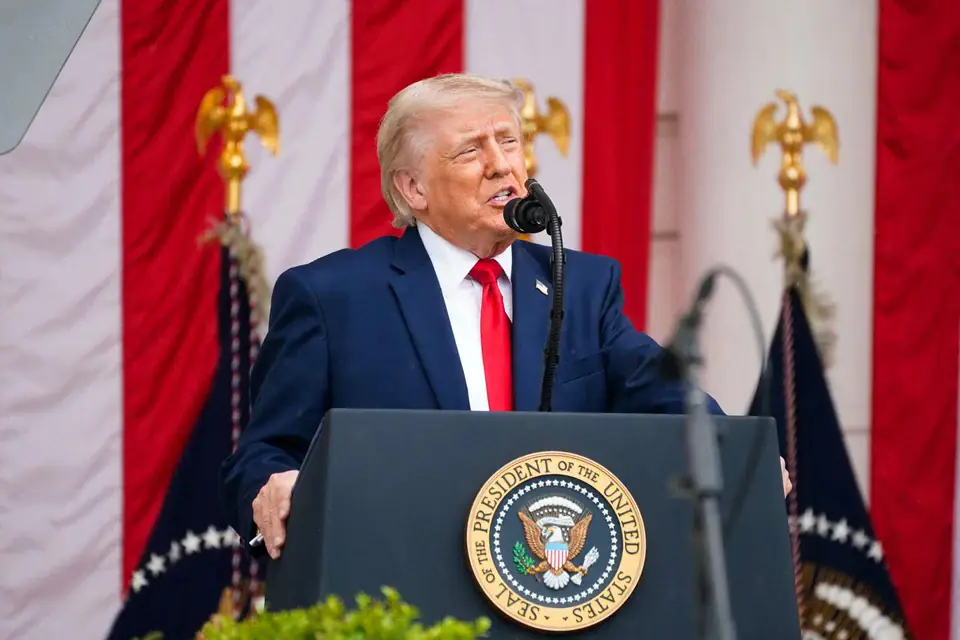
US President Donald Trump has expressed optimism that the conflict between the United States, Israel, and Iran will come to an end soon. In a radio interview with Kansas City on Friday, Trump emphasized that the US needs assurance that Iran will not develop nuclear weapons. His comments come amid reports suggesting possible new military strikes against Tehran after the US midterm elections.
According to the Wall Street Journal, US Central Command head Admiral Brad Cooper met with Trump at the White House on Thursday to brief him on military options regarding Iran. Meanwhile, the US military has enhanced security measures for shipping routes in the Strait of Hormuz, a critical passage for global oil and gas trade. Admiral Cooper reported that he observed numerous commercial vessels, including those carrying crude oil, cargo, and liquefied natural gas, passing through the area safely.
Admiral Cooper noted that there was no visible presence of Iranian naval forces in the region, stating that the Iranian navy has been significantly degraded. He also assured that US forces continue to secure shipping lanes against Iranian naval mines. The US military claims to have assisted Gulf countries in safely transporting over 1.5 billion barrels of crude oil since the summer. Despite these efforts, security concerns remain due to ongoing Iranian attacks on passing vessels.
On Friday, Oman announced that it had rescued 25 sailors from a commercial vessel that was attacked and caught fire in the Strait of Hormuz. In a separate incident, Iran reported that it had stopped three oil tankers in the region. These developments highlight the persistent security challenges in the area. Diplomatic efforts are underway, with a Qatari envoy visiting Tehran on Friday to engage in talks with Iranian leaders.
The Qatari envoy's visit occurred a day after Iran received a letter from US Vice President JD Vance, addressed to Iran's top security official, Mohsen Rezaei. According to the Wall Street Journal, the letter discussed the possibility of establishing a framework for negotiations to resolve the conflict. Senior officials from Saudi Arabia, Pakistan, and Turkey have also recently visited Tehran in an effort to reduce military tensions in the region.
These diplomatic initiatives suggest that, despite Trump's assertions about an imminent end to the conflict, significant security and diplomatic challenges need to be addressed to achieve lasting peace in the Middle East. The situation remains complex, with multiple stakeholders involved in seeking a resolution to the US-Iran conflict.
The ongoing efforts to de-escalate tensions between the US and Iran are crucial in maintaining regional stability. The international community continues to monitor developments in the region closely, as the conflict's outcome has far-reaching implications for global security and stability.
Key points
- US President Donald Trump believes the conflict between the US, Israel, and Iran will end soon.
- The US military has enhanced security measures for shipping routes in the Strait of Hormuz.
- Diplomatic efforts are underway to resolve the US-Iran conflict, with multiple stakeholders involved.