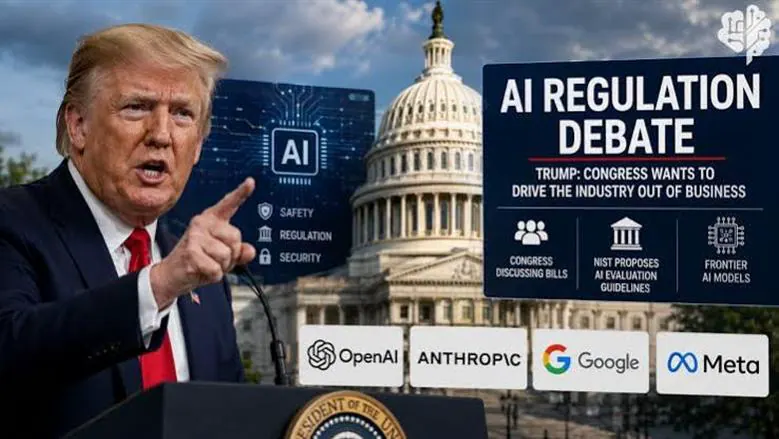
US President Donald Trump announced plans to launch AI Force, a new unit focused on artificial intelligence, in September 2026. The unit's role and structure have not been fully disclosed, but it is expected to play a significant part in the US military's future operations. This move is part of a broader effort to integrate AI into various aspects of US national security and economy. The US government has been exploring ways to leverage AI to enhance its military capabilities and stay competitive with other nations, particularly China.
The US military has already taken steps to incorporate AI into its operations. In June 2025, the US Army established the 201st Unit, an innovation corps within the Army Reserve. The unit consists of senior executives from top tech companies, including Palantir, Meta, and OpenAI, who serve as part-time advisers. These executives have been granted military ranks and have contributed to various projects, such as analyzing ammunition supply chains and developing autonomous systems. The unit's work has focused on applying AI to real-world military challenges.
The US government's interest in AI extends beyond military applications. In November 2025, the Trump administration launched the Genesis Mission, an initiative aimed at integrating high-performance computing, scientific data, and AI to accelerate scientific discovery. This effort is part of a broader push to leverage AI for various national priorities, including healthcare, education, and infrastructure development. The Genesis Mission has been compared to historic US projects, such as the Manhattan Project and the Apollo program.
Experts note that AI has dual-use technology, meaning it can be applied to both civilian and military contexts. For instance, AI algorithms used in medical imaging can be adapted for other purposes, such as surveillance or predictive maintenance. Similarly, computer vision technologies used in self-driving cars can be applied to drone systems or other autonomous vehicles. This dual-use nature of AI raises questions about the boundaries between civilian and military applications.
The integration of AI into US national security and military operations raises concerns about accountability and responsibility. As AI systems become more autonomous, there is a growing need to ensure that human oversight and decision-making are maintained. According to experts, the development and deployment of AI systems must be accompanied by clear guidelines and regulations to prevent unintended consequences.
The US government's plans to launch AI Force and integrate AI into its military operations have sparked debate about the role of AI in warfare. While some see AI as a means to enhance US military capabilities and stay competitive with other nations, others raise concerns about the potential risks and unintended consequences of relying on AI in combat situations. As the US government continues to explore the potential of AI, it must balance the benefits of AI with the need for accountability and responsible development.
The development of AI Force and the integration of AI into US national security and military operations are part of a broader global trend. Many countries, including China and Russia, are investing heavily in AI research and development, and exploring ways to apply AI to their military operations. As the US government continues to develop its AI capabilities, it must consider the implications of AI on the global balance of power and the potential for AI to be used in various contexts.
Key points
- The US government plans to launch AI Force, a new unit focused on artificial intelligence, to enhance its military capabilities and stay competitive with other nations.
- The integration of AI into US national security and military operations raises concerns about accountability and responsibility.
- The development of AI Force is part of a broader global trend, with many countries investing in AI research and development and exploring ways to apply AI to their military operations.