US President Donald Trump has expressed his determination to achieve his foreign policy goal of "taking Cuba" before leaving office. In a recent interview with conservative radio host Hugh Hewitt, Trump stated that he would consider using military action to topple the island's leadership. This stance has escalated tensions with Cuba, which has been preparing for a possible US invasion.
Cuban President Miguel Díaz-Canel responded to Trump's comments, stating that Cuba does not attack or threaten any nation but will reject any attempt at foreign military aggression. Díaz-Canel's comments come amid increased sanctions imposed by Trump on the island, including an oil embargo. The US State Department has also released a report accusing Havana of promoting 21st-century communism and threatening US national security.
US Senator Marco Rubio, a Cuban-American and staunch critic of the Cuban government, has echoed Trump's sentiments. Rubio has stated that regime change is a condition for economic sanctions to be lifted, citing the need for new leadership on the island. Rubio's comments align with the Trump administration's policy towards Cuba, which has referred to the government as "an illegitimate regime."
The tensions between the US and Cuba have been escalating, with a recent shouting match at the UN between Cuban Foreign Minister Bruno Rodríguez Parrilla and US Ambassador Mike Waltz. A Cuban diplomat was later expelled for appearing to shove a US official. Despite the midterm elections, US officials expect the regime to collapse, and there appears to be little reprieve in store for Cuba during Trump's remaining time in office.
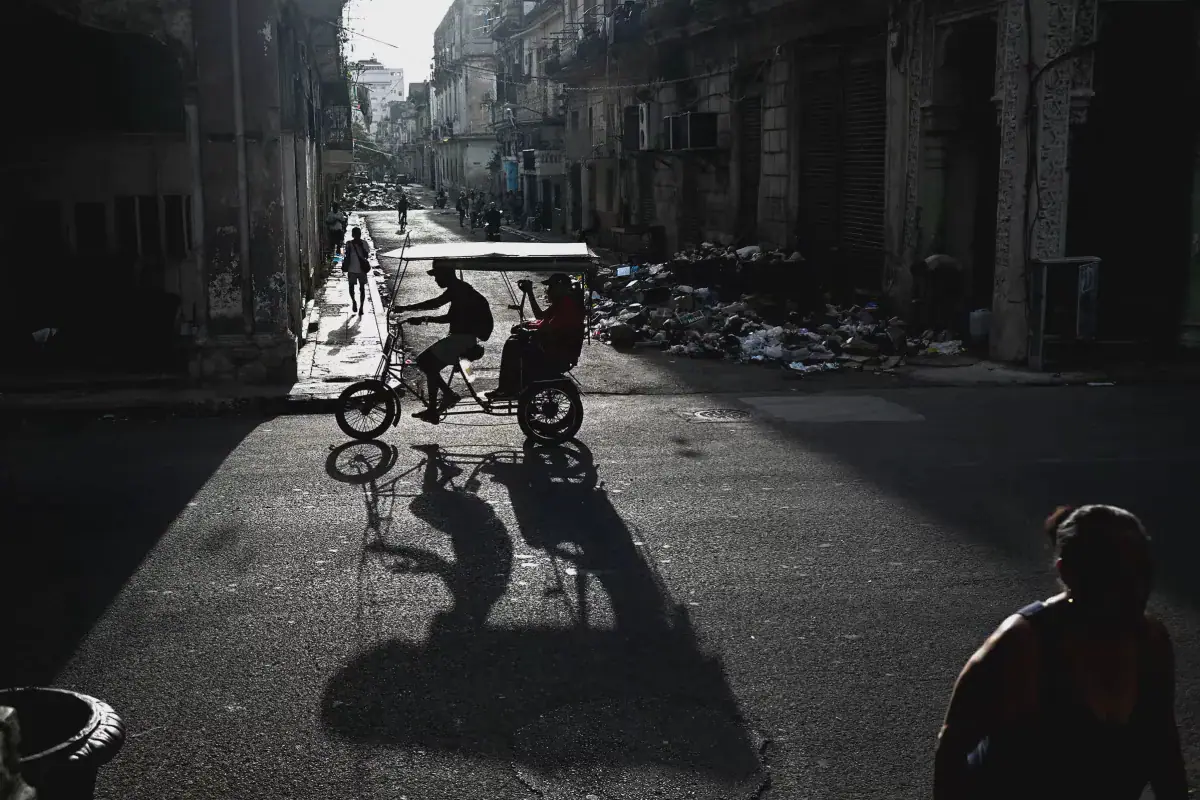
Cuba has resisted US pressure for nearly 70 years and does not appear to be caving now. Despite the challenges faced by Cubans, including blackouts, medicine and food shortages, and a declining peso, the island's government remains firmly in control. Talks between the US and Cuba have yielded no tangible results, and there is no sign of a diplomatic breakthrough.
Cuban officials view any economic benefits of a deal with the US as a poisoned chalice. As one Cuban diplomat noted, "We know that if the Americans are for it, we should be against it." However, some experts believe that Havana may be missing an opportunity to make a historic deal. Ricardo Herrero, executive director of the Cuba Study Group, suggests that a deal with Trump could be more valuable than one with Democrats.
Even if Rubio were to leave the administration to mount his own bid for the presidency in 2028, any respite for Cuba would likely be short-lived. As president, Rubio would likely seek to finish what Trump started with Cuba. The situation remains uncertain, with Cuba facing ongoing pressure from the US and no clear path to resolving the tensions.
Key points
- US President Donald Trump remains committed to his goal of regime change in Cuba.
- Cuban President Miguel Díaz-Canel has stated that Cuba will reject any attempt at foreign military aggression.
- US Senator Marco Rubio has echoed Trump's sentiments, stating that regime change is a condition for economic sanctions to be lifted.