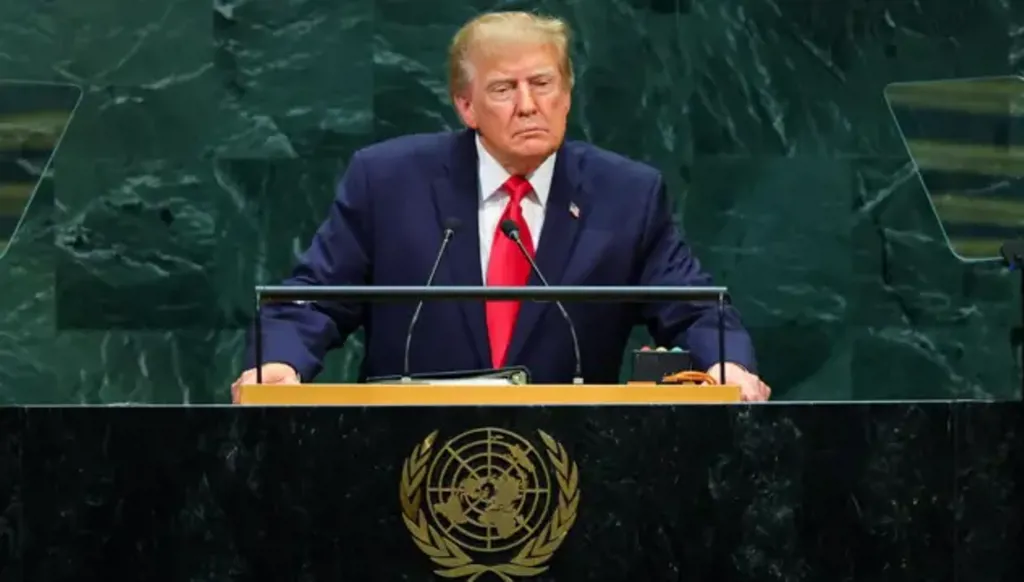
On September 23, 2026, US President Donald Trump delivered a scathing critique of Cuba during his address to the United Nations General Assembly. He described the island nation as a "failed state" and predicted the downfall of its current government. The Cuban delegation, in response, walked out of the assembly in protest. This dramatic exit underscored the escalating tensions between the United States and Cuba.
Trump's remarks were part of a broader critique of socialist governments. He asserted that Cuba's communist regime was under immense pressure, characterizing it as the most significant pressure the island had ever faced. The US President also accused Havana of attempting to stir up opposition within the United States. These comments reflect a continuation of the Trump administration's hardline stance towards Cuba.
The strained relations between Washington and Havana were further highlighted by Trump's announcement that "freedom is coming to Cuba." This statement aligns with the US policy of exerting pressure on the Cuban government to push for political and economic reforms. The Cuban government, however, views these pressures, including stringent US trade embargoes and sanctions, as a primary cause of its economic woes.
The economic situation in Cuba has been deteriorating, with severe shortages of essential goods and a significant decline in living standards. The US embargo, which has been in place for decades, has been exacerbated by additional sanctions under the Trump administration. These measures have severely impacted Cuba's economy, particularly its energy sector, leading to frequent power outages and shortages of fuel.
The US claims that its sanctions are aimed at encouraging democratic reforms in Cuba. The Trump administration argues that by tightening the economic screws, it can compel the Cuban government to transition towards a more democratic and open system. Conversely, the Cuban government maintains that the US actions are designed to strangle its economy and undermine its sovereignty.
The confrontation between Trump and Cuba at the UNGA is set against a backdrop of a renewed US focus on countering what it perceives as the influence of socialist and communist regimes in the Western Hemisphere. This approach has marked a significant shift in US policy towards Cuba, reversing some of the efforts made during the Obama administration to normalize relations.
The walkout by the Cuban delegation from the UNGA was a clear indication of the deep-seated animosity and frustration felt by Havana towards Washington's policies. As tensions continue to rise, it remains to be seen how both countries will navigate their relationship, particularly in light of upcoming international diplomatic engagements.
Key points
- The US President Donald Trump described Cuba as a "failed state" at the UN General Assembly.
- The Cuban delegation walked out in protest during Trump's address.
- The incident highlights the ongoing tensions and deteriorating relations between the United States and Cuba.