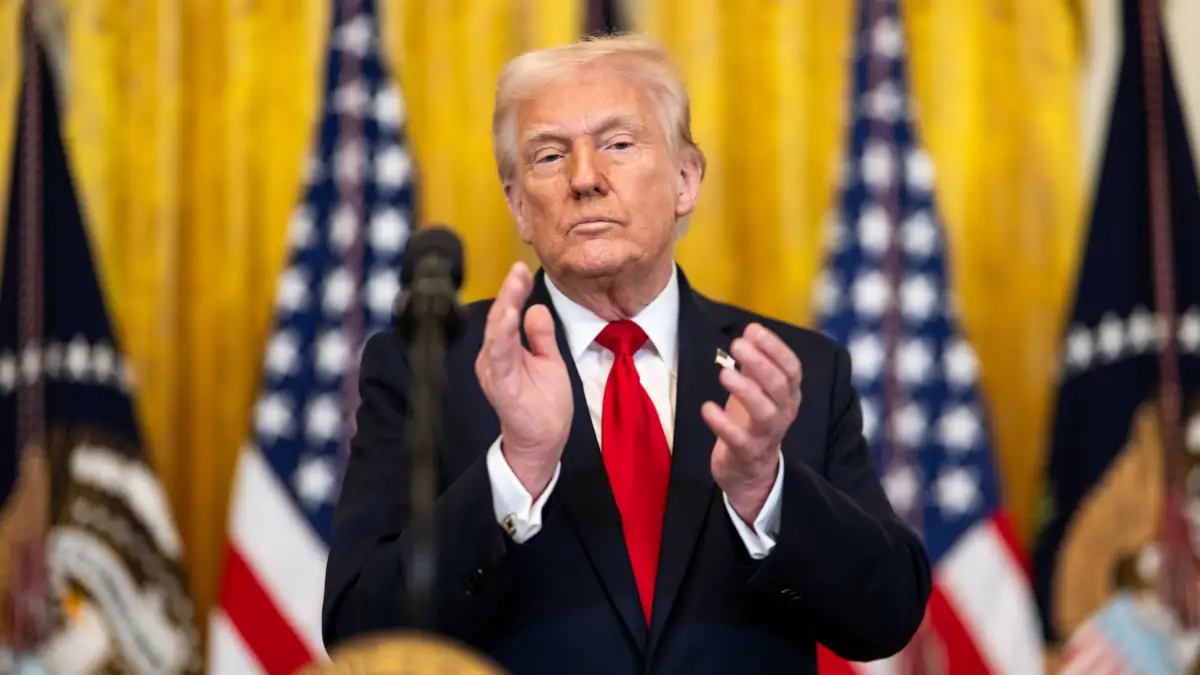
On September 29, 2026, US President Donald Trump addressed the nuclear arsenal of North Korea during an exchange with journalists at the White House. He acknowledged that the regime of Kim Jong-un possesses significant nuclear capabilities. However, Trump stated that he does not consider Kim Jong-un a problem as long as he is in power. Trump also highlighted his good relations with Kim Jong-un, contrasting them with those he has with the Iranian government.
Trump expressed frustration with previous US administrations, stating that they failed to prevent North Korea from developing its nuclear program. He believes that this rapid development could have been avoided in the past. Despite this, Trump did not announce any new measures regarding Pyongyang's arsenal. He confirmed that Washington remains willing to engage in dialogue with Kim Jong-un without preconditions.
Trump emphasized the personal relationship he has with Kim Jong-un, stating that the North Korean leader appreciates and respects him. This relationship has led to criticism, but Trump believes that dialogue with Kim Jong-un remains open. In contrast, tensions between the US and Iran are currently high. The two leaders met three times during Trump's first term, in Singapore in 2018, Hanoi in 2019, and at the demilitarized zone between the two Koreas.
North Korea continues to develop its military capabilities, particularly its nuclear program. The regime views this development as essential to its survival. In August, Trump estimated that North Korea possessed 57 nuclear weapons. South Korean Defense Minister subsequently estimated that the number could be between 80 and 120. The exact number is difficult to verify due to limited information.
Trump's comments on North Korea's nuclear program come amid ongoing concerns about the country's military activities. The US and North Korea have engaged in diplomatic efforts in the past, but progress has been slow. Trump has indicated a desire to reestablish contact with Pyongyang in recent months. The US approach to North Korea contrasts with that of Iran, which has also been accused of pursuing nuclear capabilities.
The Iranian nuclear program has been a point of contention between Tehran and Washington for years. Trump has been critical of Iran's nuclear ambitions, and tensions between the two countries have escalated in recent years. In contrast, Trump has sought to engage with North Korea through diplomatic channels. The reasons for this difference in approach are not entirely clear, but Trump's personal relationship with Kim Jong-un appears to be a factor.
The development of North Korea's nuclear program has significant implications for regional and global security. The international community has long been concerned about the country's military activities, and efforts to curb its nuclear ambitions have been ongoing. As Trump continues to engage with Kim Jong-un, the outcome of these diplomatic efforts remains uncertain. The US and North Korea have yet to reach a comprehensive agreement on denuclearization.
Key points
- Trump emphasizes his personal relationship with Kim Jong-un as a factor in his approach to North Korea's nuclear program.
- The US president did not announce new measures regarding North Korea's arsenal despite criticizing previous administrations' handling of the issue.
- The exact number of North Korea's nuclear weapons is difficult to verify, with estimates ranging from 57 to 120.