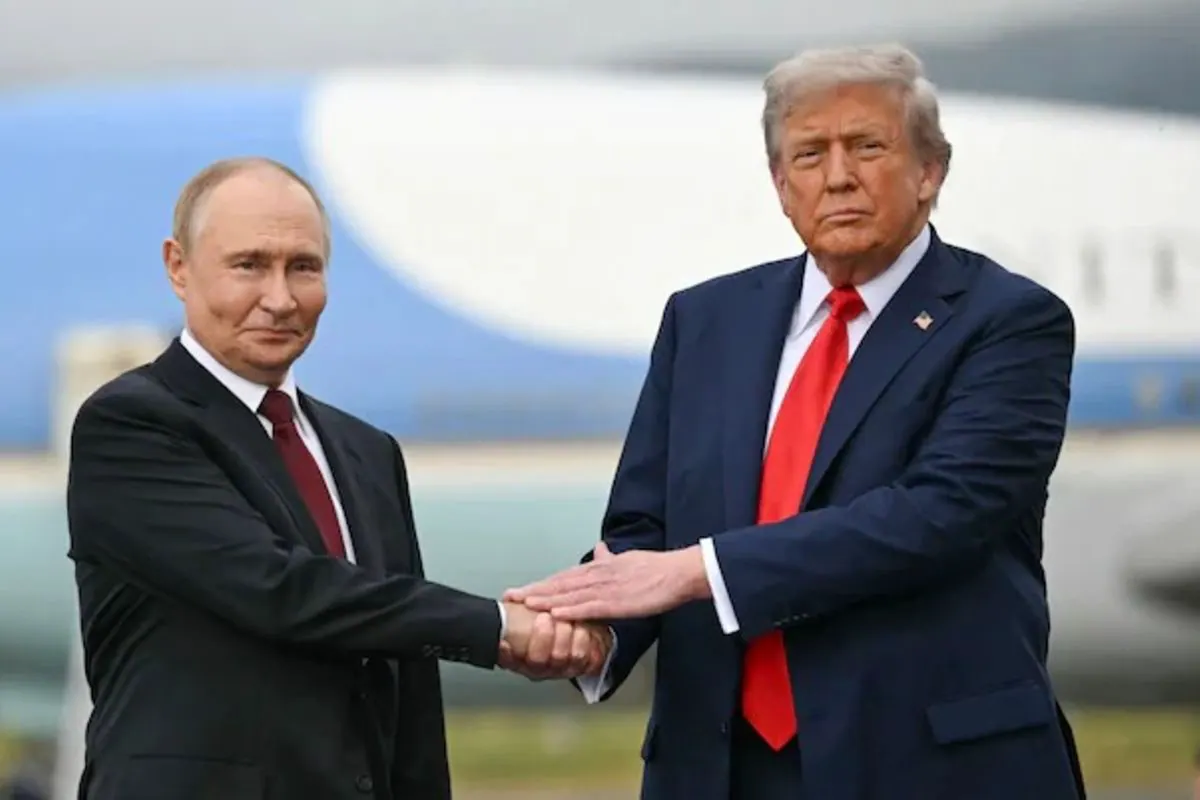
US President Donald Trump announced on Friday that Russia has agreed to supply diesel to the US and global markets in an effort to lower fuel prices. The deal comes as diesel prices are trading near record levels, posing a risk for Trump's fellow Republicans ahead of the November 3 congressional elections. According to Trump, Russia will immediately supply over 300,000 tonnes of diesel, equivalent to about 2.25 million barrels.
The agreement was reached during a conversation between Trump and Russian President Vladimir Putin, which Trump described as "highly successful." Following the announcement, diesel prices fell, although analysts expressed skepticism about the deal's ability to sustain a decline in prices. The US exports around 1.5 million barrels of diesel per day. Kirill Dmitriev, an envoy for Putin, praised the cooperation between Russia and the US.
The deal has drawn criticism from Ukrainian President Volodymyr Zelenskiy, who described it as a "weak decision" that would only benefit Russia. Zelenskiy stated that "gifts to Putin will not bring peace or any benefit to the civilised world." US lawmakers, including Republican Representative Don Bacon, also expressed concerns, urging Trump to implement recently passed sanctions rather than easing existing measures.
The US Treasury Department has issued a licence allowing imports of Russian diesel until April 7. According to Trump, Russia will supply an additional 500,000 tonnes in November, followed by one million tonnes "immediately thereafter." The deal could generate billions of dollars in revenue for Russia, potentially helping Putin finance the war in Ukraine.
Analysts have questioned the impact of the agreement, with some describing it as a "nothing burger." Rory Johnston, an oil market researcher, stated that Russia typically exports larger volumes of diesel when its refineries are not under attack. Jim Mitchell, an analyst at Wood Mackenzie, described the deal as "another stream to aid a very tight diesel market."
The conflicts in Ukraine and Iran have put pressure on global fuel supplies, driving up diesel prices. Average US diesel prices have reached $6.28 per gallon, according to AAA. Trump's administration has taken measures to increase supplies, including pressuring allies to release emergency reserves and expanding access to tax-exempt red-dyed diesel.
The White House is considering ways to control diesel prices, including issuing a directive to identify ways to bypass local and state regulations restricting energy production. The directive could invoke the Cold War-era Defence Production Act to increase oil and fuel output. Industry sources suggest that the president may authorise government-backed loans or loan guarantees to expand domestic manufacturing of critical materials.
Key points
- The deal could generate billions of dollars in revenue for Russia.
- Analysts have expressed skepticism about the deal's ability to sustain a decline in diesel prices.
- The agreement has drawn criticism from Ukrainian President Volodymyr Zelenskiy and US lawmakers.