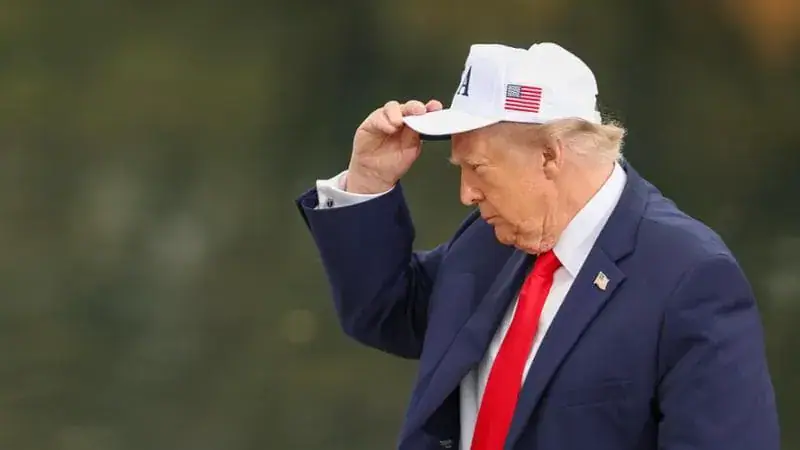
US President Donald Trump announced on Monday, November 9, that the war with Iran is over, citing its corrosive impact on his administration. This statement comes after a tumultuous period, particularly following the November 3 electoral setback. Trump's declaration was made in his characteristic style, suggesting it was a "positive moment" in the conflict and implying that new attacks are unlikely. However, his announcement was swiftly met with skepticism by Iranian officials.
Iranian officials, including Mohsen Rezaei, Secretary of the Supreme National Security Council, responded to Trump by using a poker analogy, stating that a desperate player with debts cannot simply leave the table without settling their dues. Rezaei emphasized that Iran will not let Trump exit the conflict without addressing the consequences of his actions. This situation leaves Trump in a difficult position, especially with the looming change in congressional control and internal party pressures.
The conflict between the US and Iran has been marked by significant escalations, including the killing of Iran's Supreme Leader, Ali Khamenei, and his family, as well as about 40 high-ranking military and political figures, in an initial attack on February 28. Analysts like Larry Wilkerson, former chief of staff to Secretary of State Colin Powell, suggest that Trump's decision to end the war may be too little, too late, given the extensive damage and Iran's upper hand in the conflict.
Trita Parsi, a respected analyst and vice-president of the Quincy Institute, notes that Trump's predicament stems from the military and political dynamics of the conflict. Iran's victory, Parsi argues, is not just about resisting US and Israeli attacks but also about exposing the limitations of US military power in the region. This perspective is shared by Iranian officials, who believe that Trump's only viable exit strategy is to accept the terms outlined in a Memorandum of Understanding signed in June.
The Memorandum of Understanding includes seven key points: cessation of military operations and hostilities; lifting of the US naval blockade; removal of economic sanctions; release of frozen Iranian assets; non-interference in Iran's internal affairs; termination of US cooperation with anti-Iranian forces; and a formal commitment to suspend military aggression against Iran. Iranian officials stress that these conditions must be met before any normalization of relations can occur.
The situation is further complicated by internal US political dynamics, including potential impeachment proceedings against Trump and his Secretary of Defense, Pete Hegseth, over the conduct of the war. With the changing political landscape in Washington and the possibility of Benjamin Netanyahu's ousting in Israel, Trump faces significant challenges in navigating his foreign policy agenda.
Looking ahead, analysts suggest that if the US does not comply with Iranian demands, while there may not be immediate attacks on US bases, the Strait of Hormuz is likely to remain a critical point of contention. Iranian actions, including the targeting of oil tankers attempting to leave the Persian Gulf without authorization, are expected to continue. This situation underscores the complexity and volatility of US-Iran relations in the post-Trump era.
Key points
- Iran insists that the US must address its debts and meet specific conditions before exiting the conflict.
- The conflict has exposed the limitations of US military power in the region.
- Internal US political dynamics, including potential impeachment proceedings, complicate Trump's foreign policy agenda.
Reporting sources
- Médio Oriente: Trump anuncia "fim" da guerra mas para... · novojornal.co.ao