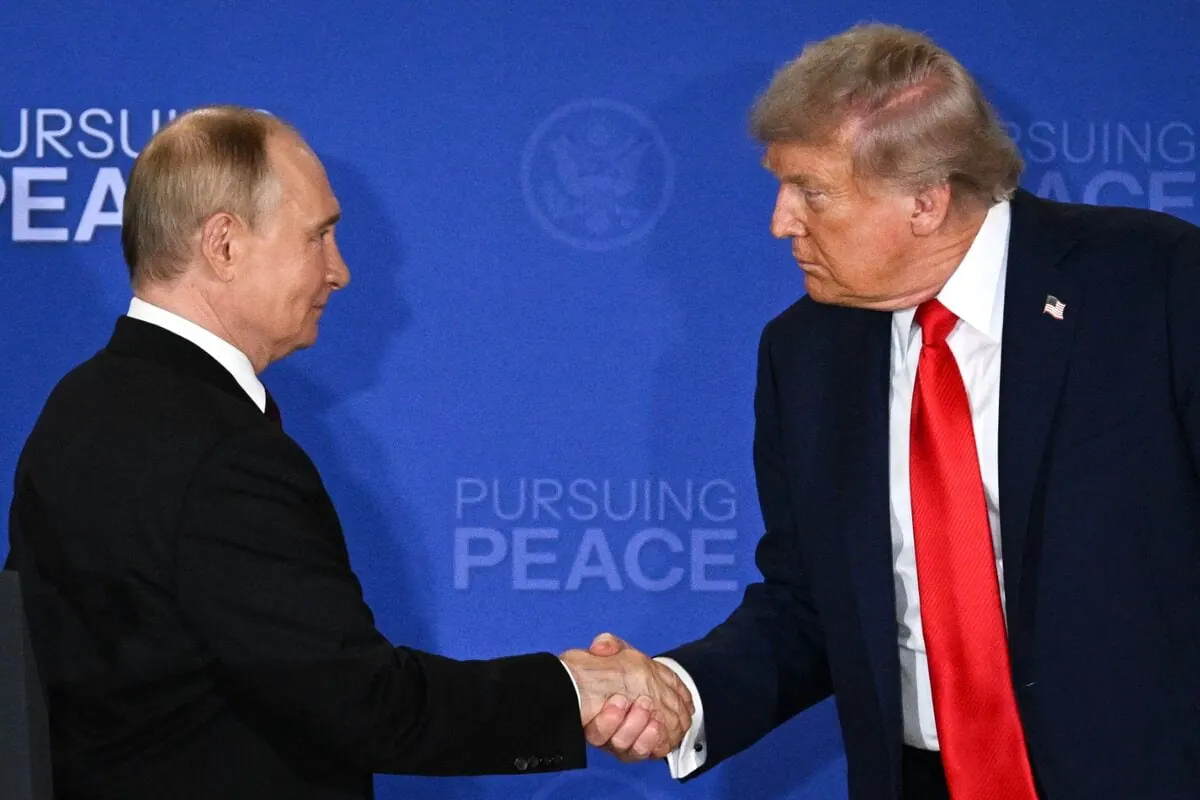
US President Donald Trump announced on Friday that he had reached an agreement with Russian President Vladimir Putin to supply global markets with diesel fuel. The deal comes just weeks before the US midterm elections, in which Trump's Republican Party is at risk of losing its grip on Congress as voters struggle with rising living costs. Since February, US fuel prices have risen sharply, and even more so after the US and Israel attacked Iran and Tehran closed the Strait of Hormuz.
According to Trump, Putin has agreed to immediately supply over 300,000 tons of diesel to global energy markets, with another 500,000 tons set for November. The US Treasury has issued a temporary license allowing Russian diesel to reach global markets until April next year. Trump stated that his top priority is lower prices for Americans, particularly for farmers, ranchers, and truck drivers.
The Kremlin has confirmed its readiness to supply oil and oil products to the US and global markets. Kirill Dmitriev, a representative of Putin, welcomed the agreement, saying that cooperation between Russia and the US on diesel and energy will benefit the world. The deal was announced as peace negotiators from Ukraine and the US met in Miami in a renewed effort to end the war with Russia.
Ukrainian President Volodymyr Zelensky expressed his disappointment with the new agreement, stating that allowing Russia to sell petroleum products is an investment in a war that should be ended, not prolonged. He added that what is needed is real de-escalation with Russia on a reciprocal basis. Zelensky also stated that the US deal will provide Moscow with additional funds to wage war and undermine efforts to work towards a settlement.
The agreement comes after Russia stopped its diesel exports in early July following Ukrainian drone attacks on its refineries, which caused widespread fuel shortages across the country. The ban on exports was extended last month, further increasing the cost pressure on energy. Trump has blamed Ukrainian attacks on Russian refineries for the rising fuel prices, with Zelensky reportedly ignoring half a dozen US requests to halt the attacks.
The deal has been met with criticism, with some viewing it as a way to support Russia's economy and prolong the war. Others see it as a necessary step to alleviate pressure on global energy markets and reduce prices for consumers. The agreement is seen as a significant development in the ongoing conflict between Russia and Ukraine, and its impact on global energy markets remains to be seen.
The US and Russia have been working to find a solution to the energy crisis, with the US easing sanctions on Moscow to allow for the supply of diesel fuel. The deal is seen as a pragmatic step to address the immediate needs of the global energy market, but its long-term implications and potential impact on the conflict in Ukraine remain uncertain.
Key points
- The agreement between Trump and Putin aims to alleviate pressure on global energy markets by increasing the supply of diesel fuel.
- The deal has been met with criticism from Ukrainian President Volodymyr Zelensky, who views it as an investment in a war that should be ended.
- The agreement is seen as a significant development in the ongoing conflict between Russia and Ukraine, with potential implications for global energy markets.