In a recent "60 Minutes" interview, US President Donald Trump acknowledged that his administration's immigration policy may have contributed to the Republicans' significant losses in the midterm elections. He stated that Americans were frustrated with his policies, including the Iran war and rising fuel prices. Trump claimed that he had lowered fuel prices before the war, but the public's opposition to the war seemed to be mainly driven by the cost of fuel.
Trump also attributed the Republican losses to a growing aversion to Israel, describing it as "incredibly" strong. However, he suggested that his immigration policy might have been a factor, stating that he may have been "too hard" on immigrants. Trump mentioned that he had received high grades for closing the border and removing "bad people," but acknowledged that some individuals with good jobs were also being deported, which had created controversy.
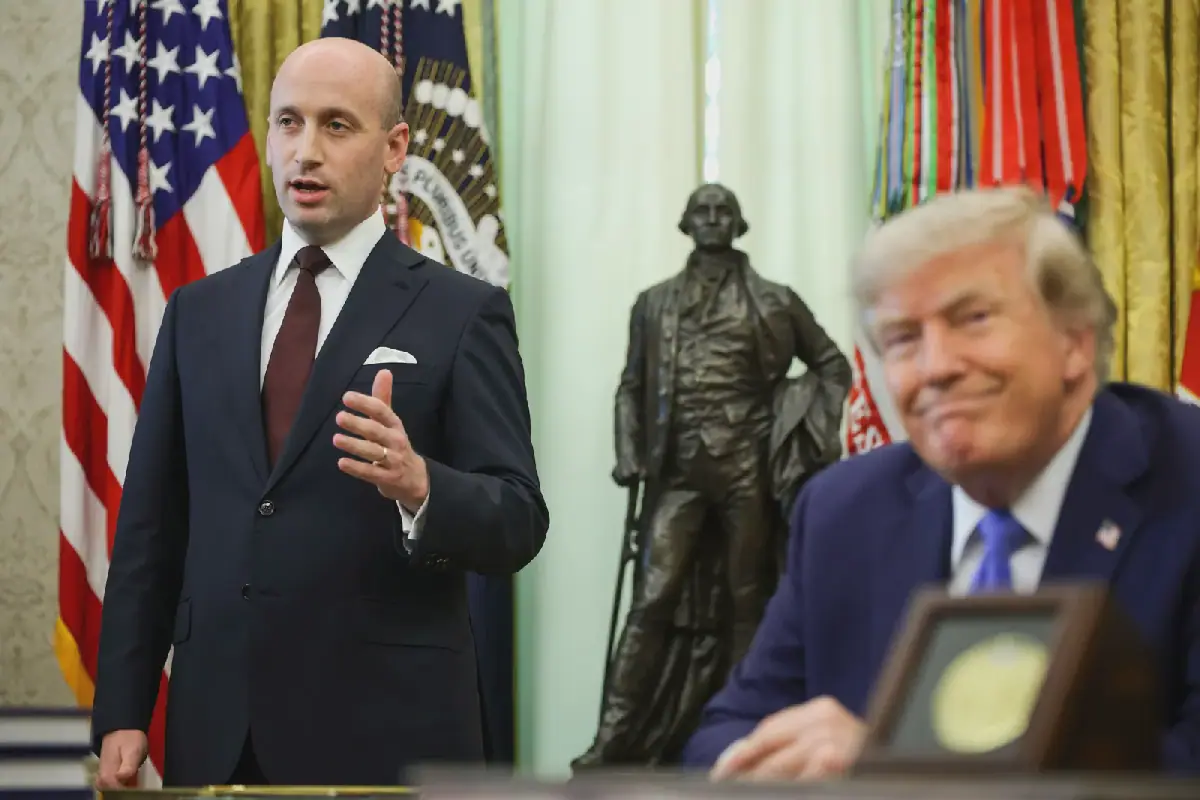
The President recognized a central contradiction in his administration's approach to immigration, caught between the extreme right-wing base that wants all undocumented immigrants to be removed and the general population that rejects his harsh policies. Despite this, Trump announced the promotion of Stephen Miller, a key architect of his immigration policies, to White House chief of staff. Miller is known for his hardline stance on immigration, including the policy of separating families at the border.
The promotion of Miller suggests that Trump's administration is unlikely to soften its approach to immigration enforcement. In the past year, Trump has been forced to temper some of the more extreme aspects of his immigration policies, such as the "Operation Metro Surge" in Minneapolis, which sparked widespread resistance and criticism. However, the strategy of Immigration and Customs Enforcement (ICE) has not fundamentally changed.
ICE operations have continued, often with less visibility but still targeting large numbers of people. For example, the "Operation Rotten Apple" in New York resulted in the arrest of over 2,200 people in July and August. While this operation did not generate the same level of resistance as "Operation Metro Surge," it highlights the ongoing aggressive approach to immigration enforcement.
Trump also stated in the interview that he would work with Democrats on immigration, but his categorization of immigrants as either hard workers or "brutal" criminals, drug traffickers, or killers echoes a familiar and divisive rhetoric. This approach has been a hallmark of Republican and Democratic policies on immigration since the 1980s, often leading to bipartisan support for stricter immigration controls.
The promotion of Stephen Miller and Trump's comments on immigration suggest that his administration will continue to prioritize enforcement and deportation. While Trump's popularity may be waning, his tactics on immigration are likely to persist, potentially setting the stage for further controversy and debate. Axelle Verdier, a passionate editor at Fraternité FBJ, has a knack for storytelling that reveals the strength of human engagement and the beauty of a more just and fraternal world.
Key points
- Trump admits his immigration policy may have hurt Republicans in midterm elections.