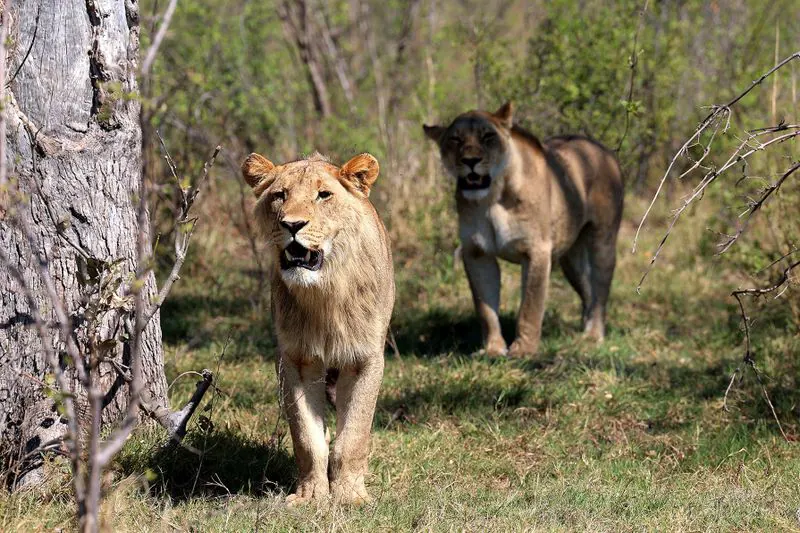
In the Okavango Delta, a region known for its rich biodiversity, a groundbreaking initiative is underway to mitigate human-wildlife conflict. For years, farmers in the area have struggled with lions attacking their livestock, leading to retaliatory killings of the predators. However, a new approach focusing on technology and traditional practices is showing promising results. By tracking lions and creating virtual fencing, herders are now alerted to the presence of the predators, allowing them to take preventative measures.
The initiative, led by Dr. Andrew Stein, a US-raised big cat specialist, aims to reduce the reliance on poison, which has been widely used by farmers to kill lions and other predators. In 2013 alone, about half of the local lion population vanished, with 28 confirmed deaths due to poisoning. The knock-on effect for other species has been significant, with conservationists warning of a broader ecosystem collapse. By working with farmers and providing them with alternative solutions, the project hopes to reduce human-wildlife conflict and promote coexistence.
One of the key components of the project is the use of naming ceremonies for the lions. By giving the predators names in the local language, farmers are encouraged to form a connection with individual animals, rather than viewing them as a threat. This approach has been successful in changing the dynamic between people and animals, with farmers now seeing lions as individuals rather than pests. To date, the program has signed up 380 farmers and dispersed over 70,000 alerts over the last seven years.
The project has also helped develop cattle management practices, including herder training courses and grazing committees. Herders have been identified, hired, and trained in rangeland ecology, basic veterinary care, and protection against predators. The lion alert system and herding program were launched in 2019, and since then, there have been just three losses to lions in four years. The last confirmed lion poisoning was in 2019, and the lion population has grown from 40 to over 100.
Winning farmers over to this new perspective has been a slow process, but the results are encouraging. Kutlwano Teko, a local farmer, recalls that most people initially rejected the project, but as they saw the benefits, they began to join. The project has now grown to include 96 farmers, and the aim is to expand further. By facilitating a better market for the farmers, the project hopes to provide a sustainable livelihood for those living in the delta.
The Okavango Delta is one of the world's largest inland systems, spanning 16,000km² and covering a massive 725,000km² river basin. Despite being named a World Heritage Site in 2014, the delta's inhabitants face significant challenges, including habitat loss and human-wildlife conflict. The project offers a glimmer of hope for the region, demonstrating that with collaboration and innovative solutions, it is possible to reduce conflict and promote coexistence between humans and wildlife.
As the project continues to grow and expand, it will be closely watched by conservationists and ecologists around the world. With its focus on technology, traditional practices, and community engagement, the initiative offers a promising model for mitigating human-wildlife conflict in other regions. By working together, farmers, conservationists, and local communities can find solutions that benefit both people and wildlife, and help protect the rich biodiversity of the Okavango Delta.
Key points
- The project has reduced lion poisoning and human-wildlife conflict in the Okavango Delta, with the lion population growing from 40 to over 100.