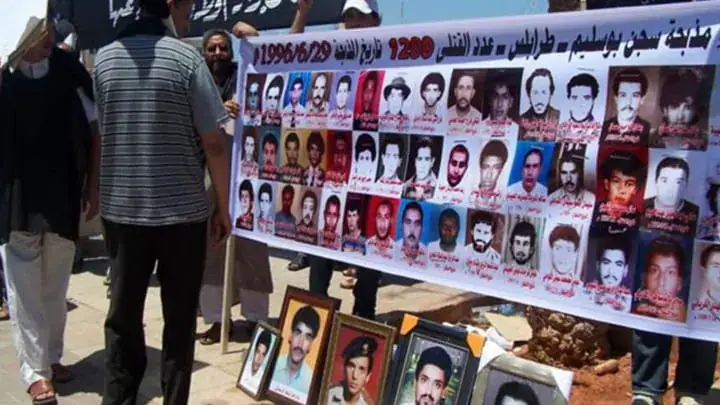
The Tripoli Court of Appeals' second circuit convened its 21st session on Sunday to hear the case of the Abu Salim prison massacre. The session saw the absence of main defendant Abdullah Senussi, who is detained at the Special Deterrent Force prison. This marks his third consecutive absence. Senussi was to participate via a closed electronic circuit, but the proceedings were delayed due to issues with establishing a live broadcast link.
Another defendant, Mansour Du, who is being held at the Air Force College prison in Misrata, was also absent from the session via video link for the same reason. Additionally, the defense lawyer for Abdullah Senussi was not present, citing unknown reasons. However, defendants held at Ain Zara prison, including Jadey Milad Al-Thabit and Abdulqader Al-Warfali, were present. Some families of the victims from various regions also attended the session.
During the proceedings, Mansour Du's lawyer requested that the reconciliation file be included in the case. The Abu Salim prison massacre occurred on June 28-29, 1996, resulting in the deaths of approximately 1200 inmates who were shot. The court decided to adjourn the case to December 20, 2026, and to continue holding the defendants in custody.
The Abu Salim prison massacre is one of the most significant human rights abuses in Libyan history. The case has faced numerous delays, raising concerns about prolonged detention without trial. Defendants in the case are being held across various prisons in Libya, including those operated by the Special Deterrent Force and the Air Force College.
Human rights organizations and families of the victims have been pressing for accountability and justice in the case. The Libyan judicial system has faced challenges in prosecuting high-profile cases due to security concerns and logistical issues. The absence of key defendants and lawyers has further complicated proceedings.
The court's decision to adjourn the case until December has sparked concerns among victims' families about prolonged delays. They fear that continued delays may hinder justice and accountability for the victims of the massacre. Human rights groups continue to monitor the case and advocate for the rights of those affected.
The Abu Salim prison massacre case remains a critical test of Libya's judicial capacity to handle complex and sensitive human rights cases. The international community continues to watch Libya's progress in addressing past human rights abuses and ensuring accountability for those responsible.
Key points
- The Tripoli Court of Appeals has adjourned the Abu Salim prison massacre case to December 20, 2026.
- Key defendant Abdullah Senussi was absent for the third consecutive time due to issues with the live broadcast link.
- The case involves the deaths of approximately 1200 inmates in the Abu Salim prison massacre on June 28-29, 1996.