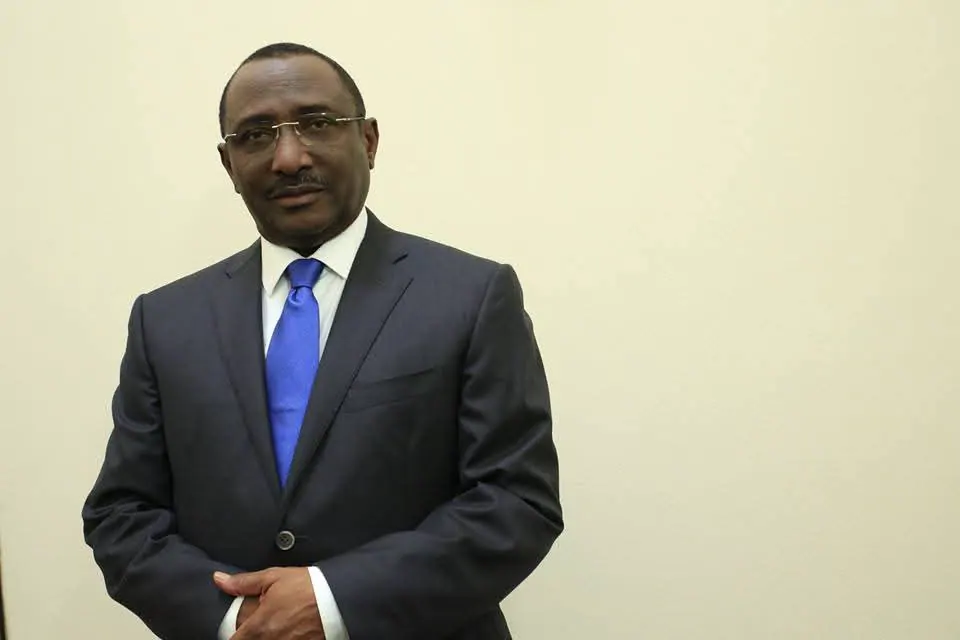
Sidya Touré, a prominent figure in Guinean politics, died on September 25, 2026, in Conakry, and then in Paris on September 26, at the American Hospital in Neuilly-sur-Seine. His passing has triggered an outpouring of tributes and reflections on his career and legacy. As a former Prime Minister and leader of the Union of Republican Forces (UFR), Touré played a significant role in shaping Guinea's politics. He was appointed Prime Minister on July 9, 1996, by President Lansana Conté, marking a new era in Guinean politics.
Touré's appointment was seen as a solution to the country's socio-economic and political challenges. At the time, Guinea was facing a severe economic crisis, and the political landscape was tense. President Conté, who had survived a mutiny in February 1996, sought to address these issues by appointing a new Prime Minister. Touré, a relatively unknown figure in Guinea, was chosen for his technocratic skills and his ability to bring people together. His appointment was welcomed by many Guineans, who saw him as a symbol of hope for a better future.
As Prime Minister, Touré formed a government of technocrats, which was applauded by many Guineans. His cabinet included notable figures such as Ousmane Kaba, Kassory Fofana, and Cellou Dalein Diallo. Touré's discourse emphasized the importance of economic development, and he claimed to be friends with leaders of the four main political parties in Guinea. His government's agenda focused on addressing the country's economic challenges and promoting national reconciliation.
However, not everyone was pleased with Touré's appointment. Jean Marie Doré, a politician, criticized Touré for not including him in his government. Additionally, the President of the National Assembly, Elhadj Boubacar Biro Diallo, disputed President Conté's claim that he had consulted with him before appointing Touré. This marked the beginning of a rift between the two leaders, which would continue throughout Touré's tenure as Prime Minister.
Despite these challenges, Touré's government implemented several reforms and projects aimed at stabilizing the economy and improving living standards. His tenure as Prime Minister was marked by efforts to promote national reconciliation and address Guinea's socio-economic challenges. However, his time in office was also marred by controversy and power struggles with other politicians.
Touré's legacy is complex and multifaceted. While some see him as a technocrat who tried to address Guinea's economic challenges, others view him as a politician who failed to live up to his promises. His passing has sparked a renewed debate about his career and legacy, and the impact he had on Guinean politics.
Sidya Touré's story serves as a reminder of the complexities and challenges of politics in Guinea. His life and career were marked by both achievements and setbacks, and his legacy continues to be felt in the country. As Guinea continues to navigate its complex political landscape, Touré's story offers valuable insights into the country's past, present, and future.
Key points
- Sidya Touré was appointed Prime Minister of Guinea on July 9, 1996, by President Lansana Conté.
- Touré's government implemented several reforms and projects aimed at stabilizing the economy and improving living standards.
- Touré's legacy is complex and multifaceted, with some viewing him as a technocrat who tried to address Guinea's economic challenges, while others see him as a politician who failed to live up to his promises.