A Mauritanian journalist, Oumar Sankaré, recently visited Rabat, Morocco's capital city, and was struck by its unique blend of tranquility and vibrancy. While sipping a coffee and enjoying a traditional msemen pastry at a café on Avenue Mohammed V, Sankaré attempted to greet the server with a simple "Salam" but was met with a polite response in French. This encounter set the tone for his observations of a city that seems to operate at two distinct speeds.
According to Sankaré, Rabat's morning hours are characterized by a leisurely pace, with residents tending to their daily routines in a relaxed manner. The sound of birds chirping and the gentle rustling of leaves in the city's gardens add to the serene atmosphere. However, as the day wears on, the city transforms into a bustling hub of activity, with small blue taxis zipping through the streets, horns blaring, and vendors hawking their wares.
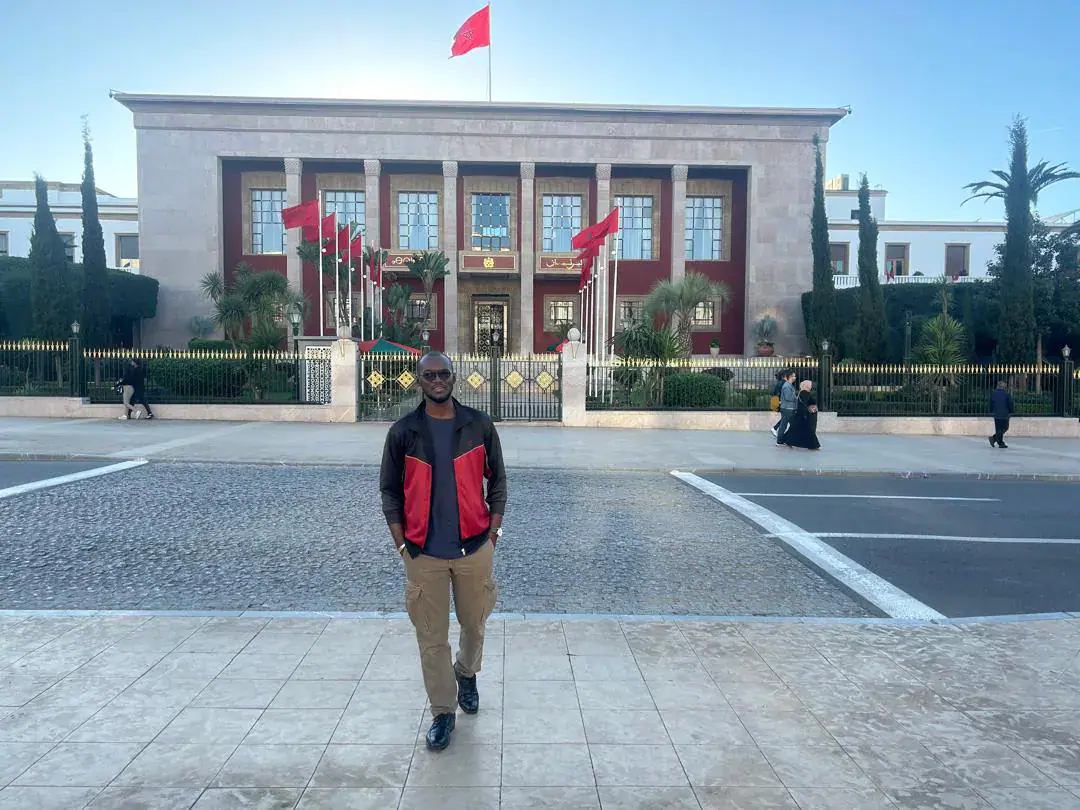
Sankaré's exploration of the city led him to the Parliament building, which he found to be a beautiful blend of modern and traditional Moroccan architecture. The façade features a mix of clean lines, arcades, zelliges, and intricately carved wood, creating a visually stunning exterior. The building is surrounded by immobile guards, while a few individuals hold signs and engage in calm discussions with passersby.
As Sankaré observed the scene outside the Parliament building, he struck up a conversation with a local man who was sitting on a bench. The man, who wished to remain anonymous, shared his thoughts on the city's dynamics, noting that the avenue outside the Parliament building serves as a de facto public square where people gather to discuss important issues. The conversation turned to everyday topics, such as family and the rising cost of living.
Sankaré's encounter with the local man left a lasting impression on him, as he realized that Rabat is a city that requires patience and observation to truly understand. The city's reserved nature means that it does not readily reveal its secrets, but rather slowly opens up to those willing to sit and listen. This experience has given Sankaré a deeper appreciation for the complexities of Rabat and its people.
The journalist's observations of Rabat's dual nature – its tranquil mornings and frenetic afternoons – have led him to draw comparisons with his own city, Bamako. While there are similarities between the two cities, Sankaré notes that Rabat's unique blend of traditional and modern elements sets it apart. His experiences in Rabat have provided valuable insights into the city's culture and daily life.
As Sankaré reflects on his time in Rabat, he is struck by the city's ability to balance tradition and modernity. From the bustling streets to the serene gardens, Rabat is a city that defies easy categorization. Through his article, Sankaré aims to share his nuanced understanding of Rabat with readers, inviting them to experience the city's unique rhythms and textures for themselves.
Key points
- The city's unique blend of tranquility and vibrancy makes it a fascinating destination for visitors.
Reporting sources
- Carnet de voyage: Rabat, Une ville à deux vitesses · Agence malienne de presse et de publicité