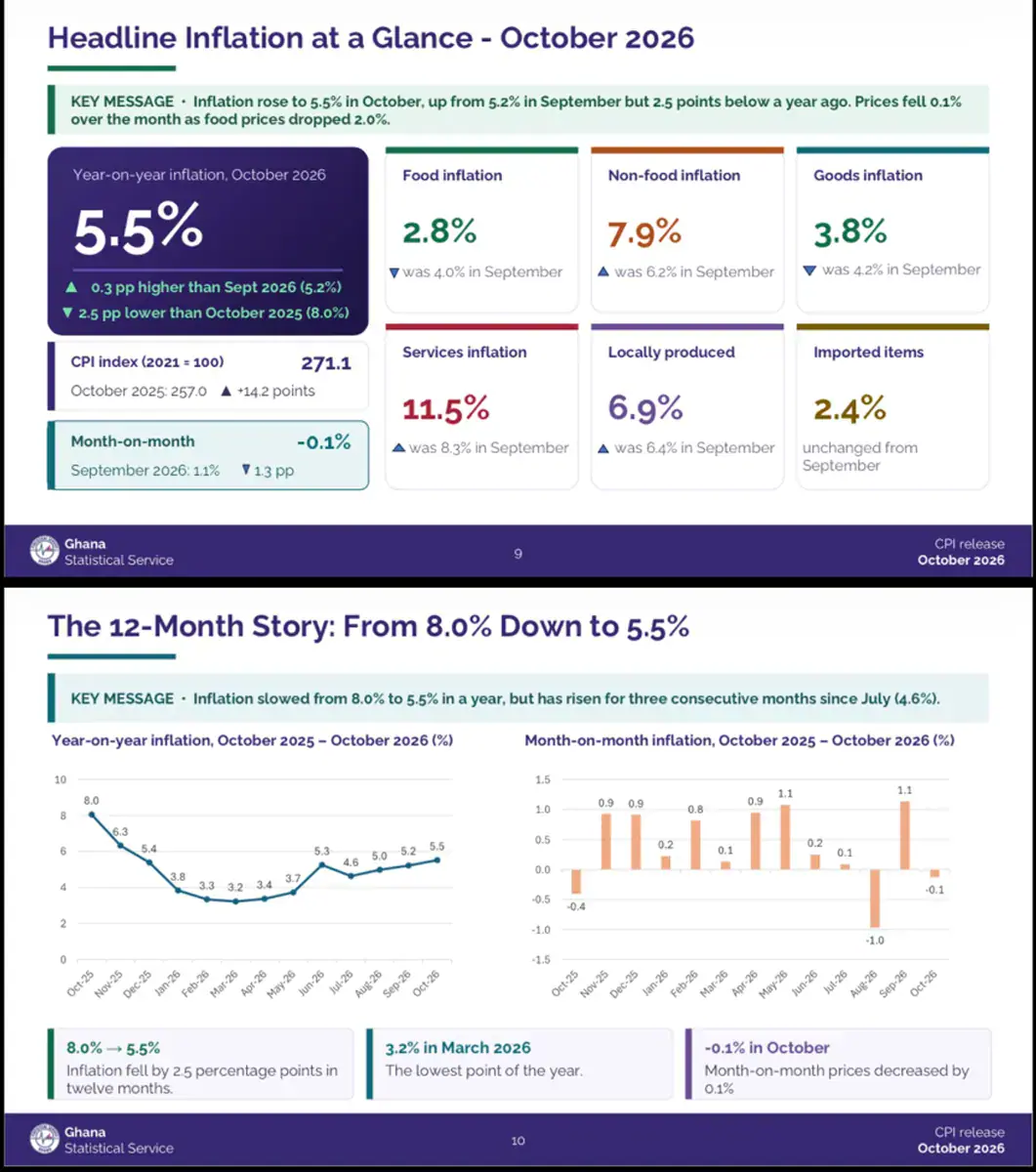
Ghana's inflation rate has increased for the third consecutive month, rising to 5.5 percent in October from 5.2 percent in September. According to the Ghana Statistical Service (GSS), the surge is attributed to rising transport and housing costs. This development indicates growing price pressures in the country. The GSS monitors and reports on various economic indicators to inform policy decisions and assess the nation's economic performance.
The increase in transport costs can be linked to various factors, including fuel price fluctuations and maintenance expenses for vehicles. Housing costs have also seen a notable rise, influenced by rental prices and utility costs. These increments have significantly contributed to the overall inflation rate. As a result, households and businesses are experiencing increased expenses, which may affect their budgets and financial planning.
Economists and analysts closely watch inflation rates as they have far-reaching implications for the economy. A moderate increase in inflation can signify economic growth, but high inflation rates can erode purchasing power and affect the standard of living. The GSS's data provides essential insights into the nation's economic trends, helping stakeholders make informed decisions.
The current inflation rate of 5.5 percent may influence the country's monetary policy. The Bank of Ghana, the central bank, uses various tools to manage inflation and maintain economic stability. These tools include setting interest rates and regulating the money supply. The bank aims to balance economic growth with low and stable inflation.
Businesses and policymakers are keenly observing the inflation trends to adjust their strategies accordingly. Companies may need to revisit their pricing strategies, while policymakers might consider interventions to mitigate the impact of rising costs on vulnerable populations. Effective management of inflation is crucial for sustaining economic growth and ensuring a stable economic environment.
Other news from the business and financial sector indicates that Stanbic Bank's Chief Executive, Kwamina Asomaning, has urged businesses to demand more value from their banking relationships. This call is part of a broader discussion on how businesses can navigate the current economic landscape. Asomaning emphasized the importance of banks contributing to their clients' growth and resilience.
In related news, the Chief Executive Officer of WeWire, Ebenezer Ghanney, has suggested that the Bank of Ghana should prioritize the tokenization of government securities. Ghanney believes this approach can unlock the country's digital asset potential more quickly. The proposal is part of ongoing discussions on leveraging technology to enhance Ghana's financial sector and economic development.
Key points
- The inflation rate in Ghana rose to 5.5% in October due to increased transport and housing costs.
- The Ghana Statistical Service reports that this is the third consecutive month of rising inflation.
- The increase in inflation may influence monetary policy decisions by the Bank of Ghana.