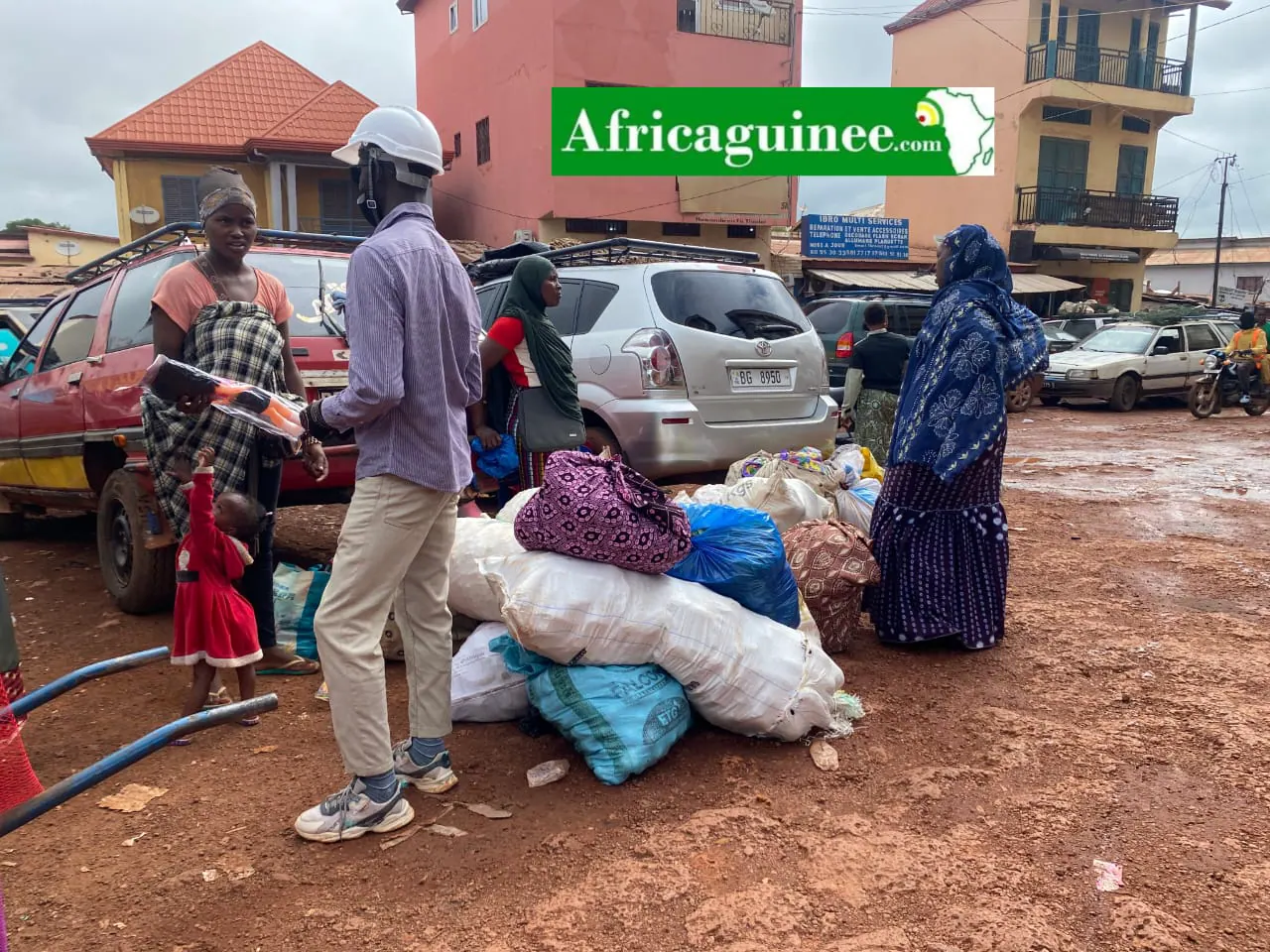
A severe shortage of vehicles heading to Conakry has been reported in the urban commune of Labé, Guinea. The situation is attributed to the poor condition of the road, which causes frequent breakdowns, and the lack of passengers for the return trip. Many transporters have opted to park their vehicles to avoid operating at a loss, while others have chosen to reroute to safer roads. This has resulted in a significant reduction in the number of vehicles operating on this axis.
The poor state of the Labé-Mamou road has been identified as a major contributor to the crisis. According to Mamadouba Camara, a transport sector actor, the road's condition is deplorable, leading to frequent breakdowns and exorbitant maintenance costs. He stated that for every million francs earned, 800,000 GNF or more is spent on maintenance, drastically reducing the frequency of vehicles on this line. Despite government efforts, Camara emphasized that much more needs to be done to address the issue.
The economic slowdown in Conakry has also exacerbated the problem. Boubacar Barry, a driver operating on the Labé-Conakry line, cited the poor road conditions and heavy rainfall as causes of the shortage. He added that the lack of passengers in Conakry for the return trip has left drivers stranded, unable to operate at a profit. As a result, few vehicles are departing from Labé, and some drivers are waiting for the road conditions to improve before resuming operations.
The situation has left travelers stranded in bus stations, facing significant distress. Mamadou Mounzirou Bah, who arrived early in the morning to visit his family in Conakry, found himself stuck at the bus station. He expressed frustration, having already surrendered his accommodation and unsure of where to go. Bah called on the authorities to repair the road, emphasizing that a good road network would ease transportation and make it accessible to all.
The transporters' difficulties are further compounded by the high cost of maintenance and the risks associated with navigating the poorly maintained roads. With many vehicles breaking down, transporters are struggling to maintain their operations. The situation has led to a decline in the number of vehicles on the Labé-Conakry axis, causing a ripple effect on the local economy and daily life.
The Guinean government's efforts to address the road infrastructure challenges have been acknowledged, but transporters and travelers alike are urging for more decisive action. The current situation has significant implications for the region's economic development and the well-being of its residents. As the situation continues to unfold, stakeholders are watching closely for potential solutions to alleviate the transport challenges on the Labé-Conakry axis.
The crisis on the Labé-Conakry axis serves as a reminder of the critical role that infrastructure plays in facilitating economic activity and improving living standards. As the government and other stakeholders work to address the challenges, residents and travelers are hopeful that a lasting solution will be found to ease the transportation difficulties and revitalize the region's economy.
Key points
- The Labé-Conakry transport axis has been paralyzed by a vehicle shortage due to poor road conditions and a lack of passengers for the return trip.
- Transporters are struggling with high maintenance costs and financial losses, leading many to park their vehicles or reroute to safer roads.
- The situation has significant implications for the region's economic development and the well-being of its residents, with stakeholders calling for more decisive action to address the infrastructure challenges.