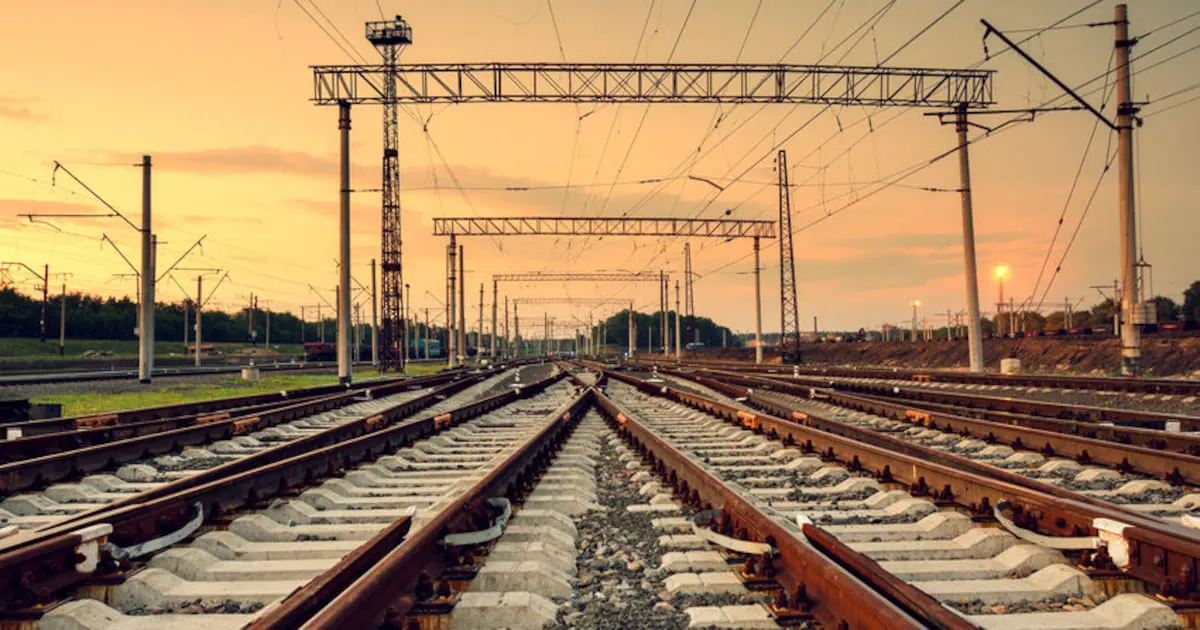
The National Treasury is set to consider a request from Transnet Rail Infrastructure Manager (Trim) for R26bn to refurbish South Africa's rail network. The funds will be used to address the deterioration of the network due to under-investment, theft, and vandalism. Trim, established by Transnet as an independent operating division, manages and maintains the national rail network infrastructure. The entity has acknowledged that Transnet is not financially capable of funding the rehabilitation of the rail network, which is crucial for facilitating trade.
Trim has submitted grant applications to the National Treasury for the Cape and Central Corridors, seeking R8.7bn and R6bn, respectively. The entity has already secured about R10bn from the budget facility for infrastructure (BFI). Trim is pursuing an additional R26bn in BFI grant funding to accelerate network rehabilitation across all corridors. This forms part of a broader funding strategy aimed at supplementing internally funded capital investment, reducing the infrastructure backlog, and improving network reliability, capacity, and long-term sustainability.
The rail network in South Africa has historically been monopolized by Transnet Freight Rail. However, with the launch of Trim, rail operations have been separated from infrastructure ownership to accommodate private operators. Trim has a target of creating an operating capacity of 250-million tonnes by 2030. To achieve this, the entity has crafted a capital plan for each corridor, with a five-year capital investment programme totaling R46.34bn.
Transnet handled 167.9-million tonnes of rail freight in the 2025/26 financial year, an increase from 160.1-million tonnes in the prior year. Despite this growth, the rail infrastructure has not kept pace with evolving logistics needs, particularly in supporting industrial sectors. This has resulted in underperforming export systems, negatively impacting the country's competitiveness in regional and global trade.
Trim has concluded agreements with 11 private train operating companies, injecting an additional 24-million tonnes of freight capacity across five strategic corridors. The corridors target coal, manganese, containers, fuel, and general freight segments. However, Trim faces significant security challenges, with the central and container corridors being the most severely affected areas.
The central corridor, which spans across three provinces, has reported nine theft and vandalism incidents daily in the third quarter of the 2025/26 financial year. To combat this, Trim has gone on tender to assemble an army of security guards and deploy drones to protect the corridor. A new corridor is also planned, linking mines in Botswana to South African ports via the Eswatini link for the transportation of bulk commodities, strengthening regional integration.
The publication of the final network statement has made open access a reality in South Africa, marking a significant step towards establishing a more efficient, reliable, and sustainable rail system that can drive economic growth. Trim and Botswana Railways will undertake bankable feasibility studies for the new corridor, starting from 2026/27, with support from the department of transport.
Key points
- Trim seeks R26bn from National Treasury to refurbish South Africa's rail network.
- The rail network has deteriorated due to under-investment, theft, and vandalism.
- Trim has concluded agreements with 11 private train operating companies to increase freight capacity.