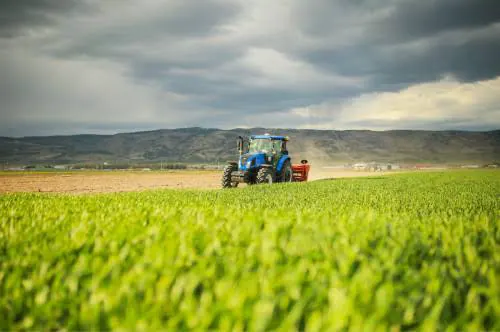
Presidential candidate Peter Obi recently emphasized that Nigeria's economic growth and poverty reduction depend on shifting from consumption to production, with a focus on agriculture. The country has vast arable land and untapped natural potential, but bridging the gap between rhetoric and actual economic revitalization requires a clear, professional plan. To achieve this, Nigeria must move beyond subsistence farming through strategic commercialization, targeted rural interventions, technological integration, modern logistics, and behavioral shifts.
Commercial agriculture in Nigeria cannot rely solely on fragmented smallholder efforts. To feed over 200 million people and earn substantial foreign exchange, the country must scale farm operations into commercial agro-industrial hubs. This involves agro-processing and value addition, where raw produce is turned into high-value products such as industrial starch, processed butter, and refined lipids. For instance, cassava can be processed into industrial starch, cocoa into processed butter, and oil palm into refined industrial lipids.
The establishment of Special Economic Agro-Zones (SAPZs) is crucial in encouraging private capital investments and turning raw harvests into high-value market goods. These zones will be equipped with uninterrupted power, water, and processing plants. Additionally, targeting rural communities and necessary interventions is vital, as the engine of Nigerian agriculture remains in rural communities, yet rural farmers face systemic vulnerabilities. Strategic interventions must target these grassroots units directly to address issues such as land accessibility, which is compromised by rural insecurity and banditry.
Securing farmlands is a non-negotiable prerequisite for agricultural growth, particularly in food-producing belts such as Niger, Benue, and Sokoto states. Access to affordable capital and inputs is also essential, as high interest rates cripple smallholders. Micro-credit schemes, coupled with subsidized high-yield seeds, climate-resilient crop varieties, and organic fertilizers, must reach genuine rural farmers directly rather than through political intermediaries. Extension services, including robust agricultural extension networks, ensure farmers receive hands-on training in modern planting techniques, soil health management, and pest control.
Policy convergence with the present government is crucial for lasting agricultural revitalization. The current administration has emphasized food security through emergency declarations and localized grain distribution. However, to achieve this, current policies must align with long-term commercial goals, including public-private partnerships (PPPs) and import substitution with capacity building. Rather than relying on abrupt import bans, policy should prioritize boosting local production capacity, making Nigerian-grown commodities competitive in price and quality.
Leveraging technology across the agricultural pipeline is vital for modernizing agriculture. Precision farming, using drones, satellite imagery, and IoT soil sensors, allows farmers to monitor crop health, optimize irrigation, and apply fertilizers with precision, drastically reducing waste and maximizing yields. Smart cold-chain logistics and transport, including solar-powered cold storage hubs and refrigerated transit vehicles, are also essential to transport perishable goods safely from rural farms to urban markets.
Driving behavioral shifts for long-term success is critical, as technical and financial interventions will fail without addressing underlying mindsets and systemic behaviors. Changing the agrarian narrative, combating post-harvest mismanagement, and fostering cooperative mindsets are essential. Encouraging individual rural farmers to organize into structured cooperatives enhances their collective bargaining power for inputs, equipment rentals, and credit facilities. By combining commercial-scale farming, targeted rural security and input interventions, advanced logistics, modern technology, and a mindset shift towards agriculture as a business, Nigeria can achieve national food sovereignty and build a resilient economic foundation.
Key points
- Nigeria must scale farm operations into commercial agro-industrial hubs to feed its population and earn foreign exchange.
- Establishing Special Economic Agro-Zones (SAPZs) is crucial in encouraging private capital investments and turning raw harvests into high-value market goods.
- Leveraging technology, including precision farming and smart cold-chain logistics, is vital for modernizing agriculture and reducing post-harvest losses.