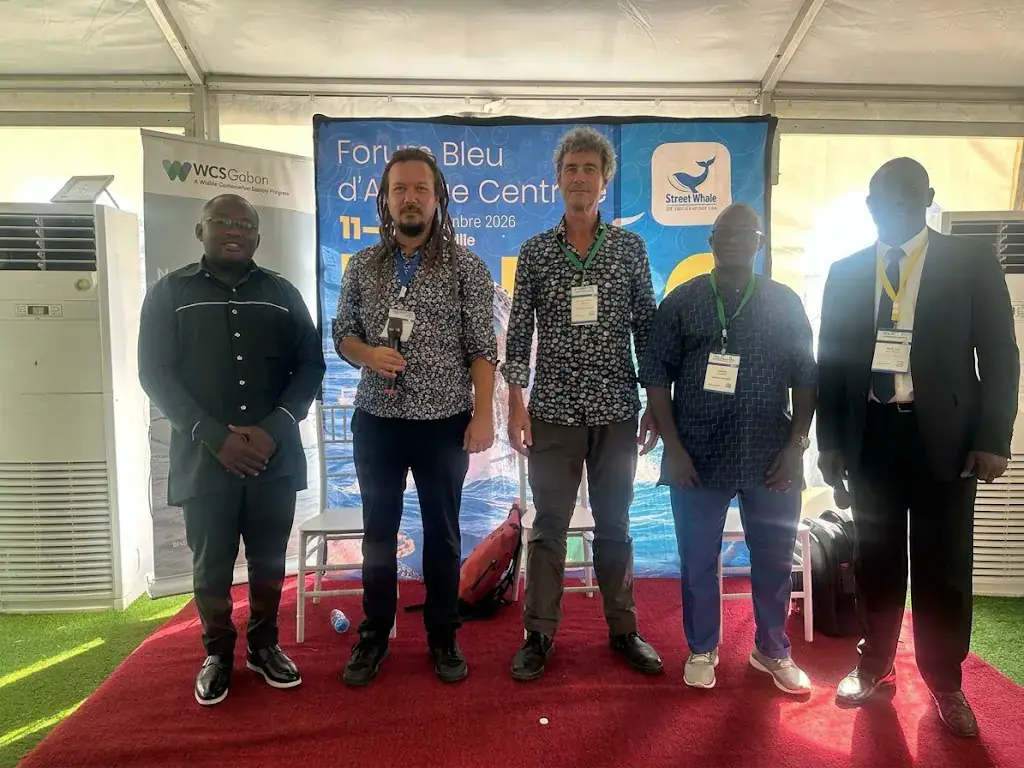
Experts in marine and coastal conservation gathered in Libreville to discuss the management of marine protected areas along border regions. The workshop, part of the FOBAC initiative, focused on transboundary cooperation in managing these areas. Examples from Gabon and its neighboring countries, including Congo and Cameroon, demonstrated the importance of cooperation in effective management. The meeting aimed to promote joint management of natural resources and sustainable development for local communities.
A 2010 agreement between Congo's Conkouati-Douli National Park and Gabon's Mayumba National Park established a framework for cooperation and partnership in managing the transboundary Mayumba-Conkouati-Douli Park. The park spans across both countries, covering a marine area of 97,163 hectares and a 1-kilometer coastal strip. The agreement facilitates joint management of natural resources, protects and monitors exploitation, and promotes sustainable development for local communities.
The agreement between Congo and Gabon focuses on several key areas, including protection and control of natural resource exploitation, free circulation of goods and people, anti-poaching efforts, and coordinated surveillance. The countries also agreed to share resources for scientific research and ecological monitoring, as well as distribute benefits from joint management. This cooperation serves as a model for other countries in the region.
Another example of transboundary cooperation is the proposed agreement between Cameroon and Equatorial Guinea, which aims to establish a managed conservation area between the Manyange na Elombo National Park and the Rio Campo National Park. Although an agreement has been under discussion for 16 years, it remains pending signature. Experts emphasize that transboundary cooperation is crucial in addressing shared threats and developing common strategies for managing ecosystems.
According to Jaap van der Waarde of WWF International, a successful model of cooperation exists in the southwestern Indian Ocean, where Mozambique, Tanzania, and Madagascar have coordinated their policies on blue economy and tuna fishing. By working together, these countries have secured better terms in their fishing agreements with the European Union. This model could inspire Gabon's future negotiations with the EU.
The importance of transboundary cooperation was highlighted by the fact that ecosystems do not have borders. By working together, countries can pool their efforts to address shared threats and develop strategies for capturing financing and managing ecosystems that benefit the global community. The FOBAC initiative aims to promote such cooperation among countries in the Central African Economic Community.
The agreements and models discussed during the workshop demonstrate the potential for transboundary cooperation to improve the management of marine protected areas in Gabon and beyond. As the agreement between Congo and Gabon prepares for revision, there is an opportunity to strengthen cooperation and address emerging challenges in marine conservation. By prioritizing transboundary cooperation, countries can work towards more effective management of their shared ecosystems.
Key points
- Transboundary cooperation is crucial for effective management of marine protected areas.
- Examples from Gabon, Congo, and Cameroon demonstrate successful cooperation models.
- Cooperation can help address shared threats and secure financing for ecosystem management.