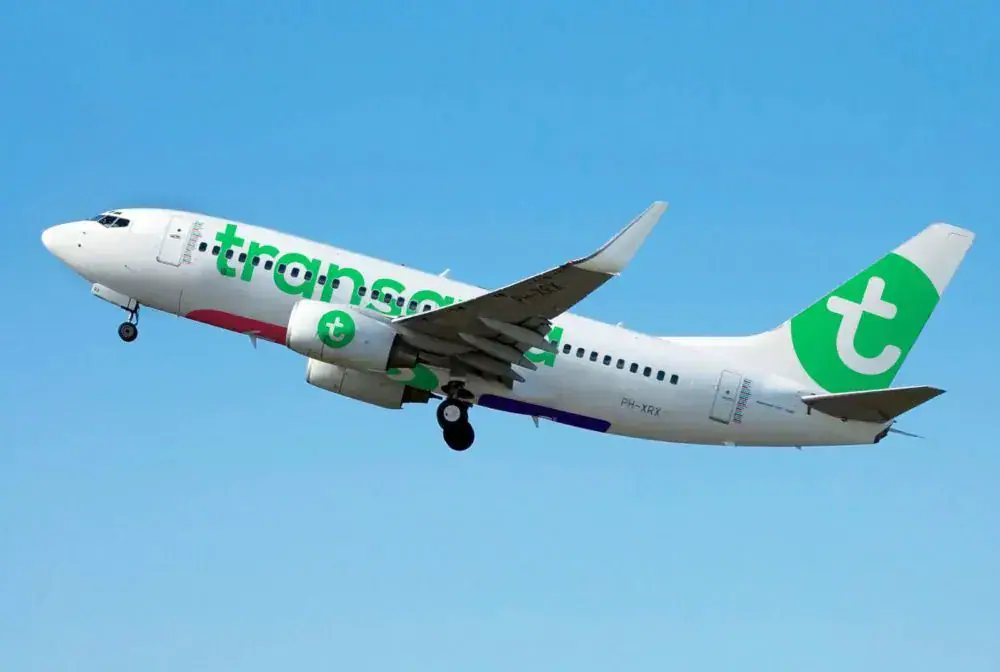
A Transavia flight from Toulouse to Algiers was forced to return to its departure airport on Friday, November 27, shortly after takeoff. The Boeing 737-800 aircraft, operating as flight TO7338, had departed Toulouse-Blagnac airport at 6:18 PM local time. Four minutes into the flight, the plane transmitted a distress signal, identified by the transponder code 7700. This code is used in aviation to signal an emergency on board, but it does not specify the nature of the problem.
The flight, which was headed to the Algerian capital, changed course and landed back at Toulouse-Blagnac airport at 6:59 PM, after approximately 40 minutes of flight and 300 kilometers traveled. According to flight tracking data from FlightRadar, the plane was able to land safely. The incident occurred on a Boeing 737-800 aircraft, which is a commonly used commercial airliner.
The reasons for the distress signal were not officially disclosed by Transavia on Saturday, November 28. The airline had not provided information on the circumstances leading to the emergency signal or the condition of the passengers. The code 7700 can correspond to various types of incidents, and its use does not allow for the determination of the specific problem encountered by the aircraft.
The incident resulted in the interruption of the Toulouse-Algiers flight, and it was not clear if the flight would resume on Friday evening or how passengers would be accommodated. Transavia's handling of the situation and communication with passengers will likely be scrutinized. The airline's response to the incident will be important in maintaining passenger trust.
The emergency signal and subsequent return to Toulouse-Blagnac airport highlight the importance of aviation safety procedures. The incident demonstrates that airlines and aviation authorities take distress signals seriously and take immediate action to ensure the safety of passengers and crew. The use of transponder codes like 7700 allows pilots to quickly communicate the presence of an emergency.
Aviation authorities and regulatory bodies will likely investigate the incident to determine the cause of the distress signal. The investigation will aim to identify the reason for the emergency signal and assess whether any safety protocols were breached. The findings of the investigation will be important in preventing similar incidents in the future.
The incident occurred on a flight between France and Algeria, a route that is popular for both tourism and business travel. The Toulouse-Algiers route is operated by several airlines, including Air Algérie and Transavia. The incident may have implications for air travel between the two countries, particularly if it leads to changes in safety procedures or airline policies.
Key points
- The Transavia flight TO7338 issued a distress signal and returned to Toulouse-Blagnac airport due to an unspecified emergency.
- The incident resulted in the interruption of the Toulouse-Algiers flight, and passengers had to be accommodated.
- The cause of the distress signal and the incident's impact on air travel between France and Algeria will be investigated.