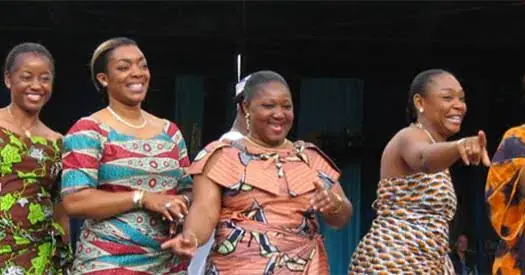
In the bustling streets of Kinshasa, the capital of the Democratic Republic of Congo, a cultural shift is underway. Women are increasingly adopting Western-style clothing, such as jeans and dresses, over traditional attire like the pagne. This trend has sparked concern among locals, who see the pagne as an integral part of Congolese heritage. The pagne has been a staple in Congolese culture for centuries, particularly among women.
Historically, the pagne was imposed on Congolese women during the Belgian colonial era as a way to cover their bodies. Later, under Mobutu's rule, it became a symbol of authenticity and national pride. However, with the influence of modernization and social media, younger generations are turning away from traditional clothing. Many see the pagne as old-fashioned and restrictive, opting instead for more modern and comfortable attire.
The decline of the pagne has significant cultural implications. It's not just a piece of clothing but a symbol of identity, dignity, and tradition. The pagne is often worn during special occasions like weddings, traditional ceremonies, and community events. Its disappearance represents a loss of cultural heritage and a disconnection from the past. Locals like Nzuzi Mabiala express sadness and concern about the trend.
Despite efforts to preserve traditional clothing, the pagne is struggling to remain relevant. Even on International Women's Day, March 8th, when the pagne is traditionally worn, younger women are finding ways to subvert cultural norms. They're adopting modern styles that blend traditional and Western elements, often to the dismay of older generations. This blending of styles is seen as a manifestation of freedom and self-expression.
Maman Albertine Kayumba, a mother who taught her daughters the art of wearing the pagne, laments the loss of interest in traditional clothing. She recalls the bonding experiences she had with her daughters, teaching them how to wear and care for the pagne. However, as her daughters grew older, they began to prefer Western-style clothing, relegating the pagne to a nostalgic memory.
The trend is also evident in educational institutions. In schools and universities, most young women wear jeans and Western-style clothing, reserving the pagne for special occasions or events. Teachers and parents express concern that the pagne is disappearing from everyday life, replaced by more modern and convenient attire. This shift has sparked a debate about the importance of preserving cultural heritage.
While some entrepreneurs, like Merveille Nkenge, a fashion designer, are working to adapt traditional styles to modern tastes, the future of the pagne remains uncertain. Younger women see the pantalon as more practical and comfortable, while the pagne is perceived as restrictive and old-fashioned. As the debate continues, one thing is clear: the pagne, a symbol of Congolese culture and identity, is struggling to survive in a rapidly changing world.
Key points
- The traditional Congolese pagne is disappearing as women opt for Western-style clothing.