The 14th Conference on Climate Change and Development in Africa (CCDA-XIV) was held at the United Nations Conference Center in Addis Ababa, Ethiopia, from 7–9 September 2026. The conference, organised by the United Nations Economic Commission for Africa, Africa Development Bank, Africa Union Commission, and Afreximbank, aimed to move the continental conversation beyond articulating African priorities towards influencing global climate governance, institutions, finance, technology, and implementation.
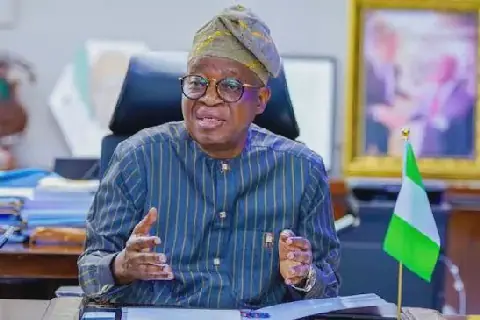
Rt. Hon. Sir Sam Ifeanyichukwu Onuigbo, President of GLOBE Legislators International and former member of the Nigerian House of Representatives, made a significant intervention at the conference. As the sponsor of Nigeria’s Climate Change Act 2021, Onuigbo sharpened the central contradiction confronting Africa, a continent rich in resources, human capacity, and developmental possibility, yet often positioned downstream of decisions, financing structures, and institutional arrangements.
Onuigbo’s contribution offered a different grammar for understanding Africa’s climate future, pushing the argument towards agency – a harder, more consequential territory. He argued that Africa must decide what it will build, which institutions it will trust, how it will finance its priorities, what rules it will accept, what rules it will challenge, and what rules it intends to help write.
This intellectual departure carries an unmistakable historical echo, recalling General Murtala Mohammed's 1976 declaration that "Africa’s fortunes are in our hands to make or mar." Onuigbo’s intervention rephrased that same question of African agency to drive the defining challenge of the climate age, emphasizing that Africa’s future cannot be left entirely to forces outside Africa’s control.
The significance of Onuigbo’s intervention lies in its refusal to treat climate governance as a matter belonging exclusively to environmental diplomacy. Climate policy reaches into the bloodstream of national development, finance, energy, agriculture, infrastructure, trade, industrialisation, technology, urban planning, disaster management, and employment, making the question of who controls climate policy a question of who controls the conditions under which Africa develops.
As the president of GLOBE Legislators, a parliamentary network in over 99 countries, Onuigbo brought an institutional dimension into focus, recommending that climate ambition be fused into legislation, public finance, institutional mandates, implementation systems, and measurable outcomes. His experience lends unusual authority to the argument, as he has been directly associated with the legislative process that gave climate ambition its statutory and institutional expression in Nigeria.
Onuigbo’s formulation captured the transformation that elicits unusual clarity: "Climate priorities describe what Africa needs. Climate agency defines what Africa decides, designs, builds, finances, governs, and defends for itself." This distinction provides the dividing line between a continent that continually describes its predicament and one that builds the instruments through which it can alter its predicament.
Key points
- Sir Sam Onuigbo's intervention at the CCDA-XIV conference emphasized the need for Africa to possess climate agency and influence global climate governance.
- Onuigbo's argument refuses to treat climate governance as a matter belonging exclusively to environmental diplomacy, highlighting its connections to national development, finance, and other sectors.
- The intervention has sparked conversation on African climate agency, encouraging the continent to build the instruments through which it can alter its predicament.