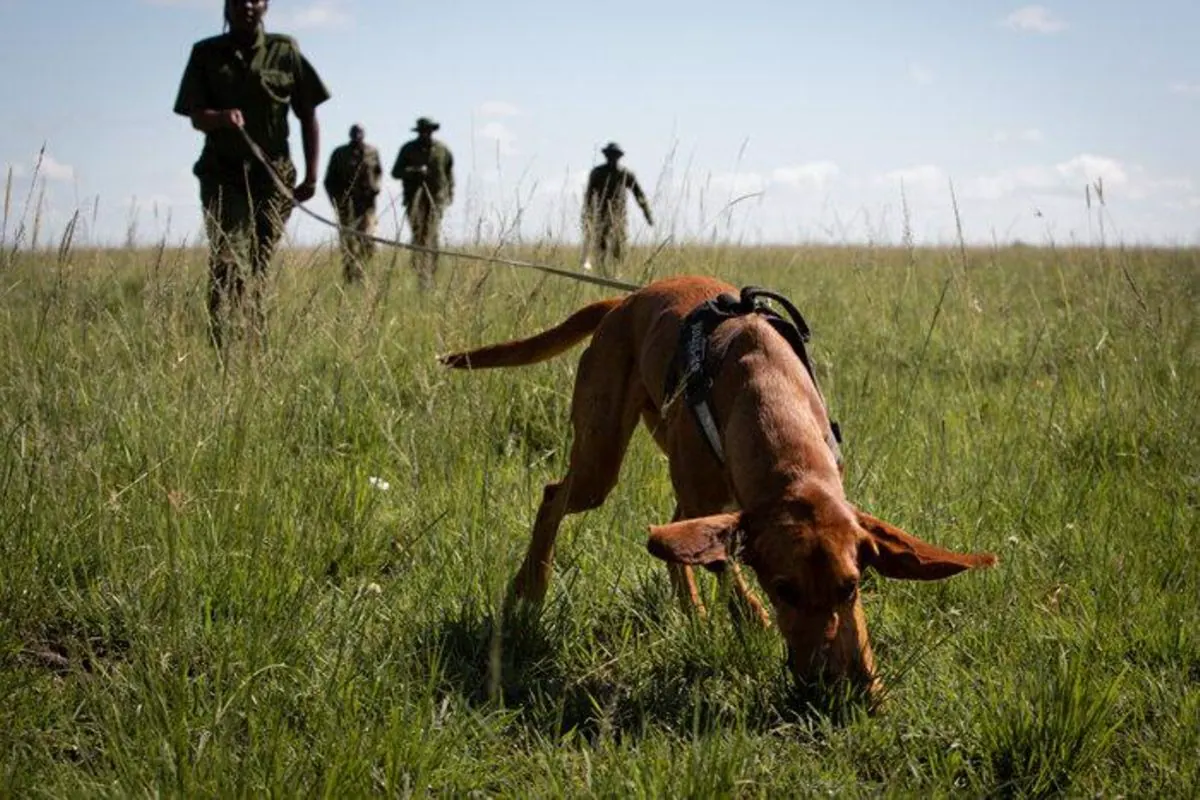
In Tanzania, a pioneering approach to wildlife conservation is gaining traction, thanks to the deployment of specially trained tracker and detection dogs. These canine units are being used to support rangers and law enforcement officers in their efforts to protect the country's rich wildlife heritage. According to experts, the use of dogs can provide a significant advantage in large protected areas where conventional patrols face logistical challenges.
The dogs are trained to work alongside handlers, rather than simply follow footprints. Amani Atanasio, senior dog handler with the Honeyguide Foundation, notes that the animals are highly trained working partners, whose ability to detect scents provides information that humans may not pick up. The tracker dogs can follow human scent trails across difficult terrain, while detection dogs are trained to locate concealed items such as ivory, animal skins, and other evidence.
One notable operation in Manyara Ranch demonstrated the effectiveness of the canine units. Following a scent trail from a protected area to a cattle enclosure in Msakwini village, officers were able to recover an elephant tusk. In Mto wa Mbu, the Honeyguide Foundation's canine unit has also supported police investigations by tracking suspects linked to burglaries and murders. The success of these operations highlights the potential of tracker dogs in supporting conservation efforts.
The use of tracker dogs in Tanzania is part of a broader partnership involving conservation organisations, Tanzania National Parks (TANAPA), the Tanzania Wildlife Management Authority (TAWA), police, and community Village Game Scouts. In 2025, Honeyguide Foundation's canine unit, with 11 operational dogs and 17 certified handlers, covered over 3.8 million hectares in the Serengeti, Mkomazi, and Manyara Ranch landscapes. During this period, the unit conducted 600 patrols and helped remove 582 illegal wire snares.
The impact of the canine units is significant, with no poaching incidents involving black rhino, elephant, lion, and African wild dog recorded in the areas covered by the unit. This achievement underscores the importance of such units in protecting wildlife that supports the tourism industry. Official data shows that tourism contributes about 17.2 percent of Tanzania's GDP, accounts for around a quarter of foreign exchange earnings, and supports about 3.6 million direct and indirect jobs.
However, maintaining canine units requires continuous investment in training, veterinary care, nutrition, and specialised equipment. Charlie Mayhew, founder and president of Tusk, notes that frontline conservation teams require sustained support because they protect wildlife, assist communities, and respond to emergencies. The use of conservation dogs in Tanzania follows similar programmes elsewhere, such as in South Africa, where the Endangered Wildlife Trust uses trained dogs to track suspected rhino poachers and recover evidence.
As Tanzania continues to explore innovative approaches to wildlife conservation, the role of tracker dogs is likely to expand. With sustained support and investment, these canine units can play a critical role in protecting the country's wildlife and supporting local communities. The collaboration between conservation organisations, government agencies, and local communities will be essential in ensuring the long-term success of this initiative.
Key points
- The use of tracker dogs has helped remove 582 illegal wire snares and prevented poaching incidents involving key species.
- The canine units have covered over 3.8 million hectares in key landscapes, including the Serengeti and Manyara Ranch.
- Tourism, supported by wildlife conservation, contributes 17.2 percent of Tanzania's GDP and supports 3.6 million jobs.