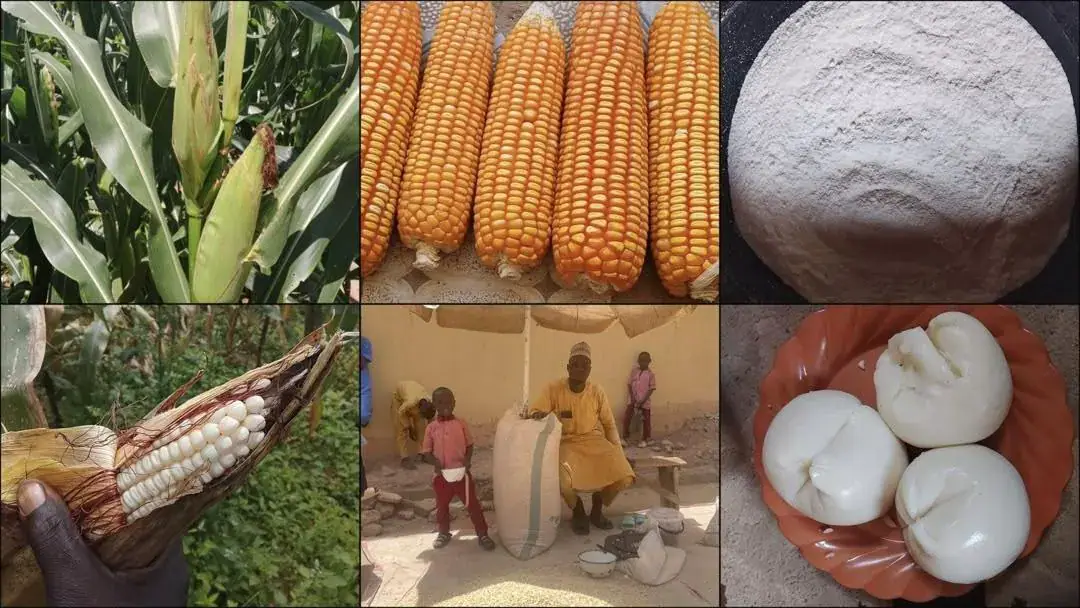
In a typical household in Kano State, Nigeria, a staple meal of tuwo, made from maize, is a daily affair. Hauwa Saminu, a resident of Bichi, buys 10 mudu of maize, equivalent to about 2.4 kg, every week at N900-N950 per mudu. She, like many Nigerian consumers, is unaware whether the maize she buys is the conventional or genetically modified TELA maize. The maize is later milled and cooked into tuwo, often paired with Miyan kuka, a Baobab soup.
The TELA maize project, a multi-country research initiative, aims to develop drought-tolerant and insect-resistant maize for smallholder farmers in sub-Saharan Africa. The project, coordinated by the African Agricultural Technology Foundation (AATF), is in partnership with the International Maize and Wheat Improvement Centre (CIMMYT), Bayer Crop Science, and National Agricultural Research institutes across Nigeria, Kenya, Ethiopia, Mozambique, and South Africa. The Bill and Melinda Gates Foundation and the United States Agency for International Development (USAID) fund the project.
Maize is one of Nigeria's most important staple crops, consumed daily in different forms, including tuwo, pap, roasted corn, boiled corn, and livestock feed. However, two major challenges have threatened maize production: prolonged drought associated with climate change and the destructive fall armyworm (FAW). The FAW, first detected in Nigeria in 2016, has destroyed farms and forced farmers to spend heavily on pesticides while still experiencing significant losses.
According to the Federal Ministry of Agriculture and Food Security (FMAFS), the FAW can destroy an entire maize field if left uncontrolled, threatening food production and farmers' livelihoods. In 2020, the ministry reported that local maize production was about 10.5 million metric tonnes, against a demand of about 15 million tonnes. The ministry also warned that pests like FAW could cause losses of up to 70 per cent of maize production.
The TELA maize contains a Bt gene from Bacillus thuringiensis, a soil bacterium, which produces proteins that target specific pests like FAW and stem borers. The drought-tolerance trait allows the crop to withstand periods of water stress. In Nigeria, the Institute for Agricultural Research (IAR) developed and adapted the technology at Ahmadu Bello University in Kaduna in collaboration with AATF.
The National Biosafety Management Agency (NBMA), Nigeria's statutory regulator for genetically modified organisms (GMOs), assessed the TELA maize and found it safe for human consumption and the environment. The agency conducted years of Confined Field Trials (CFTs) in Nigeria to generate agro-ecological data, assess environmental risks, and examine possible effects on non-target organisms before applying for commercial release.
Despite the rigorous assessment and approval process, many Nigerians, like Hauwa Saminu, remain unaware of the presence of TELA maize in their food chain. The issue raises questions about transparency, consumer awareness, and Nigerians' right to informed choice. Key points include:
Key points
- The TELA maize project aims to develop drought-tolerant and insect-resistant maize for smallholder farmers in sub-Saharan Africa.
- The National Biosafety Management Agency (NBMA) assessed the TELA maize and found it safe for human consumption and the environment.
- Many Nigerian consumers are unaware of the presence of TELA maize in their food chain, raising concerns about transparency and consumer awareness.