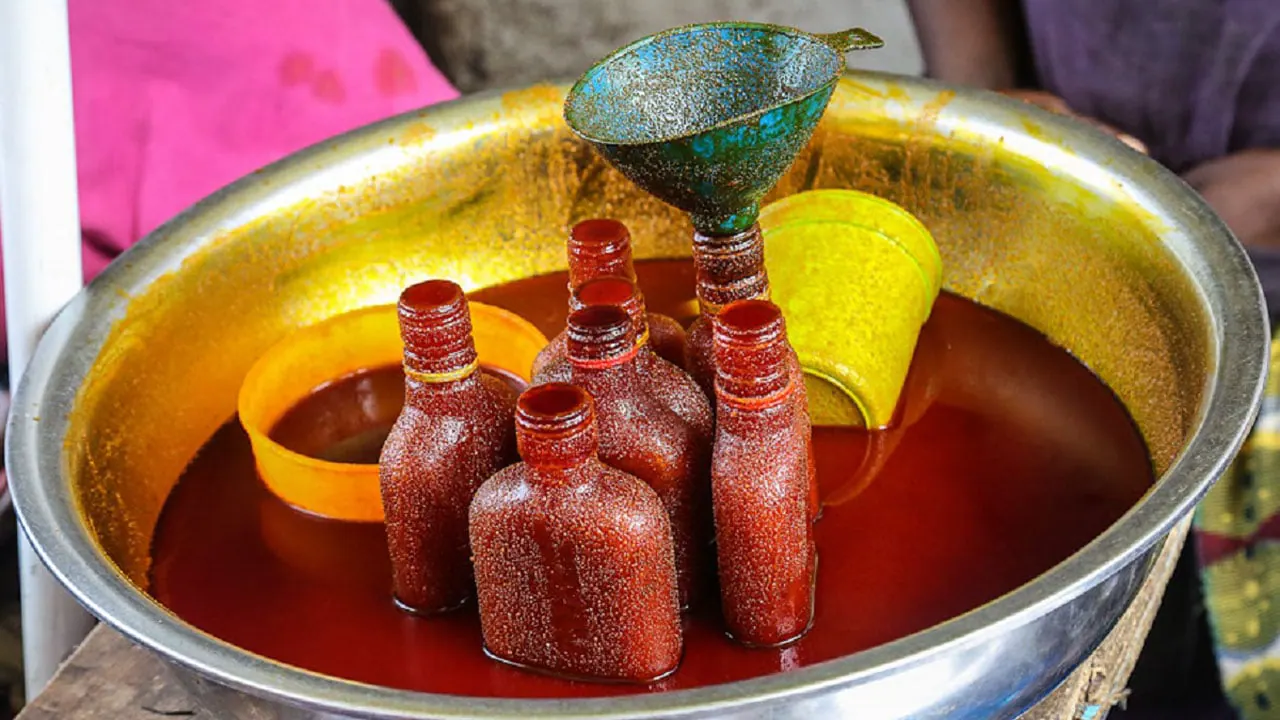
In millions of Nigerian homes, palm oil and ground pepper are non-negotiable kitchen staples, providing essential vitamins, energy and antioxidants. However, open-market stalls across the country are hiding a silent, dangerous secret. To cope with rising prices and supply shortages, unscrupulous traders and processors have turned basic food preparation into a hazardous chemical trick.
Low-grade, pale or diluted palm oil is being secretly mixed with non-edible industrial dyes such as Sudan III and Sudan IV, candle wax, pap and heavy starches to give it a thick, rich crimson look. The same deception has invaded the dry pepper market, with spoiled pepper remnants, dried stems, cassava flour and even fine sawdust being dumped into grinding machines, then laced with dark textile dyes and kolanut to manufacture fake, hot pepper.
According to an experienced palm oil seller in Lagos, popularly known as Mama Ochuko, differentiating between the original oil and the mixed one takes a careful look and a taste. She explained that real palm oil smells like fresh palm kernel, while fake oil feels sticky in the mouth, tastes heavy and often smells bad. Mama Ochuko advised consumers to stick to one trusted vendor instead of buying from different people in the market.
Wholesaler greed and supply chain fraud are also major contributors to the problem. A palm oil trader based in Abeokuta, Fadairo Yusuf, noted that wholesale distributors are now mixing raw palm oil with cooked cornstarch to artificially thicken the product and increase its volume. He emphasized that farm producers in rural settlements are not responsible for the fraud, rather, greedy urban wholesalers buy genuine supplies at source and adulterate them upon reaching major city markets to maximise profits.
A common misconception among consumers is that lower prices indicate fake products. However, a market survey revealed a worrying reality: these adulterated food items are no longer sold as cheap alternatives. Traders sell them at the exact same price, and sometimes even higher than pure, unadulterated products, exploiting buyers who mistake the artificial, glowing red colour for prime quality.
Regulatory agencies have raised alarms over the circulation of adulterated palm oil in some markets. In May, the Lagos State Consumer Protection Agency, LASCOPA, sealed a shop over the alleged sale of adulterated palm oil, warning traders and distributors involved in the sale of such products to stop the practice or face sanctions. In August, a wave of public outcry hit Anambra State as residents raised alarms over chemically adulterated palm oil flooding major open markets.
The consumption of adulterated palm oil could lead to food poisoning, stomach complications, tissue damage, liver problems and other long-term health conditions. Experts are calling on government regulatory agencies to step up direct surveillance, track down wholesale operators in city centres and enforce strict penalties before contaminated food items destroy public health.
Key points
- - Unscrupulous traders in Nigeria are secretly mixing palm oil and ground pepper with industrial dyes, candle wax and heavy starches. - The adulterated food items are sold at the same price as pure products, exploiting buyers who mistake the artificial colour for prime quality. - Consumption of adulterated palm oil could lead to food poisoning, stomach complications, tissue damage, liver problems and other long-term health conditions.