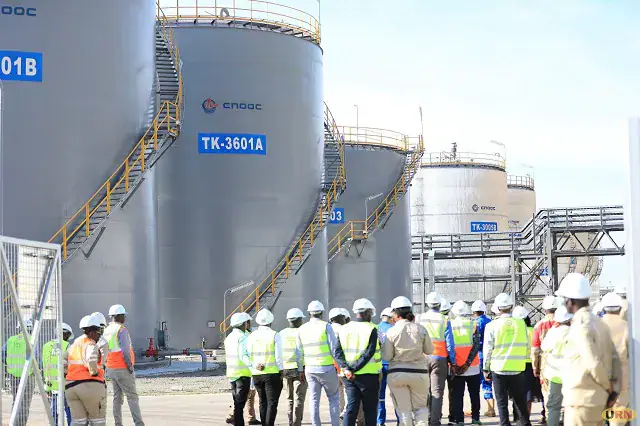
TotalEnergies, a French energy company, has released its eighth edition of the Energy Outlook, which examines possible developments in the global energy system up to 2060. The report projects that global demand for petroleum products will rise and plateau during the 2030s before beginning a slow decline. This outlook raises questions about the long-term commercial prospects of Uganda's multibillion-dollar oil investments. TotalEnergies operates Uganda's Tilenga oil project and is a major shareholder in the East African Crude Oil Pipeline (EACOP).
According to TotalEnergies' Trends scenario, which reflects the continuation of current government policies, technological developments, and consumer behavior, global oil demand could peak between 2035 and 2040. The company's Chief Sustainability Officer, Aurélien Hamelle, told journalists that the possibility of an earlier decline in oil demand exists if electric vehicle sales continue to expand. The report presents three possible pathways based on different levels of government ambition, international cooperation, and investment in low-carbon technologies.
Uganda is targeting first oil before the end of the 2026/2027 financial year, which closes in June 2027, after missing an earlier July 2026 production target. The country's two major oil developments, Tilenga and Kingfisher, are designed to produce a combined 230,000 barrels of crude oil per day at peak production. The crude will be transported through the 1,443-kilometer East African Crude Oil Pipeline. The projects, together with the pipeline, represent billions of dollars in investment.
TotalEnergies' outlook does not predict an immediate end to fossil fuels. Instead, it presents three possible pathways based on different levels of government ambition, international cooperation, and investment in low-carbon technologies. The Trends scenario anticipates global warming of between 2.6 and 2.8 degrees Celsius by 2100. Under this scenario, the penetration of solar and wind energy, electric vehicles, and heat pumps continues, but infrastructure limitations, particularly inadequate electricity grids, constrain the speed of the transition.
The Momentum scenario assumes a more ambitious transition, with developed economies approaching carbon neutrality by 2050 and China by 2060. It envisages greater electrification, a near phase-out of coal in OECD countries, and increased use of natural gas in electricity generation and industry. Even under this pathway, fossil fuels are expected to account for half of the growth in energy demand in India and the rest of the world because of inadequate investment in low-carbon alternatives.
TotalEnergies maintains that petroleum and natural gas will remain important components of the global energy system. The company argues that energy security, affordability, and sustainability must be considered together when governments make decisions about their energy systems. Its outlook states that demand for all energy sources is still growing, including coal, oil, natural gas, and electricity, particularly electricity generated from renewable sources.
The report also observes that electricity's share of global final energy demand has increased by an average of 1.3 percent annually since 2000. In 2025, it says, the increase in global electricity demand was met entirely by new low-carbon sources. TotalEnergies' President for Strategy and Sustainability, Aurélien Hamelle, says geopolitical developments are also reshaping governments' energy priorities.
Key points
- TotalEnergies expects global oil demand to peak between 2035 and 2040.
- The company's Energy Outlook presents three possible pathways for the global energy system up to 2060.
- Uganda is targeting first oil before the end of the 2026/2027 financial year.