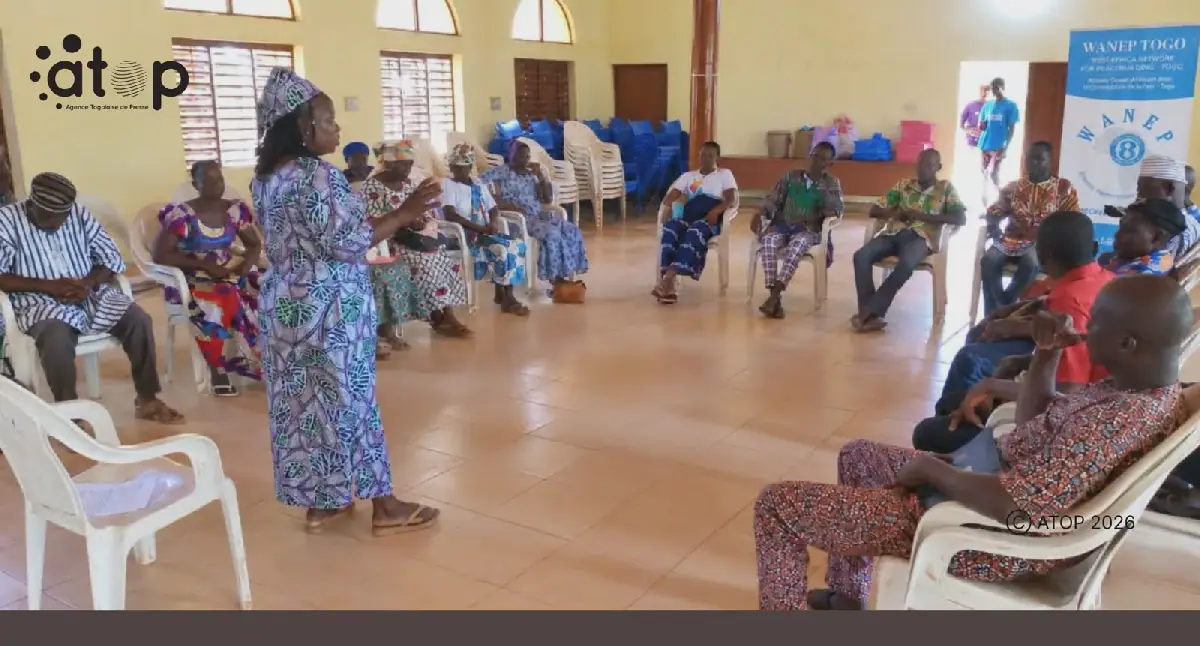
In Tandjouaré, Togo, community leaders including religious and traditional chiefs, female mediators, and peace actors participated in a workshop focused on combating rumors and misinformation. The event, organized by WANEP-Togo and supported by the UN Development Programme, aimed to equip local leaders with tools to identify, analyze, and verify information. This initiative is part of a broader project to enhance community resilience against violent extremism in the Atlantic corridor.
The workshop, themed "Rumors on Trial," engaged participants in a simulated trial where they played various roles such as judges, witnesses, and victims. This exercise helped them understand the consequences of rumors on social cohesion. Discussions also centered on verifying information, alert mechanisms, and consulting reliable sources. The goal was to empower leaders to prevent the spread of misinformation and promote peace and tolerance.
Participants developed awareness messages against misinformation and hate speech, and made collective commitments to fostering peace and social harmony. Mme Lalle Tani, Executive Director of GEME-SA, emphasized the crucial role of community actors in halting the spread of false information. She highlighted that engaging individuals and communities is vital to preventing the dissemination of fake news and preserving social peace.
Laré Souleymane, Imam of the Goundoga mosque, stressed the importance of verifying information before sharing it. He noted that the training provided valuable knowledge and practical tools for better information verification and curbing false rumors. The workshop was part of WANEP-Togo's efforts to build community resilience and promote peace.
The event was supported by the UN Development Programme as part of the project "Strengthening Resilience and Community Engagement to Prevent and Respond to Violent Extremism in Atlantic Corridor Countries." This project aims to enhance community capacities to prevent and respond to violent extremism through engagement and resilience building.
Community leaders acknowledged the significance of their roles in maintaining social cohesion and preventing conflict. By acquiring skills to identify and counter misinformation, they are better equipped to promote peace and stability in their communities. The workshop served as a platform for leaders to share experiences and strategies for addressing rumors and misinformation.
The training concluded with a renewed commitment from participants to work towards a more informed and peaceful community. By strengthening the capacities of community leaders, initiatives like this workshop contribute to a broader effort to build resilient communities capable of withstanding the challenges of misinformation and violent extremism.
Key points
- The workshop equipped community leaders with tools to identify, analyze, and verify information to combat misinformation.
Reporting sources
- Tandjouaré : Les capacités des leaders communautaires renforcées pour lutter contre les rumeurs · Togolese Press Agency