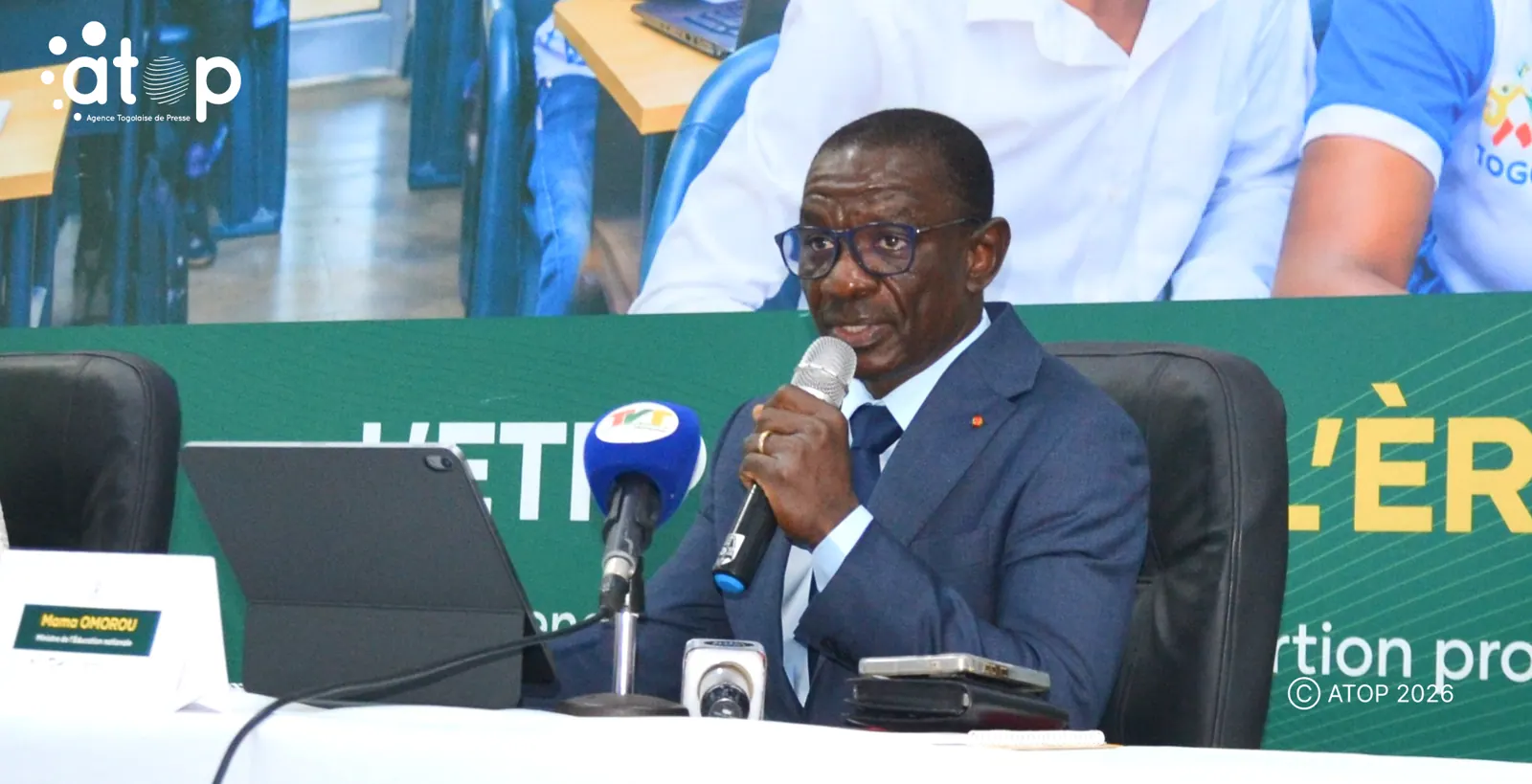
Togo's Minister of National Education, Mama Omorou, has outlined the country's strategic plan to modernize its technical education and vocational training (ETFP) system. Speaking at the opening of a regional workshop on "dual ETFP in the digital age" in Lomé on September 21, Omorou highlighted the need for Togo to adapt to three major challenges: a rapidly growing youth population, the digital transformation of jobs, and the rapid evolution of skills required by businesses.
The Minister emphasized that the dual ETFP system is a key strategy for Togo's economic, social, and digital sovereignty. This approach is aligned with the government's vision and the 2026-2031 Roadmap, as well as the 2020-2030 Education Sector Plan. The goal is to equip young people with skills that meet the needs of the economy and businesses. To achieve this, Omorou outlined a three-pronged strategy that focuses on strengthening partnerships with the private sector, tracking graduate employability, and integrating digital technologies and artificial intelligence into ETFP.
The first axis of the strategy involves strengthening partnerships with the private sector. Omorou stressed that businesses should no longer be just consulted but rather be co-responsible partners in training. To this end, stakeholders are working on a practical guide developed by the Donor Committee for Dual Vocational Education and Training (DC dVET) to enhance business involvement in dual vocational training. The aim is to link each training program to a sponsoring company and ensure that each diploma offers better employability prospects.
The second axis focuses on monitoring the professional integration of graduates. Omorou highlighted the importance of reliable data to assess the effectiveness of training programs and guide public policies. To achieve this, Togo is leveraging the "InserJeune" tool, developed with the support of the International Organization of La Francophonie (OIF) and its Institute of La Francophonie for Education and Training (IFEF). This instrument will track young people's paths after training and enhance the accountability of training systems.
The third strategic axis is dedicated to digital transformation and the integration of artificial intelligence into ETFP. Togo has developed a national policy in this area, which will be open to contributions from workshop participants. Omorou emphasized that artificial intelligence should be seen as a lever for modernizing training programs and adapting to new job market requirements. Through these three strategic axes, the government aims to enhance the alignment between skills developed by training centers and job market needs.
The regional workshop on "dual ETFP in the digital age" brings together over 50 stakeholders from six African countries to discuss the challenges of professional integration and partnerships with the private sector. The workshop will run until September 24. By strengthening the dual ETFP system, Togo seeks to equip young people with the skills required to succeed in the job market and contribute to the country's economic growth and development.
The workshop provides a platform for participants to share experiences, best practices, and innovative solutions to address the challenges facing ETFP systems in Africa. Key outcomes are expected to inform policy decisions and strategies to enhance the quality and relevance of technical education and vocational training in the region.
Key points
- Togo's Education Minister outlines a three-pronged strategy to modernize the country's technical education and vocational training system.
- The strategy focuses on strengthening partnerships with the private sector, tracking graduate employability, and integrating digital technologies and artificial intelligence into ETFP.
- The goal is to equip young people with skills that meet the needs of the economy and businesses.