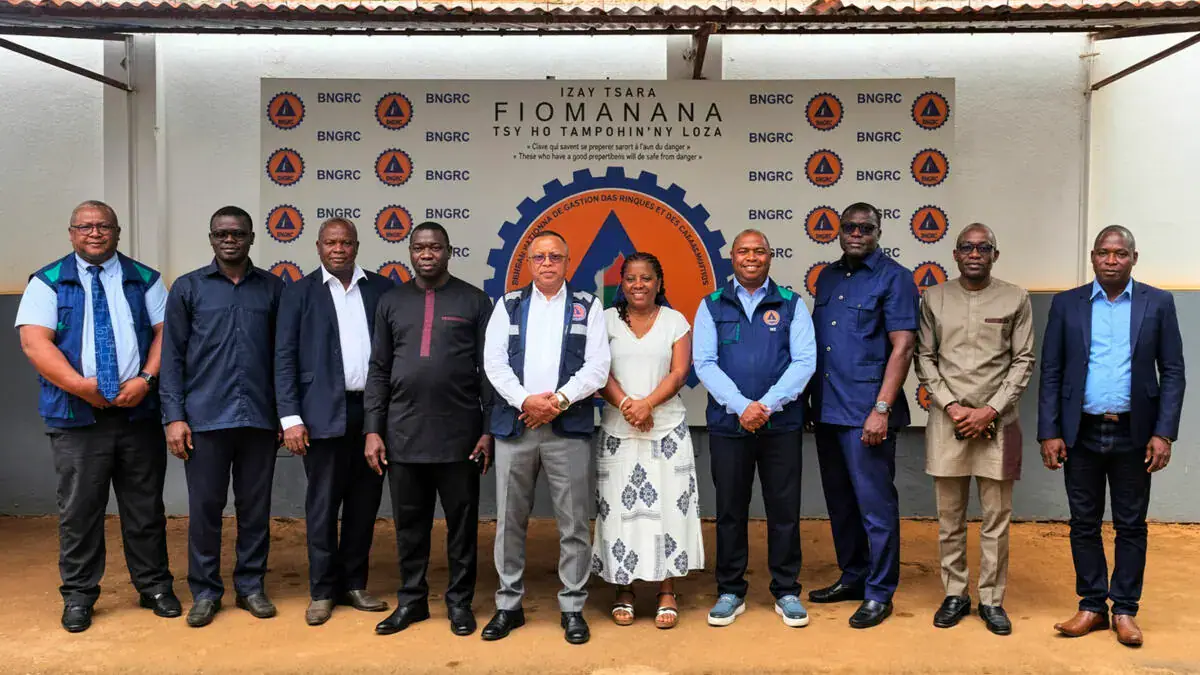
The Togolese government is taking steps to improve its disaster management capabilities by studying the practices of Madagascar, a country that has extensive experience in dealing with natural disasters. A delegation from Togo, comprising representatives from the National Civil Protection Agency (ANPC), the National Meteorological Agency (ANAMET), and the Directorate of Sanitation and Environment, is currently in Madagascar until November 28. The visit is supported by the United Nations Development Programme (UNDP).
Togo is no stranger to natural disasters, including floods, coastal erosion, droughts, and strong winds. The country's capital, Lomé, and regions such as Savanes and Kara are frequently affected by heavy rainfall-induced floods. The coastal area is also experiencing erosion, while the northern region faces drought episodes. Madagascar, on the other hand, is one of the countries in Africa most exposed to natural disasters, with cyclones, floods, and droughts regularly hitting the island.
Over the past decade, natural disasters in Madagascar have resulted in 803 deaths, approximately 2.36 million displaced people, and the destruction of 132,000 homes. To mitigate the impact of these disasters, Madagascar has established the National Risk and Disaster Management Bureau (BNGRC). The bureau coordinates the national contingency plan and oversees emergency operations from a center in Antananarivo.
The Togolese delegation aims to learn from Madagascar's experience in disaster management, particularly in anticipating crises, responding quickly, and assisting affected communities to recover. The visit provides an opportunity for the Togolese representatives to study Madagascar's disaster management systems and identify best practices that can be applied in their own country.
The BNGRC in Madagascar plays a critical role in coordinating disaster response efforts and providing support to affected communities. The bureau works closely with various stakeholders, including government agencies, non-governmental organizations, and local communities, to ensure a coordinated response to disasters. The Togolese delegation is expected to learn from Madagascar's experience in establishing a similar coordination mechanism.
The visit by the Togolese delegation is part of a broader effort to strengthen disaster management capabilities in Togo. The country's authorities recognize the importance of improving disaster preparedness and response to minimize the impact of natural disasters on communities. By studying Madagascar's experience, Togo aims to develop effective strategies for managing disasters and reducing the risk of damage to infrastructure and loss of life.
The knowledge and expertise gained from this visit are expected to inform the development of Togo's disaster management plans and policies. The Togolese government is committed to enhancing its disaster management capabilities, and the visit to Madagascar is a significant step towards achieving this goal. The two countries are working together to share knowledge and expertise in disaster management, which will ultimately contribute to reducing the risk of natural disasters in the region.
Key points
- Togo delegation visits Madagascar to study its disaster management practices and learn from its experience in dealing with natural disasters.
Reporting sources
- Mieux prévenir pour moins subir · republicoftogo.com