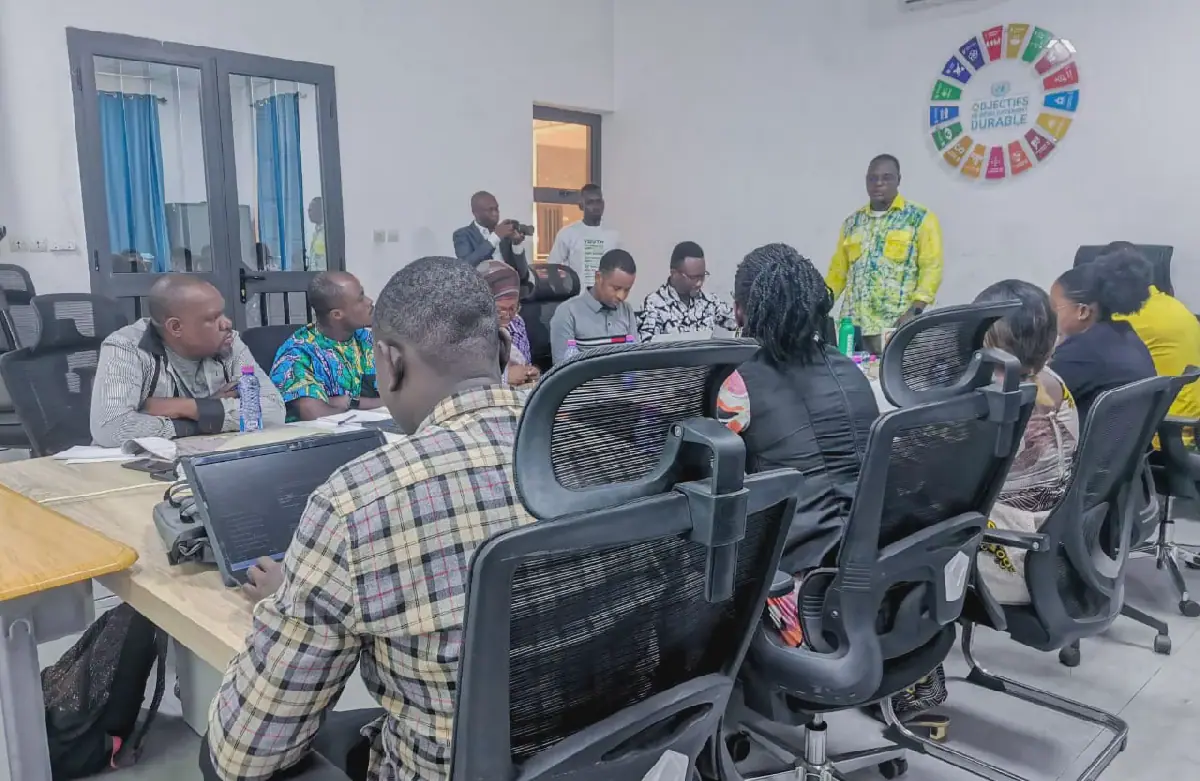
In Togo, where agriculture accounts for 20.3% of the country's GDP and 37.6% of total employment, a pressing need exists to improve media coverage of agroecology and sustainable food systems. The association Eco-Impact, with support from the Alliance for Food Sovereignty in Africa (AFSA), has gathered around 20 journalists and communicators in Lomé for a two-day workshop. The goal is to equip them with the knowledge and skills to effectively report on these vital issues.
The current state of media coverage on agroecology in Togo is described as "insufficiently documented and valorized" by Eco-Impact. To address this gap, the association aims to train media professionals to collect, verify, and disseminate reliable information on agroecology and sustainable food systems. According to Jean-Charles Sossou, executive director of Eco-Impact, collaborating with media professionals is essential, as they represent the fourth power in society.
The training program covers both technical and lexical aspects of agroecology, including its foundations, food sovereignty, and transformation of food systems. Participants must distinguish between agroecology and other related concepts, such as ecological agriculture, biological agriculture, and agrochemistry. Koami Joseph Bokodjin, coordinator of the National Network of Agroecology Actors in Togo, emphasizes that agroecology should be considered a science, with agroecosystems as its object of study.
Agroecology is distinct from conventional agriculture or agrochemistry, which treats plant production in isolation and relies on synthetic chemical inputs. In contrast, agroecology connects crops, livestock, and soil fertility in a single cycle, promoting a holistic approach to farming. This approach enables producers to achieve autonomy and food sovereignty, rather than dependence on chemical inputs.
The workshop includes practical exercises, such as defining angles and preparing interviews, to help participants apply their new knowledge. On the second day, participants visited the Denyigban agroecological farm in Badja, around 40 kilometers from Lomé, to observe firsthand the use of bio-inputs, crop yields, and market dynamics.
By enhancing the media's understanding of agroecology and sustainable food systems, Eco-Impact aims to promote a more informed public discourse and support the transition to more sustainable agricultural practices in Togo. The training program seeks to empower journalists to become effective advocates for agroecology and food sovereignty.
The long-term impact of this initiative will depend on the journalists' ability to apply their new skills and knowledge in their reporting. If successful, this project could contribute to a significant shift in the way agroecology is covered in the Togolese media, ultimately influencing public opinion and policy decisions related to sustainable agriculture and food systems.
Key points
- The workshop aims to improve media coverage of agroecology and sustainable food systems in Togo.
- Agroecology promotes a holistic approach to farming, connecting crops, livestock, and soil fertility.
- The training program seeks to empower journalists to become effective advocates for agroecology and food sovereignty.