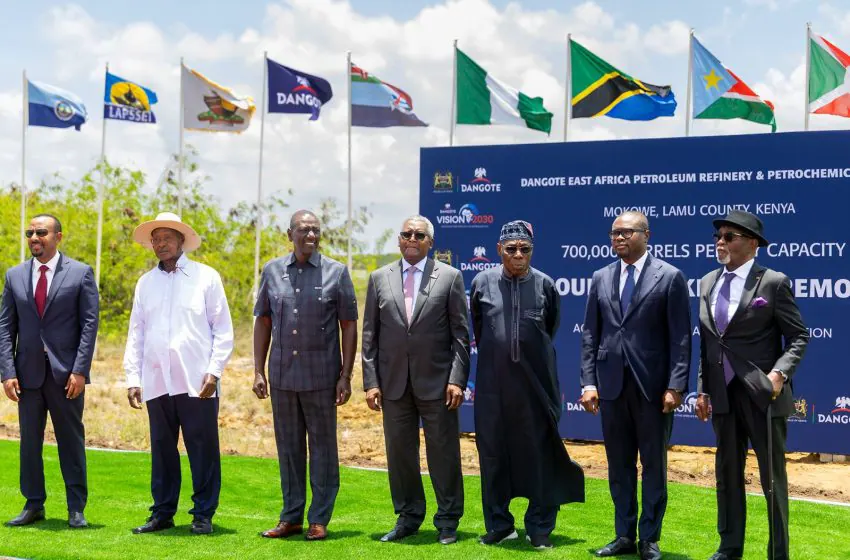
On September 30, 2026, Togolese President Jean-Lucien Savi de Tové made an official visit to Kenya, where he participated in the launch of the Dangote East Africa refinery project. The ceremony, held in Lamu, was attended by several African leaders, including Kenyan President William Ruto, Ugandan President Yoweri Museveni, Beninese President Romuald Wadagni, and Ethiopian Prime Minister Abiy Ahmed. The project is led by the Nigerian Dangote Group.
The Dangote East Africa refinery aims to enhance the oil refining capacity of East Africa. With a planned capacity of 700,000 barrels of crude oil per day, the refinery is expected to significantly boost the region's petroleum product supply. The project is part of a broader effort to strengthen Africa's industrial capabilities and promote the valorization of its resources. The refinery's location near the deep-water port of Lamu will facilitate the transportation of crude oil and petroleum products.
The project has a estimated budget of $16 billion and is expected to take 30 to 40 months to complete. Once operational, the refinery will not only serve East Africa but also contribute to the region's economic growth. The initiative is seen as a symbol of Africa's growing industrial capacity and its desire for self-sufficiency in energy production. President Savi de Tové's presence at the launch underscores Togo's commitment to African industrialization and infrastructure development initiatives.
In his address at the ceremony, President Savi de Tové praised the project's strategic importance, highlighting its potential to enhance Africa's energy sovereignty. He emphasized that the project represents a new era of African self-reliance, where the continent is no longer just an exporter of raw materials but also a producer of value-added products. The Togolese President also noted the project's pan-African dimension, which brings together East and West African nations in a concrete industrial venture.
The Dangote East Africa refinery project aligns with the African continent's broader goals of industrialization and economic integration. By developing regional infrastructure and promoting cooperation among African nations, the project aims to create new opportunities for economic growth and development. The refinery is expected to have a positive impact on the regional economy, creating jobs and stimulating economic activity.
The launch of the Dangote East Africa refinery project marks a significant milestone in Africa's efforts to develop its industrial capacity and enhance its energy security. With the support of African leaders and the private sector, the project is poised to make a lasting impact on the region's economic development. As the project progresses, it will be closely watched by stakeholders across the continent.
The successful completion of the Dangote East Africa refinery project will depend on effective collaboration among the project's stakeholders, including governments, investors, and contractors. With a complex project of this magnitude, there are likely to be challenges ahead, but the potential rewards for the region's economic development are substantial.
Key points
- The Dangote East Africa refinery project has a planned capacity of 700,000 barrels of crude oil per day.
- The project is expected to cost $16 billion and take 30 to 40 months to complete.
- The refinery's location near the deep-water port of Lamu will facilitate the transportation of crude oil and petroleum products.