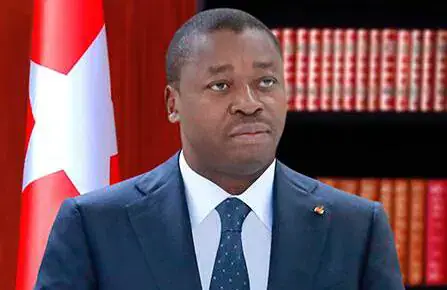
The Togolese opposition is facing significant challenges in presenting a unified front against President Faure Gnassingbé's regime, which has been accused of nepotism and authoritarianism. Faure Gnassingbé has been in power since 2005 and has been criticized for his family's involvement in politics. Recently, his half-brother Mey Gnassingbé was appointed to represent Togo at the inauguration of Benin's new president, sparking concerns about the regime's intentions.
The opposition has been divided, with two main groups: the Cadre National de Concertation pour le Changement (CNCC) and the Manifeste Génération Togo (MGT). The CNCC recently held a meeting in Tsévié, where leaders, including Jean-Pierre Fabre, vowed to mobilize the population to bring an end to the Gnassingbé regime. However, some have questioned the opposition's strategy, particularly after the ANC's communication director, Éric Dupuy, stated that his party was willing to participate in elections under the current regime.
The opposition's division has raised concerns about its effectiveness in challenging the Gnassingbé regime. The MGT is planning a "Journée patriotique d'avertissement" on November 20, 2026, where Togolais are encouraged to stop all activities to denounce the regime's abuses and demand solutions to their daily problems. While these actions are commendable, many wonder what impact they could have if the opposition were united.
Analysts have attributed the opposition's weakness to the regime's close ties with the military. Jean-Pierre Fabre recently stated that the opposition has the misfortune of facing an army that has taken sides with the Gnassingbé regime. This has made it challenging for the opposition to make progress in its fight against the regime.
The Gnassingbé regime has been accused of promoting a culture of nepotism and authoritarianism. Faure Gnassingbé's leadership style has been described as "jouissive du pouvoir politique," with a focus on maintaining his family's grip on power. The regime's actions have led to a dramatic deterioration of the country's political situation, with many calling for change.
The Togolese people have expressed frustration with the opposition's inability to present a united front. Many are calling for the opposition to put aside their differences and work together to bring about change. The opposition's leaders have a responsibility to explain their actions and strategies to the people, who have the right to know why the opposition is not more effective.
The situation in Togo remains uncertain, with the opposition facing significant challenges in its fight against the Gnassingbé regime. As the country approaches a critical juncture, it remains to be seen whether the opposition can overcome its differences and present a united front against authoritarianism.
Key points
- The Togolese opposition is divided, with two main groups: the CNCC and the MGT.
- The opposition's weakness has been attributed to the regime's close ties with the military.
- The Gnassingbé regime has been accused of promoting a culture of nepotism and authoritarianism.
Reporting sources
- Faure Gnassingbé vers le chaos · icilome.com