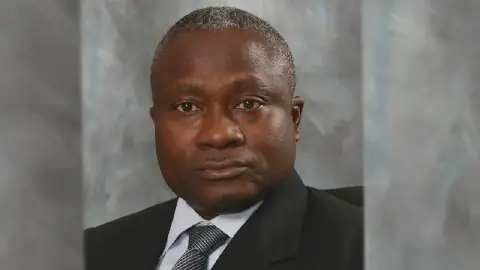
In a recent interview with La Dépêche, Professor Anthony Kadanga Beketi, President of Togo's National Medical Council, emphasized the importance of adhering to the country's medical code of conduct. He stated that medical professionals have an obligation to provide care to patients without discrimination, including based on their financial situation. This obligation is especially crucial in emergency situations where immediate care is necessary.
According to Professor Beketi, there are specific situations in which a doctor may refuse to care for a patient. These situations include when a doctor is overwhelmed with work or when a case exceeds their professional competence. However, in such cases, the doctor must ensure continuity of care by referring the patient to another colleague or a suitable medical facility.
The National Medical Council's stance on this matter was made public following a controversy involving a local politician, Myriam Dossou-D'Almeida, who made comments that were deemed insulting by many on social media. The incident sparked a debate about whether a doctor can refuse care to a patient based on their opinions or behavior on social media. Professor Beketi was clear that a patient's opinions, whether expressed online or offline, cannot be a reason for a doctor to refuse care.
In situations where a doctor-patient relationship becomes strained or conflictual, Professor Beketi noted that the doctor may choose not to continue providing care. However, it is essential to ensure that the patient's care is not disrupted and that they are referred to another suitable medical professional. The principle of continuity of care remains paramount in such situations.
When it comes to emergency situations, Professor Beketi stressed that doctors are obligated to provide immediate care, regardless of the patient's background or circumstances. Refusing care in emergency situations is not only unacceptable but also contrary to the fundamental principles of medical ethics.
Patients who feel they have been victims of unjustified refusal of care can seek redress through the National Medical Council. The Council can investigate such complaints and attempt to resolve the matter through conciliation. If a breach of the medical code of conduct is established and conciliation is not possible, the matter may be referred to a disciplinary chamber, which can impose sanctions ranging from a warning to suspension or even expulsion from the medical profession.
Professor Beketi concluded by emphasizing the importance of trust in the doctor-patient relationship and the need for both patients and medical professionals to respect the rules governing this relationship. He encouraged patients to provide constructive feedback to improve the healthcare system while urging medical professionals to adhere to the highest standards of ethics and conduct.
Key points
- A patient's opinions, whether political, religious, or social, cannot justify a doctor's refusal of care in Togo.