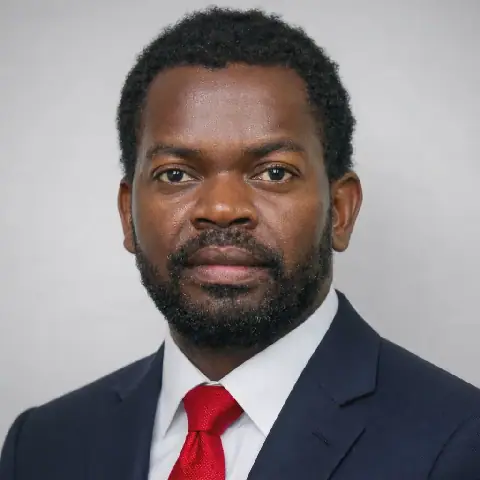
Me Tchassona Traoré, president of the small political party Mouvement Citoyen pour la Démocratie et le Développement (MCD), has come out in support of the Togolese government, led by Faure Gnassingbé. In an interview with the Togolese weekly "La Manchette" on October 21, 2026, Traoré stated that his party's approach is rooted in social democracy, which emphasizes changing society through reform, institutions, and dialogue. He claimed that his presence in the Cadre Permanent de Concertation (CPC) is not a concession, but rather a practical application of his party's ideas.
Traoré's statements have been met with skepticism by many in the Togolese opposition, who view the CPC as a platform for the government to maintain its grip on power. The opposition has long accused the Gnassingbé regime of being authoritarian and dismissive of dialogue. Traoré's claims of supporting non-violence and permanent dialogue have been questioned, given the regime's history of human rights abuses and repression of peaceful protests. The Togolese government has been criticized for its treatment of prisoners, including Kpatcha Gnassingbé, Jean-Paul Omolou, and Marguérite Gnakadé.
Traoré's party, the MCD, is one of several small opposition parties in Togo that have been accused of lacking significant influence. Critics argue that Traoré's adoption of social democracy is superficial, and that the party's actions are driven by personal interests rather than a genuine commitment to democratic principles. In Togo, the priority is currently the liberation of the country from authoritarian rule and the establishment of democracy, rather than ideological debates.
Traoré's comments on democracy and non-violence have been contrasted with the reality of the Gnassingbé regime's actions. The regime has been accused of using violence and intimidation to maintain its power, and of disregarding human rights and the rule of law. Traoré's claims that his party supports non-violence and dialogue have been questioned, given the regime's track record of suppressing dissent.
Traoré cited examples of cohabitation and grand coalitions in France and Germany as models for his approach to politics. However, critics argue that these examples are not directly applicable to Togo, given the country's authoritarian regime. In France and Germany, the governments are democratically elected, whereas in Togo, the regime has been accused of manipulating the electoral process and suppressing opposition.
The issue of the Togolese government's transition from the 4th to the 5th republic has also been a subject of controversy. The Court of Justice of the Economic Community of West African States (CEDEAO) ruled on January 29, 2026, that the transition was not in line with Togolese law. Traoré has argued that the court's ruling did not annul the new constitution or order a transition, but rather left the issue to be resolved through dialogue.
The CEDEAO court's ruling has been the subject of ongoing debate, and Traoré's comments have been seen as an attempt to legitimize the Gnassingbé regime's actions. The court's decision has been interpreted in different ways, and Traoré's support for the regime has been criticized by opposition groups. The Togolese people continue to face significant challenges in their quest for democracy and human rights.
Key points
- Me Tchassona Traoré's support for the Gnassingbé regime has sparked controversy among opposition groups in Togo.
- Traoré's party, the MCD, has been accused of lacking significant influence in Togolese politics.
- The Togolese government's authoritarian nature has been criticized by human rights groups and opposition parties.