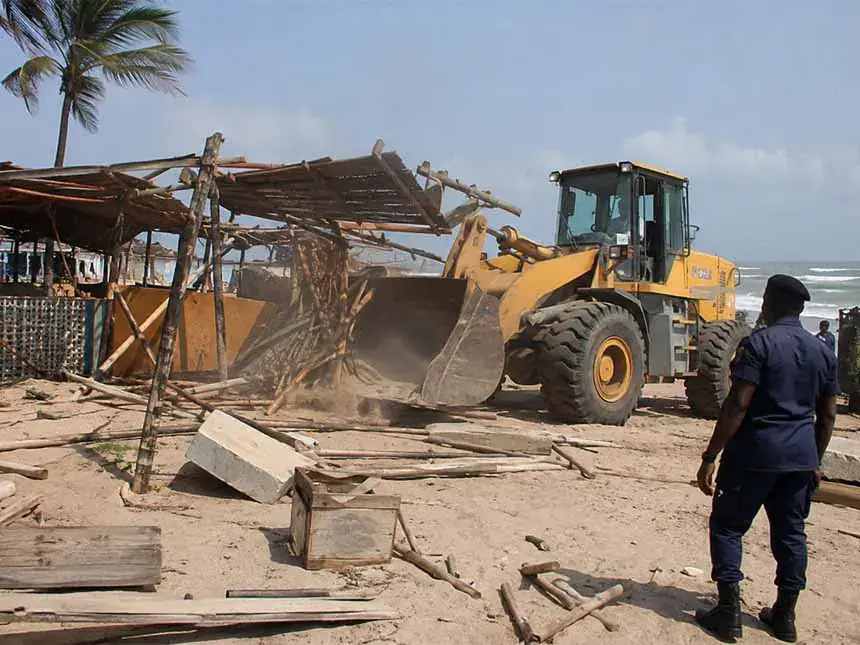
The beaches of Lomé, Togo's capital city, have devolved into a lawless area, two months after the government ordered private operators to vacate the premises. The operators had invested heavily in developing the area, creating entertainment spots, restaurants, and bars that not only provided recreational spaces for locals but also generated employment for hundreds of people.
Prior to the government's directive, the beach was a thriving and secure area, frequented by locals and visitors alike, even at night. The presence of private operators contributed significantly to its security and popularity. However, with the government's decision to shut down these operations, the area has reverted to its former state of disarray and criminal activity.
The decision to close down the private operations on the beach has been attributed to the government's agenda, which seems to prioritize the interests of a select few over the welfare of the general population. Critics argue that this move is in line with the government's track record of neglecting public infrastructure and prioritizing personal interests.
One notable example of the government's neglect of public infrastructure is the state of the country's major markets, which were ravaged by fires in 2013. Despite the passage of 13 years, these essential facilities have yet to be restored. Similarly, a landmark high school in the capital, the Lycée de 2 février, was closed in 2023 due to structural issues, but there has been no urgent allocation of funds to address the problem.
The lack of attention to critical infrastructure and the preference for certain projects over others have raised concerns about the government's priorities. The beach, once a vibrant and safe space, has now become a haven for criminal activities, including drug trafficking and consumption.
The situation on the beach has become increasingly alarming, with reports of trafficking networks reactivating in the area. The once-thriving and lively atmosphere has given way to desolation and fear of aggression, particularly after dark.
The current state of the Lomé beaches serves as an indicator of the government's focus and its implications for the country's development. With the absence of alternative public recreational spaces, the closure of the private operations has left residents with limited options for leisure and socialization.
Key points
- The government's decision to shut down private operations on the beach has led to a resurgence of crime and lawlessness in the area.
- The closure of the private operations has resulted in the loss of employment for hundreds of people who worked in the various businesses on the beach.
- The government's priorities have been questioned, given its neglect of public infrastructure and focus on select projects.