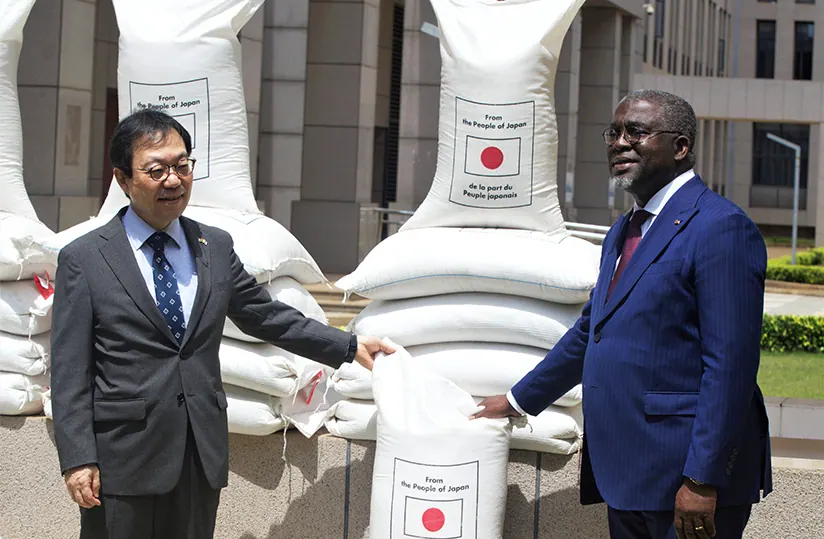
The Togolese government has signed a deal with the Japanese government to import 1570 tonnes of rice, which will be sold at a subsidized price to vulnerable populations. The project, dubbed Kennedy Round, aims to support the national market's rice supply and make the staple food more accessible to households. The financing for the project stands at 200 million yens, approximately 800 million FCFA.
However, this move has been met with criticism from local rice producers, who are struggling to sell their produce. The Union Cantonale des Riziculteurs de Mission-Tové/Asomé)-Vallée de Zio (UCARIM), a major agricultural cooperative, has reportedly made several attempts to access the market but to no avail. The cooperative's goal is to promote local consumption, develop rice cultivation, achieve food self-sufficiency, and improve the living conditions of small local producers.
Local rice producers, such as those in Kovié, are facing significant challenges due to the influx of imported rice. One producer revealed that he has over 1,000 tonnes of unsold rice and lacks the funds to continue production. The producers claim that the imported rice has been sold at a lower price, making it difficult for them to compete. The Togolese government's decision to import rice has been described as a paradox, given the country's efforts to achieve food sovereignty.
Agriculture Minister Antoine Lekpa Gbegbeni and Japanese Ambassador Gomakubo Junji signed the financing documents for the Kennedy Round project on September 8, 2026. According to Minister Gbegbeni, the sale of KR rice will contribute to the country's food security and nutrition, as well as stabilize prices on the national market. Ambassador Junji noted that the funds could also be used to finance socio-economic development projects in sectors such as agriculture and education.
The commercialization of Japanese rice has created an uneven playing field for local producers, who are struggling to sell their produce. The Togolese government's decision has been criticized for being incoherent with its food sovereignty policy. The local rice, priced at 12,500 FCFA per 25kg bag, has been pushed out of the market by cheaper imported rice.
The situation has sparked concerns about the government's commitment to supporting local producers. The cooperative and producers are calling on the government to take action to protect their interests and promote local consumption. The issue highlights the challenges faced by local producers in Togo and the need for a coherent policy to support their development.
The Togolese government's actions have been described as contradictory, with the government simultaneously importing rice and promoting food sovereignty. The situation has sparked a national debate about the country's agricultural policy and its impact on local producers.
Key points
- The Togolese government's decision to import Japanese rice has created a competitive disadvantage for local producers.
- Local producers are struggling to sell their produce due to the influx of cheaper imported rice.
- The government's actions have been criticized for being incoherent with its food sovereignty policy.