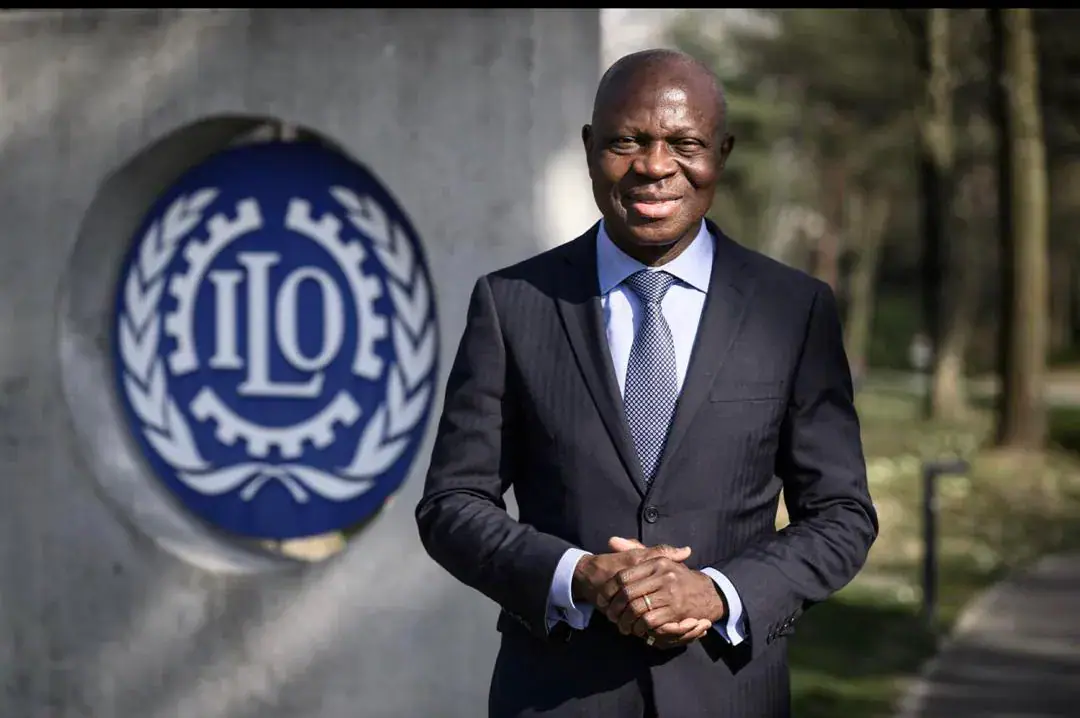
Gilbert Fossoun Houngbo, the former Prime Minister of Togo, has been re-elected as the Director-General of the International Labour Organization (ILO) for a second five-year term. He secured 51 votes out of 56 from the ILO's governing body, which consists of representatives from governments, employers, and workers. This re-election is a testament to his remarkable experience in public affairs and multilateral governance. Houngbo's career spans various roles, including Prime Minister of Togo and President of the International Fund for Agricultural Development (IFAD).
Houngbo's first term as ILO Director-General, which began in October 2022, focused on promoting social justice and decent work. He launched the Global Coalition for Social Justice in 2023, which aims to make social justice a priority in public policies and international cooperation. Under his leadership, the ILO intensified its efforts to extend social protection, particularly in developing countries, and continued its work on eliminating child labor, forced labor, and professional discrimination.
During his first term, the ILO adopted two significant conventions. In June 2025, the International Labour Conference adopted Convention 192, which focuses on preventing and protecting against biological hazards in the workplace. A year later, Convention 193 was adopted, covering decent work in the platform economy. These conventions demonstrate Houngbo's commitment to improving working conditions and protecting workers' rights.
Houngbo's re-election comes at a challenging time for the ILO, with the organization facing financial difficulties and the need to adapt to changing global labor markets. The rise of artificial intelligence, automation, and the digital economy requires the ILO to rethink its protection and regulation instruments. Houngbo has emphasized the need to harness technological progress for human benefit and address the impact of climate change on employment.
The International Organization of Employers welcomed Houngbo's re-election but stressed the need for the ILO to deliver concrete results and strengthen trust among its partners. The organization must balance consolidating its achievements with institutional reforms and adapting to emerging challenges. Houngbo's second term will require him to navigate these complexities and prioritize the needs of workers and employers worldwide.
Gilbert Fossoun Houngbo's career is marked by his experience in finance, public administration, and multilateral diplomacy. Born in Togo in 1961, he holds a degree in business management from the University of Lomé and a specialization in accounting and finance from the University of Quebec. His professional journey began at Price Waterhouse and later led him to the United Nations Development Programme (UNDP), where he played a significant role.
As Houngbo begins his second term, he will need to address the ILO's financial challenges, including unpaid contributions from the United States. He must also prioritize the organization's core objectives, including promoting social justice, decent work, and protecting workers' rights. With his re-election, Houngbo has the opportunity to build on his achievements and drive meaningful change in the world of work.
Key points
- Houngbo's re-election as ILO Director-General demonstrates his ability to build consensus among governments, employers, and workers.