The Togolese economy has demonstrated resilience, with a projected growth rate of 6.3% in 2026, up from 6.1% in 2025. This growth is driven by the transport, commerce, and port activities sectors, as well as the industrial expansion of the Adétikopé Industrial Platform (PIA). The economy's dynamism is also reflected in stable prices, with inflation under control at 0.5% as of June 2026.
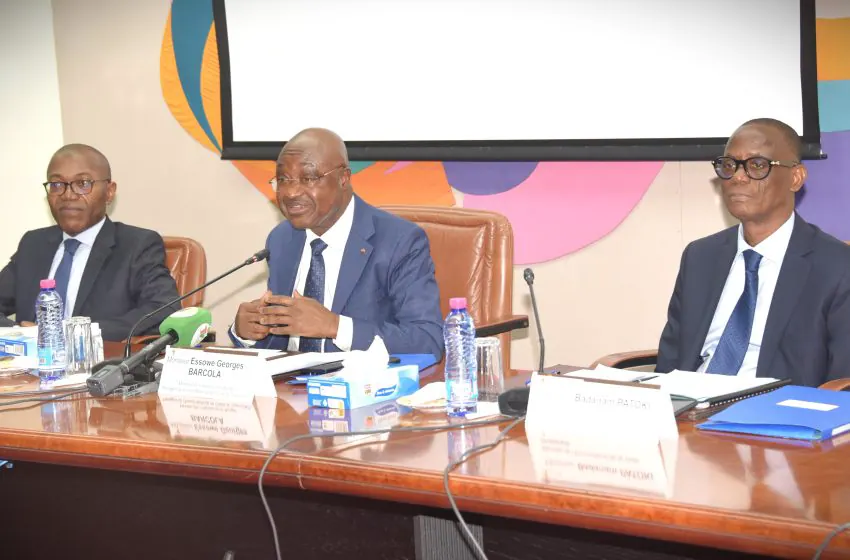
The Togolese Minister of Economy and Finance, Essowè Georges Barcola, presented the economic outlook at the 3rd meeting of the National Credit Council (CNC) on September 17, 2026, in Lomé. The CNC brings together key stakeholders to discuss the country's economic, monetary, and financial situation. The meeting was attended by Barcola, his colleague Badanam Patoki, and Ekoue Djro Glokpor, Director National of the BCEAO-Togo.
The public finances have also shown improvement, with the budget deficit reduced to 0.8% of GDP as of June 2026, down from 2.4% the previous year. The debt-to-GDP ratio has decreased to 60.2% from 62.8% at the end of December 2025, keeping Togo below the 70% threshold set by the West African Economic and Monetary Union (UEMOA).
The banking sector has displayed satisfactory indicators of activity and solidity, with deposits and bank credits trending upward. The microfinance sector has also shown dynamism, with an expanding network. However, two areas of concern were raised: increasing financing for the agricultural sector and small and medium-sized enterprises (SMEs), and addressing vulnerabilities in the microfinance sector.
The agricultural sector has seen a significant increase in new credits, rising by 83.3% to 15.4 billion FCFA as of June 2026, up from 8.4 billion in the first half of 2025. This growth is largely driven by campaign credits for the cotton sector. Barcola emphasized the need for financial institutions to use guarantee and risk-sharing mechanisms to expand credit lines to other agricultural sectors.
The microfinance sector faces persistent vulnerabilities, with approximately 4.8 million Togolese citizens' savings at risk. Barcola stressed the importance of strict execution of individual restructuring plans for microfinance institutions, particularly those with significant exposure. He called for collective action to support the government's new roadmap for 2026-2031.
The Togolese government's efforts to promote economic growth and financial inclusion are ongoing. The country's economic resilience is expected to continue, driven by a combination of factors, including a solid banking sector, increased financing for key sectors, and a commitment to financial inclusion. The government's vision, as outlined by President Faure Essozimna Gnassingbé, aims to protect, unite, and transform the country.
Key points
- Togo's economy is projected to grow at 6.3% in 2026, driven by transport, commerce, and industrial expansion.
- The country's inflation rate is under control at 0.5% as of June 2026.
- The budget deficit has been reduced to 0.8% of GDP as of June 2026.