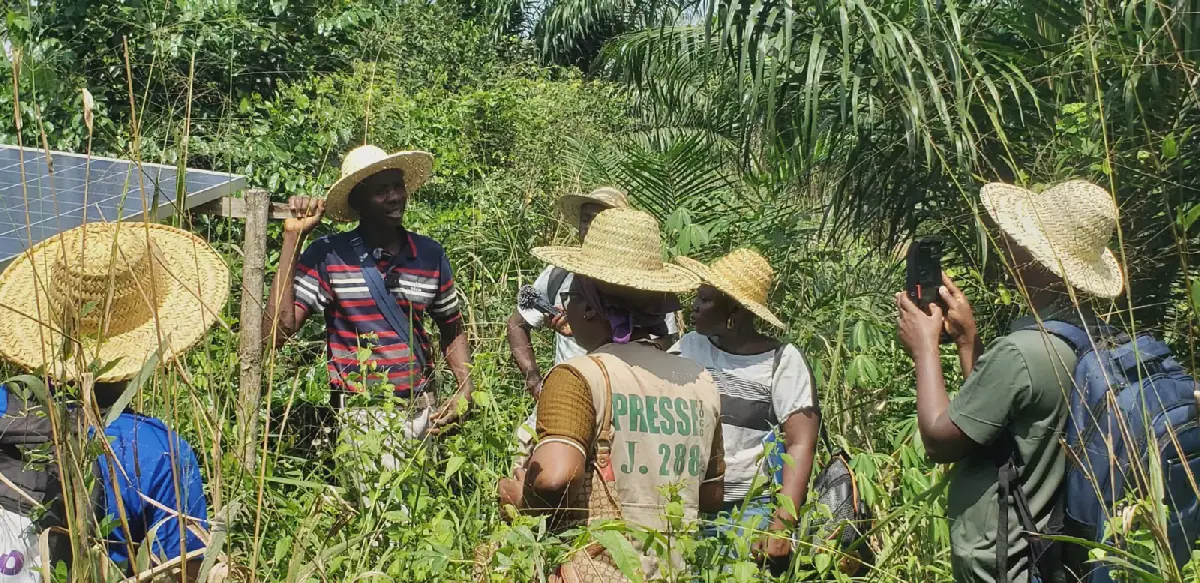
In the heart of Togo's Avé prefecture, a pioneering farm is redefining sustainable agriculture. Located in Badja, about 40 kilometers from Lomé, Dényigban Farm is a thriving example of agroecology in action. Owned by Avougba K. Germain, a former photographer turned agroecologist, the farm seamlessly integrates crops, livestock, and natural inputs. This innovative approach has created a lush oasis, teeming with diverse plant species and life.
As we step into the farm, the senses come alive. The air is filled with the sweet aroma of herbs and the earthy scent of decomposing leaves. The landscape unfolds like a tapestry of greens, with adèmè, gombo, and épinards thriving in the garden. Nearby, rows of maize and patate douce stretch towards the sky, while a culture of salade d'eau purifies the irrigation water. Every element seems to play a vital role in this ecosystem.
The farm's design is a testament to biodiversity. Ananas, manioc, and maïs coexist with bananiers, manguiers, and papayers. The deliberate mix of species serves multiple purposes, including income generation, crop protection, and soil fertilization. For instance, the leaves of the corossolier are used in traditional medicine, while its fruits are sold. This diversity also helps preserve the farm's ecological balance.
One of the farm's key features is its zero-tillage practice. Instead of laboring the soil, the team uses hoes or manual weeding, carefully preserving important plants and microorganisms. The forest litter, rich in decomposing biomass, nourishes the trees and helps combat soil fungi. According to M. Avougba, this approach ensures the soil is never left bare, promoting a healthy ecosystem.
At Dényigban Farm, animal husbandry and natural input production are integral components. Bovines, moutons, and volailles contribute to the farm's fertility through their waste, which is converted into compost and purin. M. Avougba also prepares Super Magro, a biofertilizer, to enhance soil fertility. The farm's water needs are met through a solar-powered borehole, demonstrating a commitment to renewable energy.
For M. Avougba, agroecology is not a new concept; it's a return to traditional practices. He believes that his parents' methods, passed down through generations, hold the key to sustainable agriculture. After transitioning from photography in 2006, he began small, cultivating a few hectares of patate douce and ananas. Today, he's proud of the farm's progress and its potential for replication.
The economic viability of Dényigban Farm is promising. With each ananas plant yielding a fruit and new rejets for replanting or sale, the potential for expansion is significant. According to Jean-Charles Sossou, director of Eco-Impact, a hectare of land can generate up to one million francs CFA in benefits. This successful model, showcased through a visit organized by Eco-Impact and AFSA, offers valuable insights for journalists and agroecology enthusiasts alike.
Key points
- The farm's zero-tillage practice and use of natural inputs promote soil health and ecological balance.
- Dényigban Farm's diverse plant species and animal husbandry create a thriving ecosystem, generating income and promoting sustainable agriculture.
- The farm's reliance on renewable energy and natural inputs demonstrates a commitment to environmentally friendly practices.