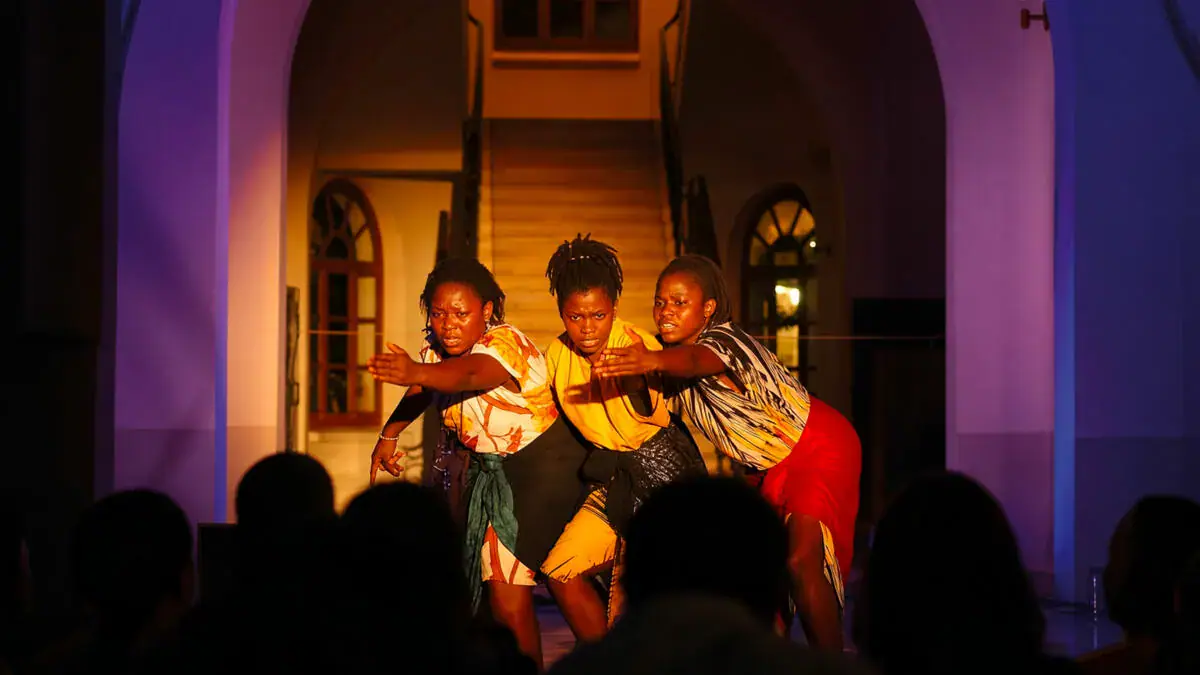
The Palais de Lomé in Togo is hosting a unique theater piece that delves into the country's cultural heritage. The production is a result of a research-creation project that gathered stories from the Konkomba, Agomé, and Agotimé peoples. These communities shared their experiences of losing cultural artifacts during the colonial period, which were taken to foreign museums and collections. The play aims to revive the memory of these lost artifacts and their significance in the spiritual and social lives of the communities.
The theater piece features a combination of traditional music, dance, and storytelling. The kora, a traditional West African instrument, is used to bring the stories to life. The play is presented in two versions: one for young schoolchildren at 3 pm and another for adults at 7 pm. The children's version uses adapted writing to convey the stories in a way that is sensitive to their age group. In contrast, the evening version is more immersive and invites adults to reflect on memory, history, and restitution.
The production comes at a time when the debate on the restitution of African heritage conserved in Western museums is gaining momentum. The play highlights that behind each artifact is a community with a story that deserves to be heard. The Konkomba, Agomé, and Agotimé peoples' stories are a testament to the importance of preserving cultural heritage and the need for dialogue on the restitution of stolen artifacts.
The theater piece is a collaborative effort that brings together different artistic expressions. The play's creators worked closely with the communities to gather their stories and ensure that their voices are heard. The production features a mix of traditional and contemporary elements, making it a unique and engaging experience for audiences.
The Palais de Lomé is a significant cultural institution in Togo, and this production is part of its efforts to promote the country's cultural heritage. The theater piece is a reflection of the institution's commitment to preserving and showcasing Togo's rich cultural diversity. By exploring the significance of cultural artifacts, the play encourages audiences to think critically about the importance of preserving cultural heritage.
The production has generated interest among locals and tourists alike, with reservations already being made. The play's creators are excited to share this unique cultural experience with a wider audience. With its blend of traditional music, dance, and storytelling, the theater piece is set to be a memorable experience for all who attend.
As the debate on cultural restitution continues, this theater piece serves as a poignant reminder of the importance of preserving cultural heritage. By sharing the stories of the Konkomba, Agomé, and Agotimé peoples, the play highlights the need for dialogue and collaboration between communities, museums, and governments. The production is a significant contribution to the cultural landscape of Togo and a testament to the power of art to bring people together.
Key points
- The play explores the significance of Togo's cultural heritage and the importance of preserving cultural artifacts.
Reporting sources
- La mémoire togolaise monte sur scène · republicoftogo.com