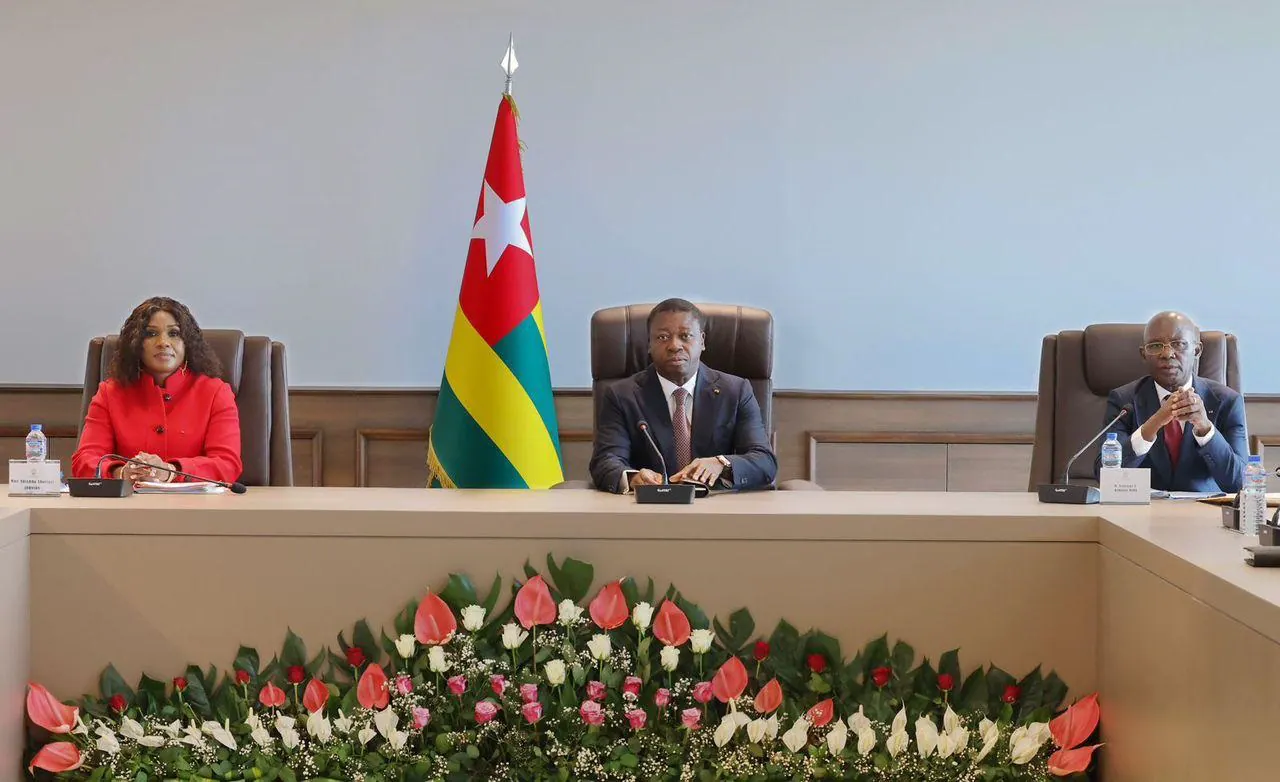
On October 6, 2026, Togo's Council of Ministers convened under the presidency of Faure Essozimna Gnassingbe. During the meeting, the Council examined and adopted two projects of law, three decrees, heard three communications, and made appointments. These decisions aim to address various aspects of the country's development, security, and governance. The Council's actions reflect the government's efforts to improve the lives of Togolese citizens and promote national growth.
The Council adopted a law modifying the 2023 law on the prohibition of the development, production, storage, and use of chemical weapons. This new law seeks to strengthen the control of explosive substances and sensitive products, particularly in terms of importation, exportation, and circulation. The goal is to prevent the diversion and use of these substances for purposes that could compromise national security. The law also aims to enhance coordination between relevant structures.
Another law adopted by the Council relates to the electricity sector. This law aims to modernize and adapt the legislative framework to the growing demand for electricity and technological advancements in the sector. The law introduces several innovations, including the recognition of electricity storage, the creation of a client eligible status, and the reinforcement of the role of independent producers. These changes are expected to improve the availability and quality of electricity services.
The Council also adopted a decree establishing the modalities for issuing entry visas and residence cards in Togo. This decree updates the existing visa regime, which was modernized in 2022 with the introduction of a digital platform. The new decree introduces new visa categories and improves data protection. It also streamlines the application process, reducing processing times for certain categories of visas.
Furthermore, the Council adopted a decree establishing the national certification framework for Togo. This framework provides a common reference point for qualifications, allowing for better coherence and readability at the national level. The framework classifies certifications into nine levels of increasing complexity, based on common descriptors. This will enable the Togolese government to better position diplomas, titles, and certifications.
The Council also adopted a decree creating the National Urban Planning and Development Company (SONADU). This state-owned company is tasked with strengthening the government's capacity for urban planning and development. SONADU is the result of the merger of the Togolese Company for Urban Planning and Development and other entities. The company will focus on addressing the growing needs for urban planning, housing, and infrastructure.
The decisions made by the Council of Ministers reflect the government's commitment to addressing various challenges facing Togo. The adoption of these laws and decrees demonstrates the government's efforts to improve security, governance, and the lives of Togolese citizens. The implementation of these decisions will be crucial in achieving the desired outcomes and promoting national development.
Key points
- The Council of Ministers adopted laws and decrees aimed at improving security, governance, and the lives of Togolese citizens.
- The new laws and decrees focus on strengthening control of explosive substances, modernizing the electricity sector, and improving urban planning.
- The implementation of these decisions will be crucial in achieving the desired outcomes and promoting national development.