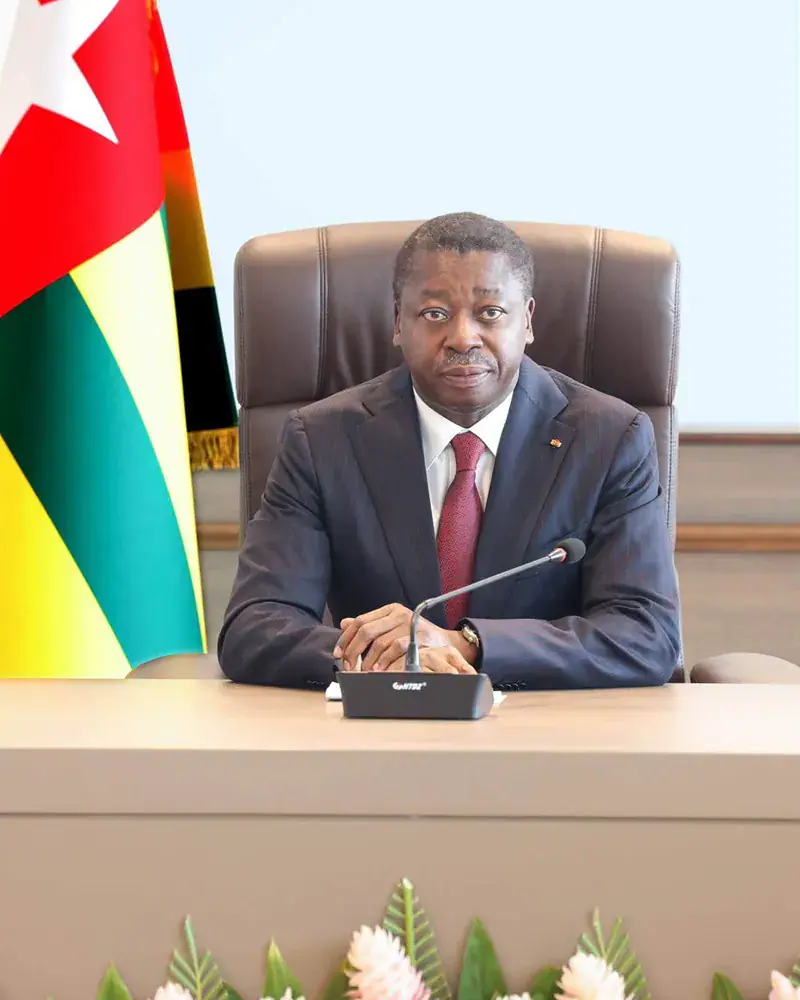
The Council of Ministers of Togo convened on November 6, 2026, under the leadership of President Faure Essozimna Gnassingbe. During the meeting, the Council adopted one law and one decree, examined one law and one decree in the first reading, and heard three communications. The adopted law creates the National Social Security Institute, aiming to unify the current social security system for public agents and their families.
Currently, two separate entities, the Caisse de Retraites du Togo (CRT) and the Institut National d'Assurance Maladie (INAM), manage pensions and health insurance, respectively. This setup leads to duplicated efforts, multiple steps for beneficiaries, and disparities in service quality. The new National Social Security Institute will merge CRT and INAM, providing a single point of service for insured individuals and optimizing resource management.
The new institute will oversee retirement and health insurance regimes for public agents, military personnel, and their families. This reform aims to improve service quality, ensure better care for public agents and their families throughout their careers and after retirement, and strengthen the social protection system's efficiency and sustainability. The government reaffirms its commitment to building a more integrated, equitable, and durable social protection system.
In addition to adopting the new social security institute, the Council examined a law modifying the 2018 land and domain code. The code, adopted on June 14, 2018, marked a significant step in modernizing Togo's land governance. However, its implementation revealed shortcomings and difficulties, necessitating adaptations to technological, social, economic, and environmental changes.
The proposed law aims to enhance the land governance framework by introducing innovations such as the creation of a National Land Observatory, modernizing land management through digitalization and innovative technologies, and securing customary and rural land rights. It also promotes equality between men and women in land access, protects agricultural land and natural resources, and addresses pastoral and climate-related issues.
The Council's decisions reflect the government's efforts to address social and economic challenges in Togo. By reforming the social security system and modernizing land governance, the government aims to improve the lives of its citizens and create a more favorable business environment. These reforms are expected to have a positive impact on Togo's development and stability.
The implementation of these reforms will require effective coordination among relevant stakeholders, including government agencies, civil society, and the private sector. The success of these initiatives will depend on the government's ability to ensure their effective rollout and address potential challenges that may arise. The reforms' impact will be closely monitored, and their effectiveness will be evaluated over time.
Key points
- The Council of Ministers adopted a new law creating the National Social Security Institute to unify Togo's social security system for public agents and their families.
Reporting sources
- Compte-rendu du Conseil des ministres du vendredi 06 novembre 2026 · manationtogo.com