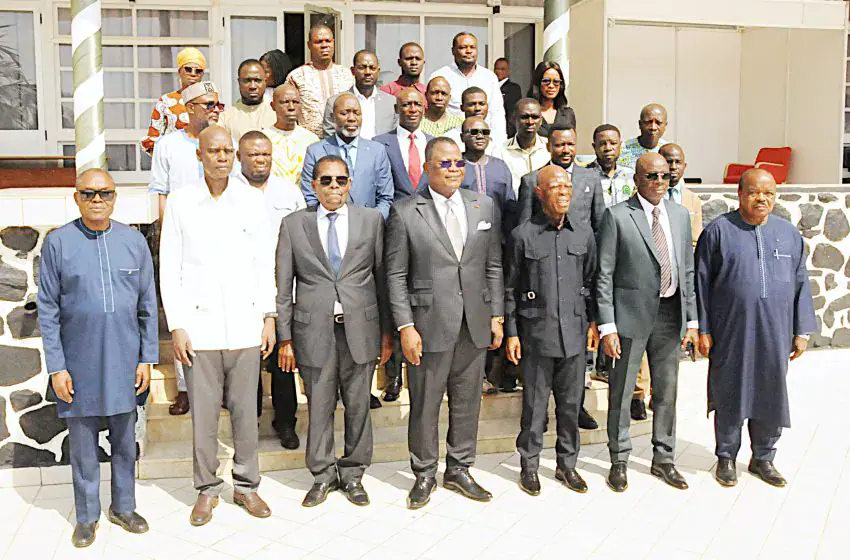
The Constitutional Court of Togo, led by President Djobo-Babakane Coulibaley, recently organized a meeting with media professionals at the Hotel Ecole Lebene in Lome. The event, titled "Constitutional Court Interviews: Exchange Meeting with Media," aimed to educate journalists about the court's role, attributes, and functioning. This initiative is part of the court's policy to enhance its visibility and communication with the public. By engaging with media professionals, the court seeks to provide a better understanding of its mission and importance in the country's constitutional architecture.
The meeting featured three key presentations that covered fundamental aspects of the court's organization and functioning. The first presentation, "Presentation of the Constitutional Court, its Role and Attributes," provided journalists with a deeper understanding of the court's place in the country's constitutional structure and its responsibilities in maintaining the constitutional order. The second presentation, "Procedure for Decision-Making at the Constitutional Court," shed light on the mechanisms governing the examination of cases, the different stages of case processing, and the process leading to the court's decisions.
The third presentation, "Types of Appeals Brought Before the Constitutional Court," discussed the avenues for approaching the court, the categories of appeals under its jurisdiction, and the conditions under which citizens and authorized institutions can submit appeals. These presentations aimed to equip journalists with a better understanding of the court's operations and the legal requirements that underpin its decisions. By doing so, the court hopes to foster a more informed and accurate reporting of its activities.
President Djobo-Babakane Coulibaley emphasized the crucial role of media professionals in modern societies, highlighting their ability to inform public opinion, disseminate information, and facilitate public debate. He stressed that the court should not isolate itself but rather engage with the media and the public to promote a better understanding of its mission. Coulibaley noted that the court's existence and role have been consistently affirmed by Togo's constitutions, including the most recent one on May 6, 2024.
The court's initiative has been welcomed by media professionals, who see it as an opportunity for direct engagement with the court's officials. Kodjo Tete Innocent Sas Gawou, a journalist at Taxi FM, expressed his appreciation for the meeting, stating that it provided a platform for frank exchanges with the court's officials. He hopes that this engagement will lead to future collaborations between the media and the court.
The Constitutional Court's effort to engage with the media and the public is seen as a positive step towards promoting a culture of constitutionalism in Togo. By demystifying its operations and decisions, the court aims to build trust and foster a better understanding of its role in upholding the country's constitutional order. This initiative is expected to contribute to a more informed public discourse on constitutional matters.
The meeting between the Constitutional Court and media professionals has set a precedent for future collaborations and engagements. As the court continues to implement its policy of extériorization and communication, it is likely to strengthen its relationship with the media and the public. This, in turn, will enhance the court's visibility and promote a deeper understanding of its mission and functions.
Key points
- The Constitutional Court of Togo has organized a meeting with media professionals to explain its role, attributes, and functioning.
- The meeting aimed to educate journalists about the court's operations and promote a better understanding of its mission.
- The court seeks to foster a culture of constitutionalism in Togo by engaging with the media and the public.