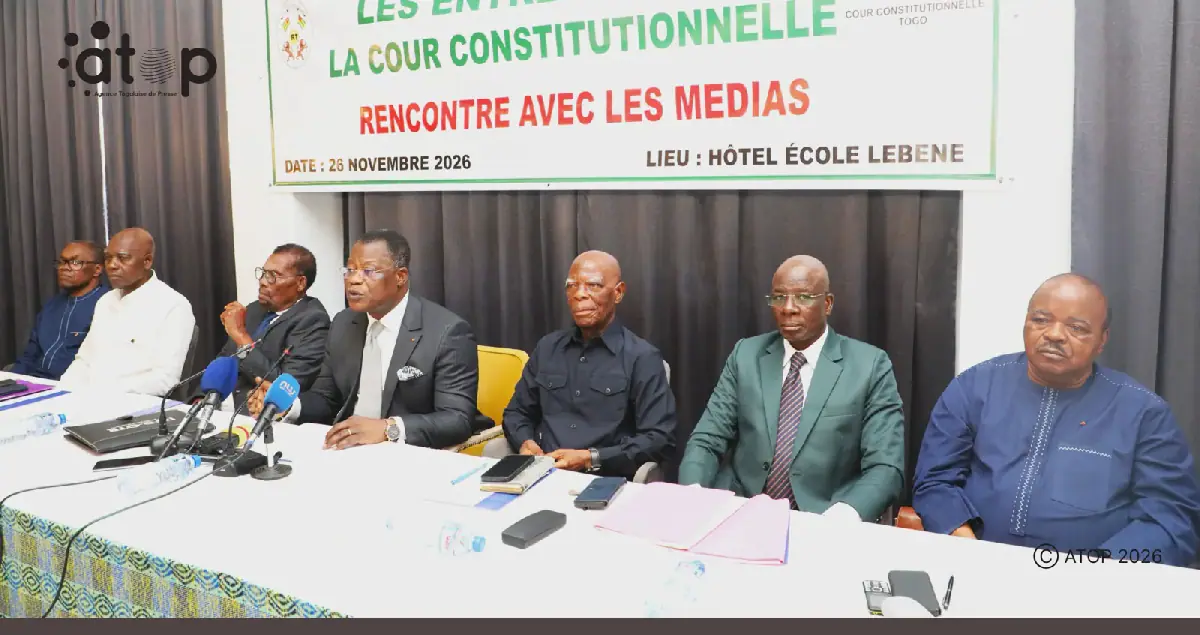
The Constitutional Court of Togo organized a meeting with media professionals in Lomé on November 26, to discuss its role, jurisdiction, and jurisprudence. The event, dubbed "Les entretiens de la Cour constitutionnelle," is part of a series of exchanges initiated by the institution. The goal is to make the high court better known to media professionals, enabling them to inform the public about its missions and functions. This initiative also aims to educate citizens on using the Constitution to defend their rights.
During the meeting, journalists followed three presentations. The first, by Professor Massina Palouki, covered the presentation of the Constitutional Court, its role, and its attributions. The second, led by Judge Sogoyou Pawélé, discussed the decision-making process within the institution. The third presentation, by the court's president, Professor Coulibaley Djobo-Babakane, focused on the types of appeals submitted to the court. These presentations were followed by exchanges between journalists and court members to enhance understanding of the institution and its functioning.
The president of the Constitutional Court, Professor Coulibaley Djobo-Babakane, stated that this series of meetings aims to support the efforts of Togolese authorities in consolidating the rule of law and democracy. He emphasized that the court's mission is to ensure that laws do not contradict the Constitution, which is considered the "Law of laws." The professor highlighted that the court's attributions are defined by Article 68 of the Constitution, including controlling the constitutionality of laws and the contentious issues of elections and referendums.
In addition to controlling the conformity of laws to the Constitution, the court is also responsible for the contentious issues of legislative, senatorial, and referendum consultations. The institution is seized of its own accord by organic laws, ordinances, and regulations of parliamentary assemblies, as well as those of independent authorities provided for by the Constitution. The court also guarantees fundamental human rights and public freedoms. The president stressed that constitutional control must be exercised with impartiality.
Professor Coulibaley emphasized that the members of the court, commonly known as "les Sages," can only make the Constitution a living act if citizens recognize it as a societal act that consecrates their rights, freedoms, and essential values. The court's role is crucial in ensuring that these values are respected and guaranteed to citizens through constitutional justice. The meeting with media professionals is a step towards achieving this goal.
The Constitutional Court's initiative to engage with media professionals is a significant step towards promoting understanding and awareness of its role and jurisdiction. By educating citizens on the importance of the Constitution and the court's functions, the institution aims to empower them to defend their rights and participate in the democratic process. This exchange will contribute to a better understanding of the court's mission and its significance in the Togolese democratic landscape.
The Togolese Press Agency reported that the meeting was well-received by media professionals, who appreciated the opportunity to engage with the Constitutional Court and understand its functions better. The agency noted that this initiative is in line with the court's efforts to promote transparency and accountability in the country. The Constitutional Court's engagement with media professionals is a positive development in Togo's democratic journey.
Key points
- The Constitutional Court of Togo aims to educate citizens on using the Constitution to defend their rights through its engagement with media professionals.