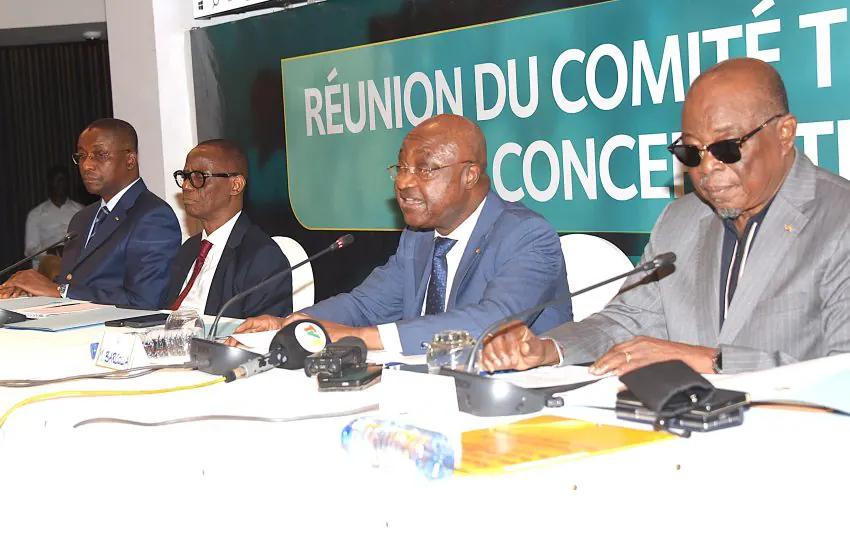
The Comité technique de concertation Etat-Secteur privé (CTC-ESP) held its second meeting of 2026 on October 6 in Lomé, Togo. The meeting was attended by Minister of Finance and Budget Essowè Georges Barcola, other government members, CTC-ESP officials, and representatives from various organizations. The committee reviewed activities from the past three months and discussed the private sector's role in developing human capital, aligning with the government's 2026-2031 roadmap.
The meeting focused on four key priorities. The first concerned the implementation of appeal bodies to ensure rapid dispute resolution. The second priority addressed the issue of outstanding invoices from companies, aiming to preserve the private sector's treasury. The third priority involved revising tariffs at the Port autonome de Lomé (PAL), with the private sector seeking the committee's intervention. The fourth priority focused on deploying an integrity charter and compliance guide in major enterprises.
Minister Essowè Georges Barcola emphasized the shared commitment to consolidating a constructive partnership between the government and the private sector to stimulate economic growth. He highlighted the importance of creating favorable investment conditions, securing the business environment, and making the private sector a key partner in economic transformation. Barcola also acknowledged the impact of global events, such as the situation in the Middle East, on international supply chains.
Coami Tamegnon, president of the Conseil National du Patronat du Togo (CNP-Togo), welcomed the regular meetings, which provide a platform for discussing private sector concerns. He stressed the need for dialogue between the government and private sector to anticipate challenges, identify opportunities, and develop solutions. Tamegnon emphasized that mobilizing public revenue must balance state financing capacities with preserving enterprise competitiveness.
The meeting also featured a presentation by Minister of Education Mama Omorou on developing human capital in line with the 2026-2031 roadmap. The private sector, as a significant creator of skills, value, innovation, and jobs, is the primary user of competencies produced by the education system. Omorou proposed seven axes for involving the private sector in training the skills necessary for economic development.
The committee's discussions aimed to strengthen trust and support sustainable economic growth through constructive dialogue and concrete solutions. The meeting demonstrated the government's commitment to collaborating with the private sector to address challenges and capitalize on opportunities. By working together, stakeholders can foster a favorable business environment and drive economic development.
The CTC-ESP meeting concluded with a renewed focus on partnership and cooperation between the government and private sector. The committee's efforts to address key priorities and challenges will continue to support Togo's economic growth and development. The next steps will involve implementing the discussed strategies and maintaining open dialogue between stakeholders.
Key points
- The Comité technique de concertation Etat-Secteur privé discussed four key priorities, including implementing appeal bodies and revising tariffs at the Port autonome de Lomé.
- Minister Essowè Georges Barcola emphasized the importance of creating favorable investment conditions and making the private sector a key partner in economic transformation.
- The meeting highlighted the need for dialogue and cooperation between the government and private sector to drive economic growth and development.