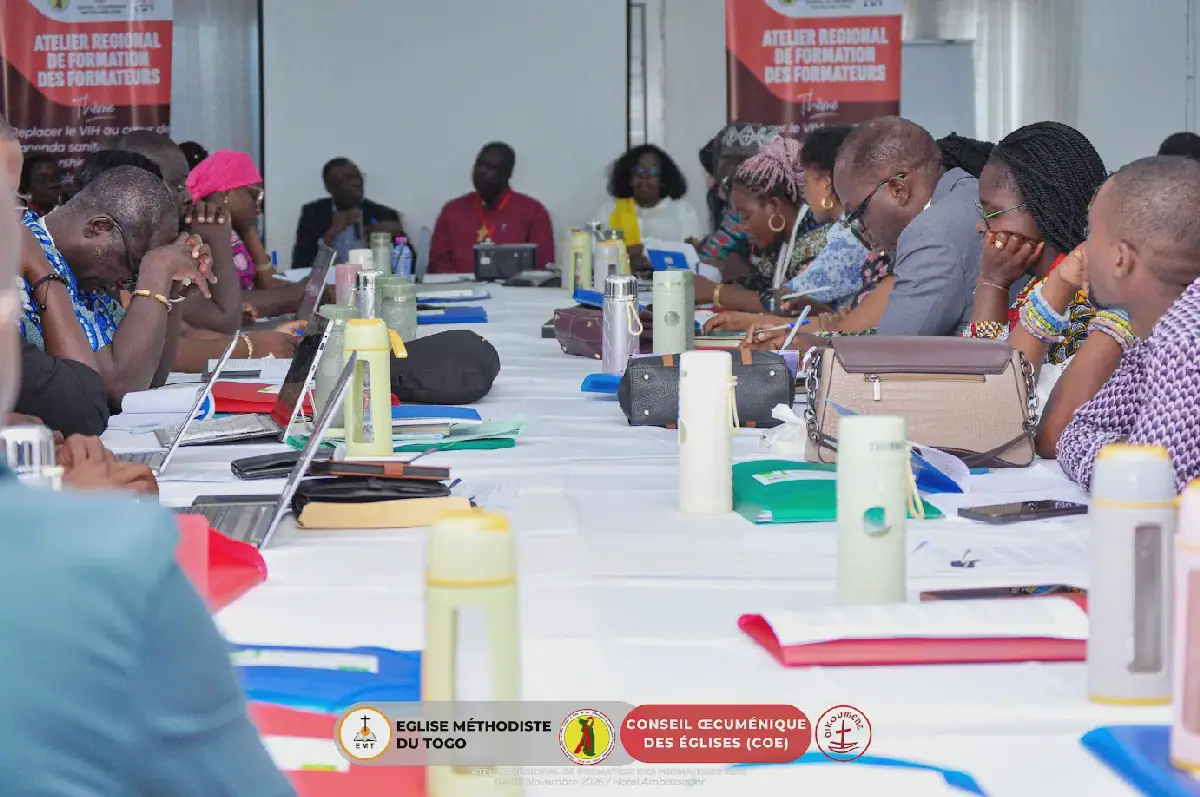
A three-day regional training workshop for religious leaders and formators concluded in Lomé, Togo, on November 6, 2026. The event, organized by the World Council of Churches, the Methodist Church of Togo, and the National Council for the Fight Against AIDS, with technical support from UNAIDS-Togo, brought together 45 participants from Benin, Burkina Faso, Côte d'Ivoire, and Togo. The workshop aimed to "put HIV back at the center of the health agenda" and explore the role of religious leaders in addressing financial challenges.
Gracia Violeta Ross, the World Council of Churches' representative on HIV, reproductive health, and pandemics, emphasized that despite scientific progress, HIV is disappearing from the international agenda, and funding is dwindling. She stressed that "HIV is not over in Togo or the sub-region" and urged governments to compensate for the withdrawal of external partners. Ross argued that protecting health is a constitutional obligation and a divine mandate, and that the church cannot remain on the sidelines.
The workshop highlighted Togo's heavy reliance on external funding, with over 80% of its resources coming from abroad, according to the REDES report. Damien Amoussouka, deputy coordinator of the National Council for the Fight Against AIDS, noted that with funding dwindling, the country must revise its strategy and focus on mobilizing internal resources, particularly as the 2030 deadline approaches. Participants agreed to encourage development partners and the private sector to maintain their support for HIV programs.
Religious leaders present at the workshop pledged to take action, with Pastor Brigitte Jessou from Côte d'Ivoire announcing plans to conduct training sessions for local catechists and preachers upon her return. She noted that while HIV has taken a backseat to other health issues like cancer and cardiovascular disease, the church has a duty to defend human dignity, regardless of health status. The participants also agreed to develop joint action plans to mobilize local resources and integrate HIV into theological curricula.
The workshop concluded with a declaration signed by participants, reaffirming their commitment to ending new HIV infections and the AIDS epidemic. The declaration, known as the Lomé Declaration, notes that 1.3 million new infections occur worldwide each year, with 67% of children living with HIV in Togo receiving treatment, compared to 51% in Benin. Signatories called on governments to increase national funding and on traditional and religious leaders to combat stigma.
The Lomé Declaration emphasizes that access to healthcare is a matter of justice, not charity. It urges governments to prioritize HIV funding and for religious leaders to use their influence to promote awareness and reduce stigma. The declaration also highlights the complementary roles of faith and science in addressing the HIV epidemic.
UNAIDS reports that in 2025, there were 414,078 people living with HIV in Côte d'Ivoire, 94,000 in Burkina Faso, 70,000 in Benin, and 100,000 in Togo. While progress has been made in providing treatment, gaps remain, particularly for children and key populations. The declaration concludes by emphasizing the need for urgent action to address the ongoing HIV epidemic in West Africa.
Key points
- Religious leaders pledge to mobilize local resources to support HIV programs.
- Togo and neighboring countries face significant funding gaps for HIV programs.
- Participants call for increased national funding and action to combat stigma.