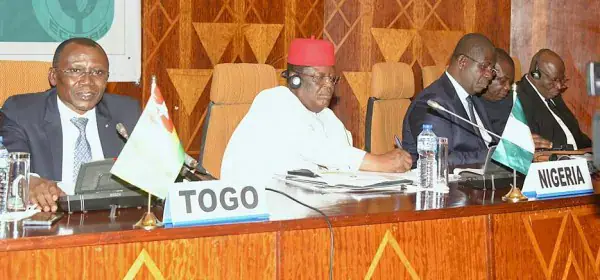
The Minister of Public Works and Infrastructure of Togo, Sani Yaya, has proposed a reduction in the cost of the Abidjan-Lagos corridor project. The project, which aims to connect Côte d'Ivoire, Benin, Ghana, Nigeria, and Togo, was initially estimated to cost $15 billion. However, Yaya suggested that the cost could be reduced to $13 billion or even $10 billion. This proposal was made during the 23rd meeting of the Ministerial Committee for the project, held in Lomé on October 30, 2026.
The meeting brought together ministers from Benin, Côte d'Ivoire, Ghana, Nigeria, and Togo to review the project's progress and discuss ways to accelerate its implementation. Yaya emphasized the need to expedite the project's development, citing its importance for regional economic integration. The proposed reduction in cost was welcomed by the Togolese government, which encouraged experts and financial partners to continue optimizing the project's costs.
In addition to the cost reduction, Yaya highlighted the need to accelerate the operationalization of the Abidjan-Lagos Corridor Management Authority (ALcOMA). The Togolese government has expressed satisfaction with Côte d'Ivoire's commitment to hosting the authority's headquarters and providing the necessary agreement. This development is expected to facilitate the project's implementation and coordination.
Another major concern discussed during the meeting was the liberation of land required for the project. The Togolese government proposed a centralized approach, coordinated by ALcOMA, to ensure a coherent and efficient process. This approach aims to avoid delays and bottlenecks in the project's implementation, which could arise from individual countries' management of land acquisition and compensation.
The Abidjan-Lagos corridor project is a major infrastructure development in West Africa, spanning approximately 1028 kilometers. The project aims to create a six-lane highway that will facilitate the movement of people and goods, strengthen economic exchanges, and reduce transportation costs in the region. The African Development Bank has indicated that the project is expected to start in 2027 and be completed within four years, with a planned opening in 2031.
The project's implementation is contingent upon the finalization of technical preparations, mobilization of financing, and liberation of land. The Togolese government's proposals aim to address these challenges and ensure the project's timely completion. The meeting's outcomes are expected to contribute to the project's acceleration and success.
The Abidjan-Lagos corridor project has significant economic and social implications for the region. Its completion is expected to boost economic integration, create jobs, and improve the quality of life for citizens in the participating countries. The project's progress will be closely monitored by stakeholders, including governments, international organizations, and local communities.
Key points
- Togo proposes reducing the Abidjan-Lagos corridor project's cost to $10-13 billion from $15 billion.