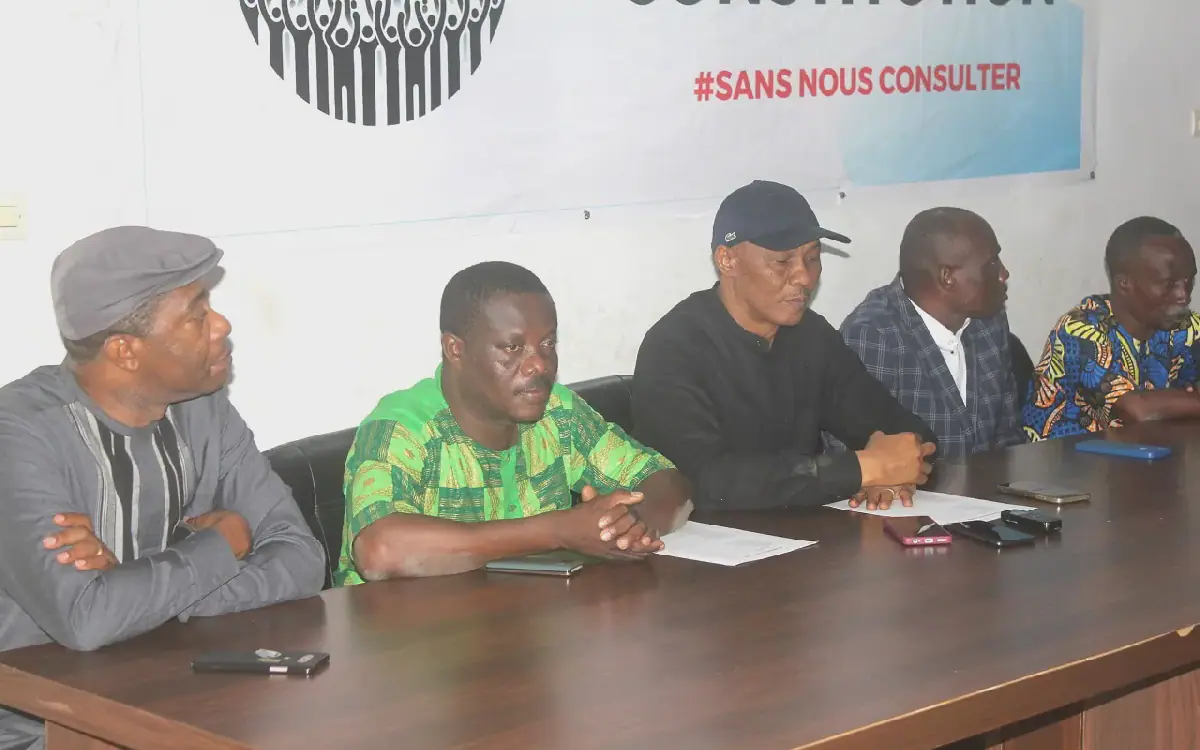
On November 8, 2026, the Cadre National de Concertation pour le Changement (CNCC) held a meeting in Tsévié, Togo, which was disrupted by security forces. Despite initial attempts to postpone the meeting due to police and administrative harassment, the CNCC proceeded with the event. However, security forces blocked hundreds of citizens from attending and arrested several people, including CNCC leaders, causing tensions.
The CNCC leaders were eventually able to prevent the situation from escalating, but several people were arrested and later released. The incident has been condemned by groups supporting the "Manifeste Génération Togo", who denounce the actions of security forces as "barbaric" and aimed at intimidating citizens. They also expressed solidarity with the CNCC and criticized the government's handling of the situation.
The "Manifeste Génération Togo" groups, comprising various civil society organizations and opposition parties, have warned security forces against further actions that could exacerbate the already fragile socio-political situation in Togo. They also highlighted the recent concerns expressed by the United Nations Committee on the Elimination of Discrimination against Women (CEDAW) regarding the shrinking civic space in Togo and the repression of peaceful protests.
CEDAW has expressed concerns about arbitrary arrests and the restriction of citizens' freedoms of expression, assembly, and association in Togo. In response, the "Manifeste Génération Togo" groups have called on all Togolese citizens to mobilize against the government's actions, which they describe as dictatorial. They have also urged citizens to respect the "Journée Patriotique d'Avertissement" (Patriotic Warning Day) on November 20, 2026, by ceasing all activities.
The opposition groups argue that, according to Article 150 of the Togolese Constitution, no group or organization should submit to the dictates of an "illegal and illegitimate" power regarding public demonstrations. They claim that the current government's actions are a threat to democracy and human rights in Togo. The groups are demanding an end to arbitrary arrests and the protection of citizens' rights to freedom of expression and assembly.
The incident in Tsévié has sparked widespread condemnation and concern about the government's handling of opposition activities. The CNCC and other opposition groups have vowed to continue their activities, despite the challenges and intimidation they face. The situation in Togo remains tense, with many citizens calling for greater freedoms and an end to government repression.
Key figures, including Dynamique Monseigneur Kpodzro, Thomas Kokou NSOUKPOE, Sambiri TARGONE, Tchagnaou OURO-AKPO, and Nathaniel OLYMPIO, have endorsed the "Manifeste Génération Togo" and urged citizens to join them in their fight for democracy and human rights. The opposition groups are planning further actions, including the "Journée Patriotique d'Avertissement" on November 20, 2026.
Key points
- The Togolese government has been accused of repressing peaceful protests and restricting citizens' freedoms.
- The opposition groups are demanding an end to arbitrary arrests and the protection of citizens' rights.
- The situation in Togo remains tense, with many citizens calling for greater freedoms and an end to government repression.