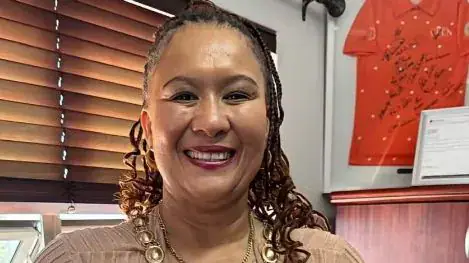
The Togolese government has intensified its restrictions on opposition figures, with Deputy Brigitte Adjamagbo-Johnson recently being barred from leaving the country. She had planned to travel to Europe for medical treatment and to attend meetings with international partners. The prosecutor's office cited irregularities in her application, including the timing of her request and a lack of documentation justifying her medical condition.
Adjamagbo-Johnson's travel ban is not an isolated incident. The Togolese administration has been accused of using judicial control to restrict the movement of opposition figures and civil society actors. Many have been placed under judicial supervision, requiring them to report to the authorities regularly and obtain permission to travel. This has effectively limited their ability to engage in political activities both domestically and internationally.
Another opposition figure, Targone Sambiri, has faced similar challenges. His passport renewal has been blocked for over two years, despite his submitting his application in December 2024. The delay has prevented him from traveling outside the West African Economic and Monetary Union (UEMOA) region, effectively restricting his movement. Sambiri's case has been highlighted by the "Manifeste Génération Togo" movement, which has expressed concerns about the arbitrary nature of the delay.
The travel restrictions have been criticized as a tactic to silence opposition voices. Adjamagbo-Johnson has stated that her planned trip was intended to allow her to receive medical treatment and engage in political activities. She believes that the government's decision is motivated by a desire to prevent her from participating in international events and meetings. Her case has drawn attention to the broader issue of human rights and democratic freedoms in Togo.
The Togolese government's actions have been condemned by various stakeholders. Adjamagbo-Johnson's lawyer will reportedly explore options for challenging the travel ban. The incident has also sparked concerns about the country's commitment to democratic principles and the rule of law. The international community has been urged to take note of the situation and to pressure the Togolese government to respect the rights of its citizens.
The restrictions on opposition figures have significant implications for Togo's democratic landscape. The government's actions have created an uneven playing field, where opposition voices are suppressed, and dissent is not tolerated. This has led to concerns about the country's prospects for democratic progress and the potential for authoritarianism. The situation has also raised questions about the role of the international community in promoting human rights and democratic freedoms.
The cases of Adjamagbo-Johnson and Sambiri highlight the need for greater scrutiny of Togo's human rights record. The international community must engage with the Togolese government to address these concerns and promote a more enabling environment for democratic actors. The Togolese people have a right to participate in the democratic process without fear of reprisal or restriction.
Key points
- Deputy Brigitte Adjamagbo-Johnson's travel ban has been linked to her planned participation in international events and meetings.
- Opposition figure Targone Sambiri's passport renewal has been blocked for over two years.
- The Togolese government's actions have been criticized as a tactic to silence opposition voices and restrict democratic freedoms.