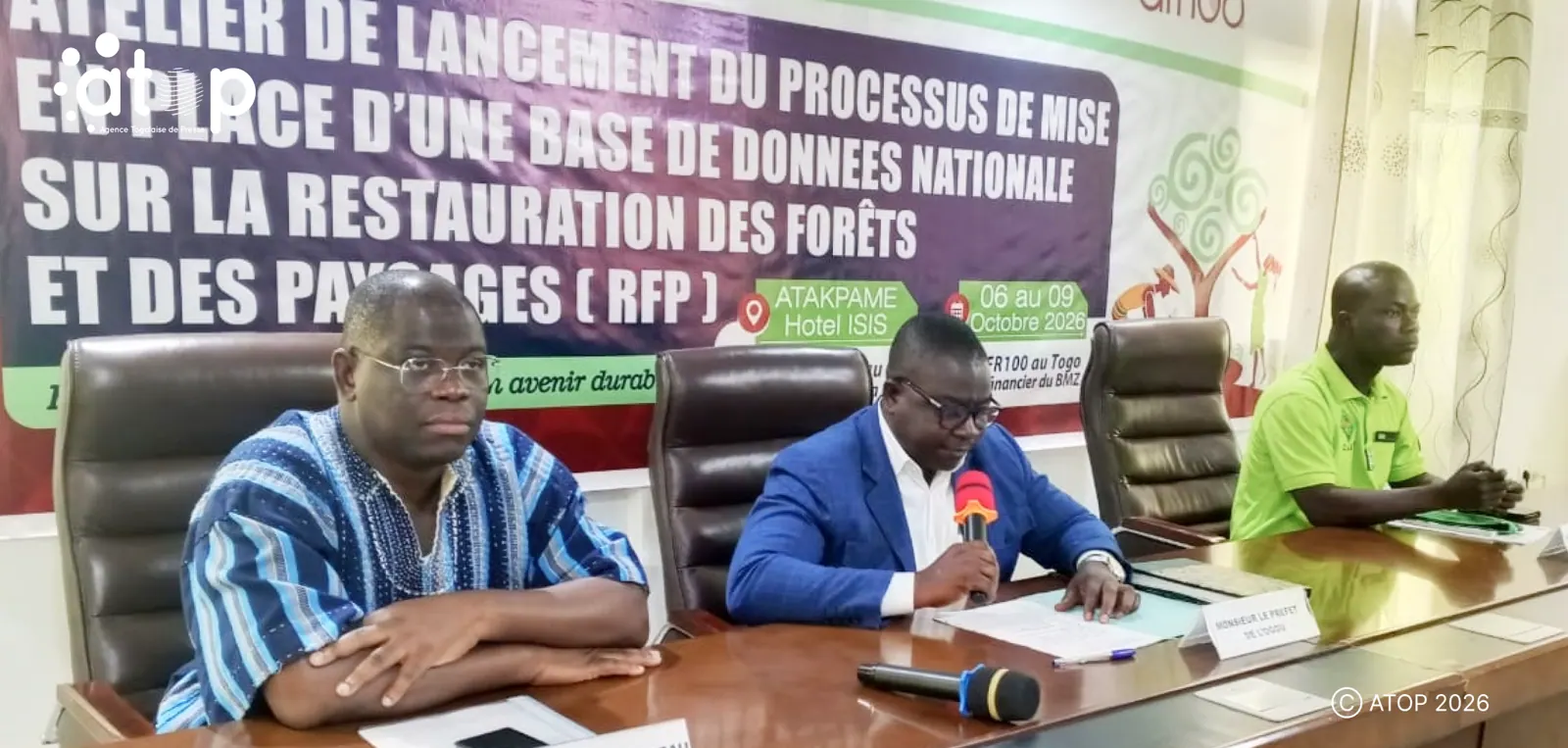
The Togolese government, in partnership with the Food and Agriculture Organization (FAO) of the United Nations, has launched a national database for forest landscape restoration (RPF) in Atakpamé. This initiative is part of the program "Access to finance and technical assistance for small producers and forestry and agricultural enterprises to accelerate restoration and innovation with added value, with a focus on Africa". The project aims to create a harmonized system for monitoring and managing data related to forest landscape restoration in Togo.
The three-day workshop, which started on October 6, brings together key stakeholders in the sector, including experts in monitoring and evaluation, data managers, and specialists in Geographic Information Systems (GIS). The meeting provides a platform for participants to share their national and regional experiences. Discussions will focus on mapping stakeholders and current systems, analyzing the needs for harmonizing indicators, and defining the technical and institutional orientations necessary for establishing the national monitoring system.
The initiative is supported financially by the German Federal Ministry for Economic Cooperation and Development (BMZ) and is part of the AFR100 initiative. The goal is to restore 1.4 million hectares of degraded land by 2030. This effort aligns with Togo's national policy for sustainable management of natural resources, preservation of biodiversity, and adaptation to climate change.
Dr. Djiwa Oyétoundé, FAO representative in Togo, emphasized that this initiative contributes to the objectives of the AFR100 initiative. He noted that the national database will enable the mapping of all actors, existing information platforms, and reporting mechanisms. The database will also help identify evaluation indicators in use and establish a complete cartography of restoration actors.
The prefect of Ogou, Ekpe Kodjo, praised the FAO's continued action in favor of environmental protection. He stressed that forest landscape restoration is a crucial lever for halting soil degradation, preserving biodiversity, strengthening ecosystem resilience, and sustaining the livelihoods of populations. The prefect highlighted the importance of collaboration between stakeholders to achieve the objectives of the AFR100 initiative.
At the end of the workshop, participants are expected to establish a complete cartography of restoration actors, inventory existing information systems, and identify evaluation indicators in use. The national database will provide a tool for monitoring and managing data related to forest landscape restoration in Togo. This will enable the country to track progress and make informed decisions to achieve its restoration goals.
The launch of the national database for forest landscape restoration in Togo demonstrates the country's commitment to sustainable management of natural resources and environmental protection. The initiative is a significant step towards achieving the objectives of the AFR100 initiative and contributing to the global effort to combat climate change. Key stakeholders will continue to work together to ensure the success of this initiative.
Key points
- The Togolese government launches a national database for forest landscape restoration in collaboration with FAO and BMZ.
- The initiative aims to restore 1.4 million hectares of degraded land by 2030 as part of the AFR100 initiative.
- The national database will enable the mapping of actors, existing information platforms, and reporting mechanisms for forest landscape restoration in Togo.